Cooking Over a Fire
Ateş Üzerinde Yemek Pişirmek
Emma and Jack cook dinner over the campsite fire. They prepare a simple meal and talk about what they want to do the next day.
Emma ve Jack kamp ateşinin üzerinde akşam yemeği pişiriyor. Basit bir yemek hazırlayıp ertesi gün ne yapmak istedikleri hakkında konuşuyorlar.
Diyalog8
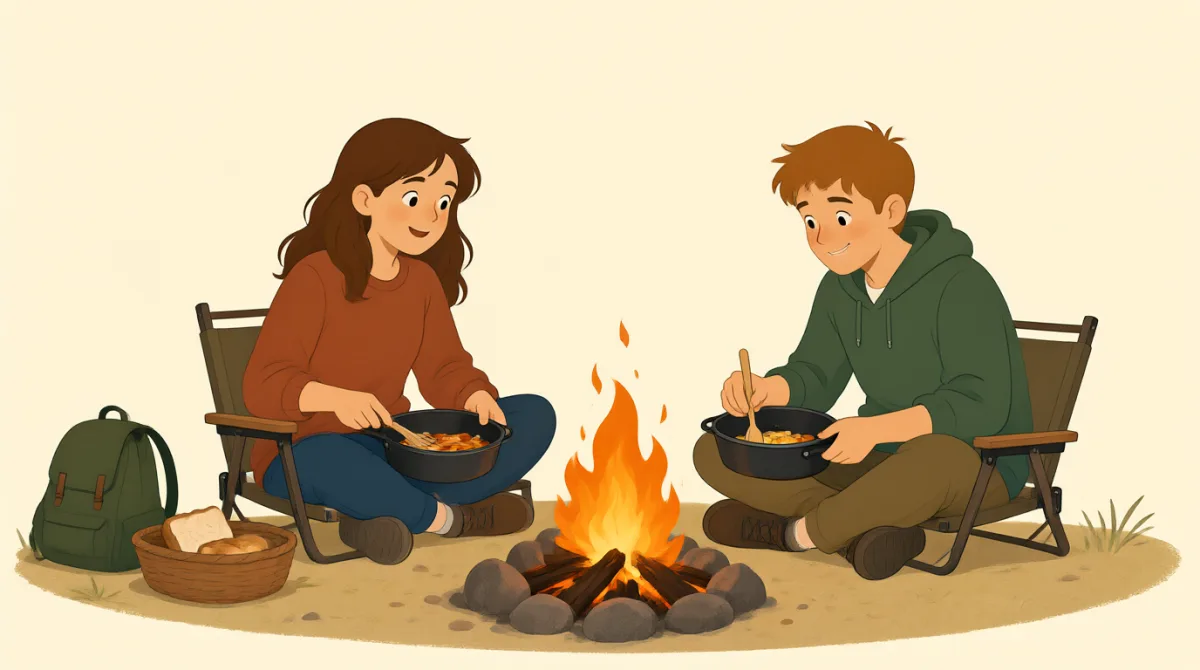

The fire is ready. What should we cook for dinner?
Ateş hazır. Akşam yemeğinde ne pişirelim?

Let’s cook sausages and potatoes. I brought some bread, too.
Sucuk ve patates pişirelim. Biraz ekmek de getirdim.
Great! Can you put the potatoes in the pan?
Harika! Patatesleri tavaya koyabilir misin?
Sure. We should cook them slowly so they don’t burn.
Tabii. Yanmasınlar diye yavaşça pişirmeliyiz.
I’ll turn the sausages. They smell really good.
Sucukları çevireceğim. Çok güzel kokuyorlar.
Dinner will be ready soon. What do you want to do tomorrow?
Akşam yemeği yakında hazır olur. Yarın ne yapmak istiyorsun?
I’d like to hike by the lake and take some pictures.
Göl kenarında yürüyüş yapmak ve birkaç fotoğraf çekmek istiyorum.
Sounds good. Let’s eat, then plan our morning.
Kulağa güzel geliyor. Önce yiyelim, sonra sabahımızı planlarız.
Kelime Bilgisi8
- cook for dinnerakşam yemeği için pişirmek
This means to prepare food for the evening meal. You can ask, “What should we cook for dinner?”
Bu ifade, akşam öğünü için yemek hazırlamak anlamına gelir. “What should we cook for dinner?” diye sorabilirsin.
- broughtgetirdi
“Brought” is the past form of “bring.” Use it to say you carried something with you, such as food on a camping trip.
“Brought”, “bring” fiilinin geçmiş zaman hâlidir. Kamp gezisinde yanına yiyecek almak gibi, bir şeyi yanında taşıdığını söylemek için kullanılır.
- put the potatoes in the panpatatesleri tavaya koymak
This means to place the potatoes inside the pan. You can use “put [something] in [a container]” when giving a simple instruction.
Bu ifade, patatesleri tavanın içine yerleştirmek anlamına gelir. Basit bir talimat verirken “put [something] in [a container]” kalıbını kullanabilirsin.
- cook them slowlyonları yavaşça pişirmek
This means to heat the food gently over time. You can use this phrase when food needs to cook without burning.
Bu ifade, yemeği zaman içinde hafifçe ısıtmak anlamına gelir. Yemeğin yanmadan pişmesi gerektiğinde bu ifadeyi kullanabilirsin.
- turn the sausagessucukları çevirmek
This means to move or flip the sausages so they cook on the other side. It is useful when cooking food in a pan or over a fire.
Bu ifade, sucukların diğer tarafının da pişmesi için onları hareket ettirmek veya ters çevirmek anlamına gelir. Tavada ya da ateş üzerinde yemek pişirirken kullanışlıdır.
- burnyanmak
Food burns when it gets too hot or cooks for too long. You can say, “Watch the food so it doesn’t burn.”
Yemek çok fazla ısındığında veya çok uzun süre piştiğinde yanar. “Watch the food so it doesn’t burn.” diyebilirsin.
- by the lakegöl kenarında
This means near or beside the lake. Use “by” to describe a place next to something.
Bu ifade, gölün yakınında veya yanında anlamına gelir. Bir şeyin yanındaki bir yeri tanımlamak için “by” kullanılır.
- take some picturesbirkaç fotoğraf çekmek
This means to use a camera or phone to make photographs. You can say, “I’d like to take some pictures” when talking about plans.
Bu ifade, fotoğraf çekmek için kamera veya telefon kullanmak anlamına gelir. Planlarından bahsederken “I’d like to take some pictures” diyebilirsin.
Önemli Cümleler8
- 1
What should we cook for dinner?
Akşam yemeğinde ne pişirelim?
Use this question to ask for ideas about what to prepare for an evening meal. You can replace “dinner” with another meal or occasion.
Bu soruyu, akşam öğünü için ne hazırlanacağı konusunda fikir istemek için kullanabilirsin. “Dinner” yerine başka bir öğün veya etkinlik yazabilirsin.
- 2
I brought some bread, too.
Biraz ekmek de getirdim.
This sentence tells someone that you brought an additional item. Use “I brought [something], too” to mention something you have with you.
Bu cümle, birine yanında ek bir şey getirdiğini söyler. Yanında bulunan bir şeyden bahsetmek için “I brought [something], too” kalıbını kullanabilirsin.
- 3
Can you put the potatoes in the pan?
Patatesleri tavaya koyabilir misin?
This is a polite way to ask someone to do a task. Replace “the potatoes” and “the pan” with other things and places.
Bu, birinden bir işi yapmasını istemenin kibar bir yoludur. “The potatoes” ve “the pan” yerine başka şeyler ve yerler yazabilirsin.
- 4
We should cook them slowly so they don’t burn.
Yanmasınlar diye yavaşça pişirmeliyiz.
Use “We should” to make a suggestion, and “so” to explain the reason. You can use this pattern to give practical advice.
Öneride bulunmak için “We should”, nedeni açıklamak için de “so” kullanılır. Pratik tavsiyeler vermek için bu kalıbı kullanabilirsin.
- 5
I’ll turn the sausages.
Sucukları çevireceğim.
Use “I’ll” to offer to do something now or soon. Replace “turn the sausages” with another helpful task.
Bir şeyi şimdi veya yakında yapmayı teklif etmek için “I’ll” kullanılır. “Turn the sausages” yerine başka bir yardımcı iş yazabilirsin.
- 6
What do you want to do tomorrow?
Yarın ne yapmak istiyorsun?
Use this question to ask someone about their plans for the next day. You can replace “tomorrow” with another time.
Bu soruyu, birine ertesi gün için planlarını sormak için kullanabilirsin. “Tomorrow” yerine başka bir zaman ifadesi yazabilirsin.
- 7
I’d like to hike by the lake and take some pictures.
Göl kenarında yürüyüş yapmak ve birkaç fotoğraf çekmek istiyorum.
Use “I’d like to” to talk about something you want to do. Add two activities with “and” to describe your plans.
Yapmak istediğin bir şeyden bahsetmek için “I’d like to” kullanılır. Planlarını anlatmak için “and” ile iki etkinlik ekleyebilirsin.
- 8
Let’s eat, then plan our morning.
Önce yiyelim, sonra sabahımızı planlarız.
Use “Let’s” to suggest doing something together. “Then” shows the order of the activities: eat first and plan afterward.
Bir şeyi birlikte yapmayı önermek için “Let’s” kullanılır. “Then”, etkinliklerin sırasını gösterir: önce yemek yenir, ardından plan yapılır.