Starting the Conversation
เริ่มต้นบทสนทนา
Jack brings up the damaged fence with Mia and explains why he thinks it should be repaired soon. They share their concerns and agree to look into the cost.
แจ็กคุยกับมีอาเรื่องรั้วที่เสียหาย และอธิบายว่าทำไมเขาถึงคิดว่าควรซ่อมเร็ว ๆ นี้ ทั้งคู่เล่าความกังวลของตัวเองและตกลงว่าจะลองดูค่าใช้จ่าย
บทสนทนา9
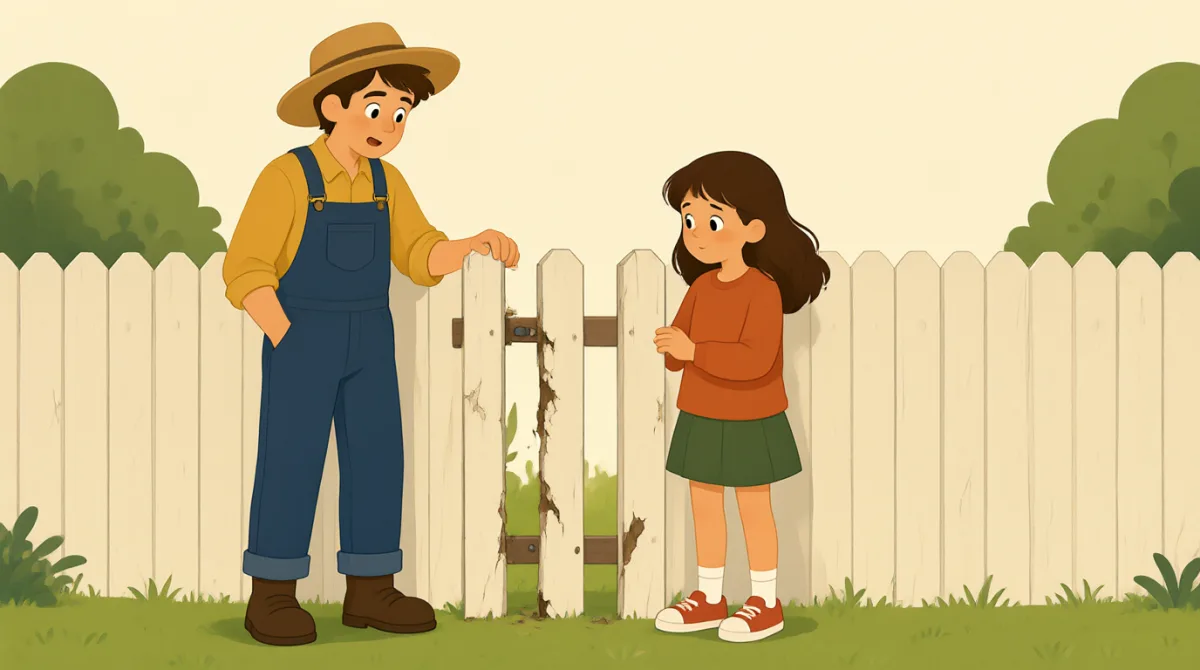

Hey, Mia, do you have a minute? I wanted to talk about the fence between our yards.
นี่ มีอา ว่างคุยสักครู่ไหม เราอยากคุยเรื่องรั้วที่กั้นระหว่างบ้านเราหน่อย

Sure. I noticed it was leaning more after the rain. Is that what you wanted to talk about?
ได้สิ เราสังเกตว่าหลังฝนตกมันเอียงมากขึ้น ใช่เรื่องนี้หรือเปล่าที่อยากคุยด้วย
Yeah. I’m worried it could fall over, especially with the next strong wind. It seems better to fix it soon.
ใช่ เรากลัวว่ามันจะล้ม โดยเฉพาะถ้ามีลมแรงอีกครั้ง น่าจะซ่อมเร็ว ๆ นี้ดีกว่า
That makes sense. I’d hate for it to fall into either yard and cause more damage. Have you seen how bad it is?
ฟังดูมีเหตุผลนะ เราคงไม่อยากให้มันล้มเข้ามาในสวนของฝ่ายไหนแล้วทำให้เสียหายมากขึ้น เธอเห็นหรือยังว่ามันเสียหายแค่ไหน
I checked the posts yesterday. Two are loose, and one board is cracked. It may need more than a quick patch.
เมื่อวานเราไปดูเสารั้วมา สองต้นโยกแล้วก็มีแผ่นไม้แตกหนึ่งแผ่น อาจต้องซ่อมมากกว่าแค่ปะนิดหน่อย
Okay. I’m a little concerned about the cost, but I agree we shouldn’t wait until it gets worse.
โอเค เรากังวลเรื่องค่าใช้จ่ายอยู่นิดหน่อย แต่เห็นด้วยว่าเราไม่ควรรอจนมันแย่ไปกว่านี้
I understand. We don’t have to decide on anything today. Maybe we can get a couple of repair estimates first.
เข้าใจนะ วันนี้เรายังไม่ต้องตัดสินใจอะไรก็ได้ บางทีเราอาจขอราคาประเมินค่าซ่อมสักสองเจ้าก่อน
That sounds fair. Since the fence is shared, we can look at the options together and talk about the cost afterward.
ฟังดูยุติธรรมดี ในเมื่อรั้วเป็นของเราสองคน เรามาดูทางเลือกด้วยกัน แล้วค่อยคุยเรื่องค่าใช้จ่ายกันทีหลัง
Great. I’ll call a local fence company tomorrow and ask them to take a look. Then we’ll know what we’re dealing with.
ดีเลย พรุ่งนี้เราจะโทรหาบริษัททำรั้วแถวนี้ แล้วขอให้เขามาดู จากนั้นเราก็จะรู้ว่าต้องจัดการกับอะไรบ้าง
คำศัพท์7
- do you have a minute?ว่างสักครู่ไหม
A polite way to ask if someone has time to talk briefly. You can use it to start a conversation about a specific topic.
เป็นวิธีสุภาพในการถามว่าอีกฝ่ายมีเวลาคุยสั้น ๆ ไหม ใช้เริ่มบทสนทนาเกี่ยวกับเรื่องใดเรื่องหนึ่งได้
- leaningเอียง
Sloping to one side instead of standing straight. Here, it describes the fence’s condition.
ลาดไปทางด้านใดด้านหนึ่ง แทนที่จะตั้งตรง ในที่นี้ใช้บอกสภาพของรั้ว
- fall overล้มลง
To tip over and land on the ground. Use it to talk about something that may not be stable.
เอียงจนล้มลงไปบนพื้น ใช้พูดถึงสิ่งที่อาจตั้งอยู่ไม่มั่นคง
- looseหลวม
Not firmly attached or fixed in place. Here, it describes fence posts that may need repair.
ไม่ได้ยึดติดหรืออยู่กับที่อย่างแน่นหนา ในที่นี้หมายถึงเสารั้วที่อาจต้องซ่อม
- a quick patchซ่อมปะเล็กน้อย
A small, simple repair that fixes a problem temporarily or without much work. Use it when comparing a minor fix with a larger repair.
การซ่อมเล็ก ๆ ง่าย ๆ เพื่อแก้ปัญหาชั่วคราวหรือโดยไม่ต้องทำอะไรมาก ใช้เมื่อเปรียบเทียบการซ่อมเล็กน้อยกับการซ่อมครั้งใหญ่
- repair estimatesราคาประเมินค่าซ่อม
Approximations of how much a repair will cost. You can ask for estimates before deciding whether or how to do the work.
การประมาณว่าการซ่อมจะมีค่าใช้จ่ายเท่าไร ขอราคาประเมินได้ก่อนตัดสินใจว่าจะซ่อมหรือซ่อมอย่างไร
- That sounds fair.ฟังดูยุติธรรมดี
A way to show that you think a suggestion or arrangement is reasonable. It is useful when agreeing to a plan.
ใช้แสดงว่าคุณคิดว่าข้อเสนอหรือข้อตกลงนั้นสมเหตุสมผล เหมาะสำหรับใช้เมื่อตกลงตามแผน
ประโยคสำคัญ8
- 1
Hey, Mia, do you have a minute?
นี่ มีอา ว่างคุยสักครู่ไหม
This is a friendly, polite way to begin a conversation. Replace the name to use it when asking someone else to talk.
นี่เป็นวิธีเริ่มบทสนทนาอย่างเป็นกันเองและสุภาพ เปลี่ยนชื่อเป็นชื่อคนอื่นได้เมื่อต้องการชวนเขาคุย
- 2
I’m worried it could fall over, especially with the next strong wind.
เรากลัวว่ามันจะล้ม โดยเฉพาะถ้ามีลมแรงอีกครั้ง
This sentence explains a concern and gives a reason for it. Use “I’m worried [something] could…” to describe a possible problem.
ประโยคนี้บอกความกังวลพร้อมเหตุผล ใช้ “I’m worried [something] could…” เพื่อพูดถึงปัญหาที่อาจเกิดขึ้น
- 3
It seems better to fix it soon.
น่าจะซ่อมมันเร็ว ๆ นี้ดีกว่า
This is a gentle way to recommend taking action. Replace “fix it” with another action and “soon” with a suitable time.
นี่เป็นวิธีแนะนำให้ลงมือทำอย่างนุ่มนวล เปลี่ยน “fix it” เป็นการกระทำอื่น และเปลี่ยน “soon” เป็นช่วงเวลาที่เหมาะสมได้
- 4
I’d hate for it to fall into either yard and cause more damage.
เราไม่อยากให้มันล้มเข้าไปในสวนของฝ่ายไหนแล้วทำให้เสียหายมากขึ้นเลย
This sentence explains why you want to prevent a possible problem. Use “I’d hate for [something] to…” to express concern about an unwanted result.
ประโยคนี้อธิบายว่าทำไมคุณถึงอยากป้องกันปัญหาที่อาจเกิดขึ้น ใช้ “I’d hate for [something] to…” เพื่อแสดงความกังวลต่อผลลัพธ์ที่ไม่พึงประสงค์
- 5
It may need more than a quick patch.
อาจต้องซ่อมมากกว่าแค่ปะนิดหน่อย
This is useful when you think a problem could require a bigger repair than expected. You can reuse “It may need more than…” to suggest that a simple solution may not be enough.
ประโยคนี้มีประโยชน์เมื่อคิดว่าปัญหาอาจต้องซ่อมใหญ่กว่าที่คาดไว้ คุณนำ “It may need more than…” ไปใช้ซ้ำเพื่อบอกว่าวิธีแก้แบบง่าย ๆ อาจไม่เพียงพอ
- 6
We don’t have to decide on anything today.
วันนี้เราไม่ต้องตัดสินใจอะไรก็ได้
This reassures someone that there is no need to make an immediate decision. Use “We don’t have to decide on…” to reduce pressure while considering options.
ประโยคนี้ช่วยให้อีกฝ่ายสบายใจว่าไม่จำเป็นต้องตัดสินใจทันที ใช้ “We don’t have to decide on…” เพื่อลดความกดดันระหว่างพิจารณาทางเลือก
- 7
Maybe we can get a couple of repair estimates first.
บางทีเราอาจขอราคาประเมินค่าซ่อมสักสองเจ้าก่อน
This suggests a practical next step without sounding too forceful. Replace “repair estimates” with other information or quotes you need before deciding.
ประโยคนี้เสนอขั้นตอนถัดไปที่นำไปทำได้จริง โดยไม่ฟังดูบังคับเกินไป คุณสามารถเปลี่ยน “repair estimates” เป็นข้อมูลหรือใบเสนอราคาอื่น ๆ ที่ต้องใช้ก่อนตัดสินใจได้
- 8
Since the fence is shared, we can look at the options together and talk about the cost afterward.
ในเมื่อรั้วเป็นของเราสองคน เรามาดูทางเลือกด้วยกัน แล้วค่อยคุยเรื่องค่าใช้จ่ายกันทีหลัง
This sentence gives a reason for working together and proposes how to proceed. Use “Since…” to introduce a reason before suggesting a shared plan.
ประโยคนี้ให้เหตุผลว่าทำไมควรร่วมมือกันและเสนอว่าจะดำเนินการต่ออย่างไร ใช้ “Since…” เพื่อเกริ่นเหตุผลก่อนเสนอแผนที่ทำร่วมกัน