Discussing Who Pays
คุยกันว่าใครจะเป็นคนจ่าย
Mia and Jack discuss how to split the repair costs, considering that the fence serves both yards. They agree to share the expense fairly and get a few quotes before deciding.
มีอากับแจ็กคุยกันเรื่องการแบ่งค่าใช้จ่ายในการซ่อมรั้ว โดยคำนึงว่ารั้วกั้นพื้นที่สวนของทั้งคู่ พวกเขาตกลงจะแบ่งค่าใช้จ่ายกันอย่างยุติธรรม และขอใบเสนอราคาหลายรายก่อนตัดสินใจ
บทสนทนา9
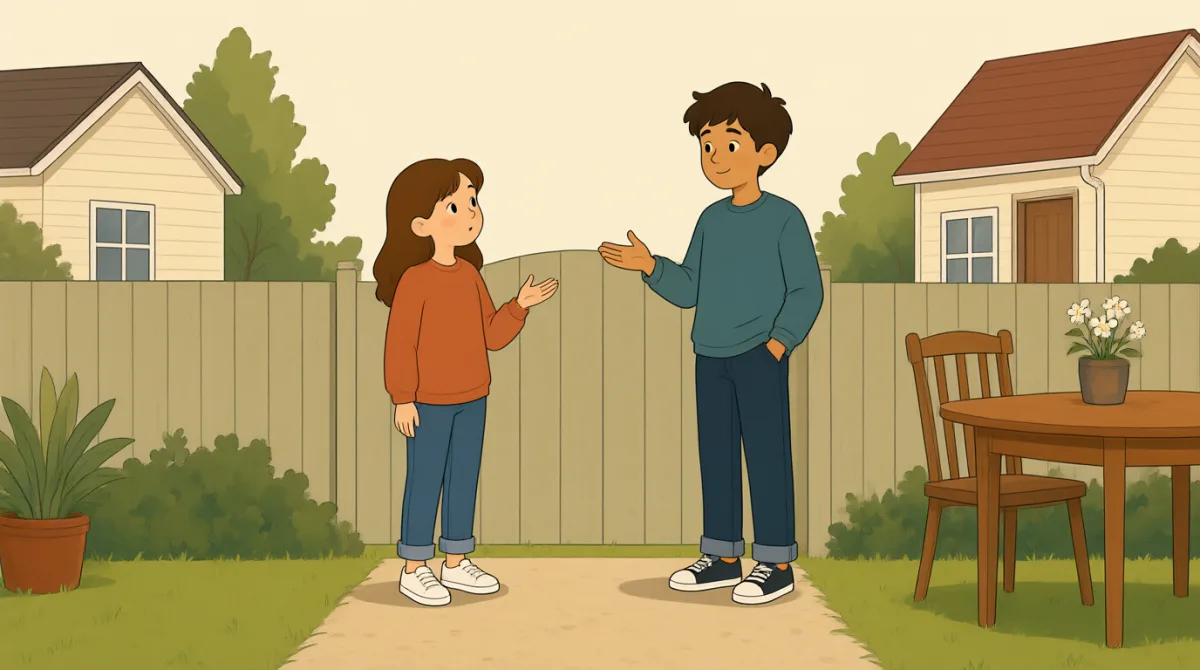

I got an estimate for the fence repair. It’s more than I expected, so we should talk about how to split the cost.
ฉันได้ใบประเมินราคาซ่อมรั้วมาแล้ว ราคาสูงกว่าที่คิดไว้ เราน่าจะคุยกันเรื่องการแบ่งค่าใช้จ่ายนะ

Definitely. Since the fence sits between our yards and we both use it, splitting the bill seems fair to me.
แน่นอน รั้วอยู่ระหว่างสวนของเราและเราทั้งคู่ก็ใช้รั้วนี้ แบ่งบิลกันดูยุติธรรมสำหรับผมนะ
I agree, though one section on my side looks worse. Would it make sense for each of us to pay for that side?
ฉันก็เห็นด้วยนะ แต่รั้วส่วนที่อยู่ฝั่งฉันดูแย่กว่า ถ้าเราแต่ละคนจ่ายค่าซ่อมฝั่งของตัวเองจะดีไหม
Maybe, but the whole fence needs support. If we only fix one section, the rest could start leaning before long.
ก็อาจจะนะ แต่รั้วทั้งหมดต้องเสริมความแข็งแรง ถ้าเราซ่อมแค่ส่วนเดียว อีกไม่นานส่วนที่เหลืออาจเริ่มเอียงได้
That’s a good point. I don’t want us to patch it up now and end up paying more for another repair later.
ฟังดูมีเหตุผลนะ ฉันไม่อยากให้เราแค่ซ่อมไปก่อนตอนนี้ แล้วสุดท้ายต้องจ่ายแพงกว่าเดิมเพื่อซ่อมอีกครั้งทีหลัง
How about we share the cost of the main repair fifty-fifty? If any extra work is only for one side, we can discuss that separately.
ถ้าเราแบ่งค่าซ่อมหลักกันคนละครึ่งเป็นไง ถ้ามีงานเพิ่มเติมที่ทำเพื่อฝั่งใดฝั่งหนึ่งโดยเฉพาะ เราค่อยมาคุยกันแยกต่างหากได้
That sounds fair. Before we decide, let’s get a couple more quotes so we know we’re not paying over the odds.
ฟังดูยุติธรรมดี ก่อนตัดสินใจ เราขอใบเสนอราคาเพิ่มอีกสักสองเจ้าดีไหม จะได้รู้ว่าเราไม่ได้จ่ายแพงเกินไป
Agreed. I’ll contact two local companies, and you can check whether the estimate includes materials and cleanup.
ตกลง ผมจะติดต่อบริษัทท้องถิ่นสองบริษัท ส่วนคุณช่วยเช็กได้ไหมว่าใบประเมินราคารวมค่าวัสดุและค่าทำความสะอาดแล้วหรือยัง
Great. Once we compare the quotes, we can choose a reasonable option and split the final bill evenly.
ดีเลย พอเราเปรียบเทียบใบเสนอราคาแล้ว เราก็เลือกตัวเลือกที่สมเหตุสมผลและแบ่งบิลสุดท้ายกันเท่า ๆ กันได้
คำศัพท์8
- estimateใบประเมินราคา
An estimate is an approximate price for a job. Here, it tells Mia how much the fence repair may cost.
estimate คือราคาคร่าว ๆ สำหรับงานหนึ่งงาน ในบทสนทนานี้ ใบประเมินราคาบอกมีอาว่าการซ่อมรั้วอาจมีค่าใช้จ่ายเท่าไร
- split the costแบ่งค่าใช้จ่าย
To split the cost is to divide the expense between people. You can use this phrase when discussing how to share a bill.
split the cost หมายถึงแบ่งค่าใช้จ่ายกันระหว่างหลายคน ใช้วลีนี้เมื่อพูดคุยเรื่องการแบ่งบิล
- seems fair to meดูยุติธรรมสำหรับฉัน
This means that something feels reasonable or just in your opinion. Use it to express agreement with a suggestion.
seems fair to me หมายถึง ในความเห็นของคุณ สิ่งนั้นดูสมเหตุสมผลหรือยุติธรรม ใช้เพื่อแสดงความเห็นด้วยกับข้อเสนอ
- before longอีกไม่นาน
This means soon or after a short time. Jack uses it to explain that the rest of the fence may start leaning soon.
before long หมายถึง เร็ว ๆ นี้หรือหลังจากเวลาผ่านไปไม่นาน แจ็กใช้คำนี้เพื่ออธิบายว่าส่วนที่เหลือของรั้วอาจเริ่มเอียงในไม่ช้า
- patch it upซ่อมแซมไปก่อน
To patch something up is to make a quick, limited repair. The phrase can also describe fixing a problem temporarily.
patch it up หมายถึงซ่อมแซมบางอย่างอย่างรวดเร็วและเพียงชั่วคราว วลีนี้ยังใช้พูดถึงการแก้ปัญหาแบบชั่วคราวได้ด้วย
- fifty-fiftyคนละครึ่ง
This means divided equally, with each person paying half. It is a casual way to talk about sharing costs.
fifty-fifty หมายถึงแบ่งเท่า ๆ กัน โดยแต่ละคนจ่ายครึ่งหนึ่ง เป็นวิธีพูดแบบไม่เป็นทางการเมื่อต้องการพูดถึงการแบ่งค่าใช้จ่าย
- over the oddsแพงเกินไป
If you pay over the odds, you pay more than something is worth or more than a reasonable price. It is a useful phrase when comparing prices.
ถ้าคุณจ่าย over the odds หมายถึงคุณจ่ายมากกว่ามูลค่าที่ควรจะเป็น หรือมากกว่าราคาที่สมเหตุสมผล วลีนี้มีประโยชน์เมื่อเปรียบเทียบราคา
- evenlyอย่างเท่า ๆ กัน
Evenly means in equal amounts. Here, Mia uses it to describe how they will divide the final bill.
evenly หมายถึงในจำนวนที่เท่ากัน ในที่นี้มีอาใช้คำนี้เพื่อบอกว่าพวกเขาจะแบ่งบิลสุดท้ายกันอย่างไร
ประโยคสำคัญ8
- 1
Since the fence sits between our yards and we both use it, splitting the bill seems fair to me.
รั้วอยู่ระหว่างสวนของเราและเราทั้งคู่ก็ใช้รั้วนี้ แบ่งบิลกันดูยุติธรรมสำหรับผมนะ
This sentence gives a reason for sharing a cost and then states an opinion. Reuse the pattern “Since [reason], [suggestion] seems fair to me” in discussions about shared expenses.
ประโยคนี้ให้เหตุผลว่าทำไมควรแบ่งค่าใช้จ่ายกัน แล้วจึงแสดงความคิดเห็น คุณสามารถนำรูปแบบ “Since [reason], [suggestion] seems fair to me” ไปใช้ในการพูดคุยเรื่องค่าใช้จ่ายร่วมกันได้
- 2
Would it make sense for each of us to pay for that side?
ถ้าเราแต่ละคนจ่ายค่าซ่อมฝั่งนั้นจะดีไหม
This is a polite way to ask whether a suggestion is reasonable. You can reuse “Would it make sense for [person] to [action]?” when proposing a plan.
นี่เป็นวิธีสุภาพในการถามว่าข้อเสนอนั้นสมเหตุสมผลหรือไม่ คุณสามารถนำรูปแบบ “Would it make sense for [person] to [action]?” ไปใช้เมื่อต้องการเสนอแผนได้
- 3
If we only fix one section, the rest could start leaning before long.
ถ้าเราซ่อมแค่ส่วนเดียว อีกไม่นานส่วนที่เหลืออาจเริ่มเอียงได้
This sentence explains a possible result of doing only part of a job. Use “If we only [action], [result] could…” to point out a risk.
ประโยคนี้อธิบายผลลัพธ์ที่อาจเกิดขึ้นจากการทำงานเพียงบางส่วน ใช้รูปแบบ “If we only [action], [result] could…” เพื่อชี้ให้เห็นความเสี่ยง
- 4
I don’t want us to patch it up now and end up paying more for another repair later.
ฉันไม่อยากให้เราแค่ซ่อมไปก่อนตอนนี้ แล้วสุดท้ายต้องจ่ายแพงกว่าเดิมเพื่อซ่อมอีกครั้งทีหลัง
This sentence explains a concern about a quick fix leading to a bigger expense. “End up + -ing” is useful for describing an unexpected final result.
ประโยคนี้อธิบายความกังวลว่าการซ่อมชั่วคราวอาจนำไปสู่ค่าใช้จ่ายที่สูงขึ้น “End up + -ing” มีประโยชน์เมื่อพูดถึงผลลัพธ์สุดท้ายที่ไม่คาดคิด
- 5
How about we share the cost of the main repair fifty-fifty?
ถ้าเราแบ่งค่าซ่อมหลักกันคนละครึ่งเป็นไง
This is a friendly way to suggest an equal split. Use “How about we…?” to offer a plan or solution.
นี่เป็นวิธีเป็นมิตรในการเสนอให้แบ่งค่าใช้จ่ายเท่า ๆ กัน ใช้ “How about we…?” เพื่อเสนอแผนหรือทางแก้ไข
- 6
If any extra work is only for one side, we can discuss that separately.
ถ้ามีงานเพิ่มเติมที่ทำเพื่อฝั่งใดฝั่งหนึ่งโดยเฉพาะ เราค่อยมาคุยกันแยกต่างหากได้
This sentence separates a shared expense from a cost that affects only one person. Reuse “If [condition], we can discuss that separately” when agreeing on how to handle exceptions.
ประโยคนี้แยกค่าใช้จ่ายที่ทั้งสองฝ่ายร่วมกันรับผิดชอบออกจากค่าใช้จ่ายที่มีผลต่อคนใดคนหนึ่งเท่านั้น คุณสามารถนำรูปแบบ “If [condition], we can discuss that separately” ไปใช้เมื่อตกลงกันว่าจะจัดการกับกรณียกเว้นอย่างไร
- 7
Before we decide, let’s get a couple more quotes so we know we’re not paying over the odds.
ก่อนตัดสินใจ เราขอใบเสนอราคาเพิ่มอีกสักสองเจ้าดีไหม จะได้รู้ว่าเราไม่ได้จ่ายแพงเกินไป
This sentence suggests comparing prices before making a decision. “Let’s get a couple more quotes” is useful when arranging repairs or other services.
ประโยคนี้เสนอให้เปรียบเทียบราคาก่อนตัดสินใจ “Let’s get a couple more quotes” มีประโยชน์เมื่อจัดการเรื่องการซ่อมแซมหรือบริการอื่น ๆ
- 8
Once we compare the quotes, we can choose a reasonable option and split the final bill evenly.
พอเราเปรียบเทียบใบเสนอราคาแล้ว เราก็เลือกตัวเลือกที่สมเหตุสมผลและแบ่งบิลสุดท้ายกันเท่า ๆ กันได้
This sentence lays out the next steps in a clear order. Use “Once we [action], we can [next action]” to explain a plan.
ประโยคนี้เรียงลำดับขั้นตอนถัดไปอย่างชัดเจน ใช้ “Once we [action], we can [next action]” เพื่ออธิบายแผน