Favorite Childhood Food
อาหารโปรดในวัยเด็ก
Mia asks Emma and Leo what food they loved as children. They talk about family meals and treats they still remember.
มีอาถามเอมมาและเลโอว่า ตอนเด็ก ๆ พวกเขาชอบกินอะไร ทั้งสามคุยกันถึงมื้ออาหารของครอบครัวและขนมที่ยังจำได้จนถึงทุกวันนี้
บทสนทนา9
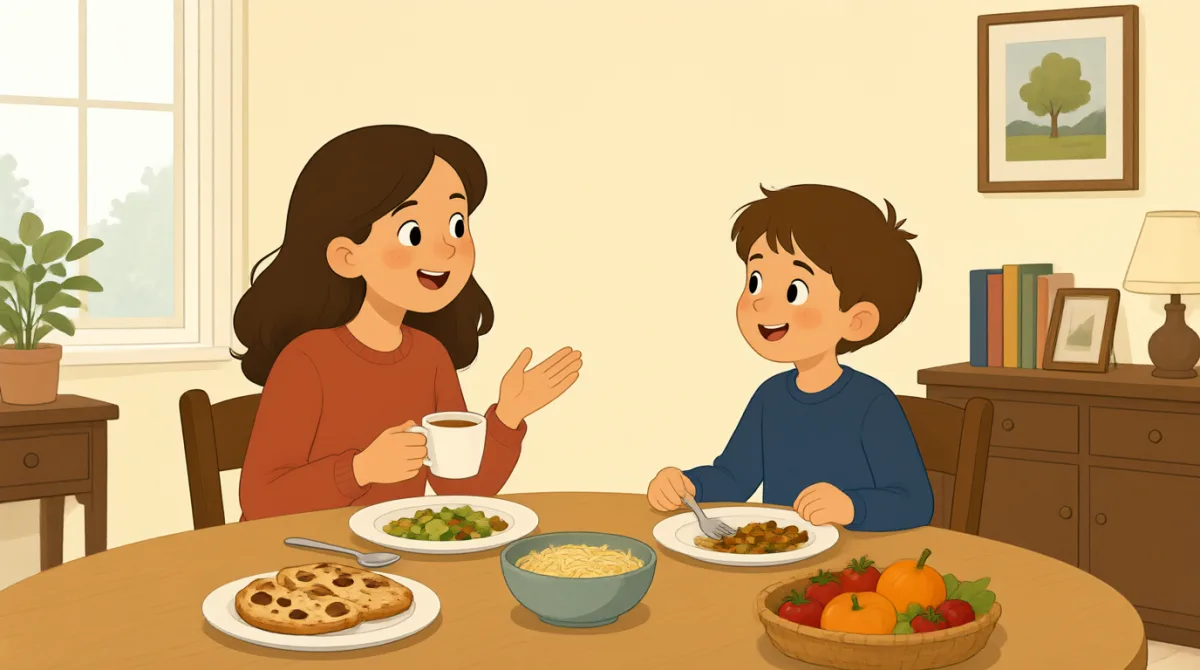

What food did you love as a child, Emma?
ตอนเด็ก ๆ เธอชอบกินอะไรเหรอ เอมมา

I loved my mother's tomato soup and grilled cheese sandwiches.
ฉันชอบซุปมะเขือเทศกับแซนด์วิชชีสย่างฝีมือแม่มากเลย

I always asked for my grandmother's noodles when I visited her.
ตอนที่ฉันไปหา คุณย่า ฉันจะขอกินบะหมี่ฝีมือคุณย่าทุกครั้งเลย
That sounds good! Did you eat them for lunch or dinner?
ฟังดูน่าอร่อยนะ! เธอกินเป็นมื้อกลางวันหรือมื้อเย็นเหรอ
Usually dinner. She made a big pot, and we all ate together.
ส่วนใหญ่เป็นมื้อเย็น คุณย่าจะทำหม้อใหญ่ ๆ แล้วเราก็กินด้วยกันทุกคน
My family had soup on cold days. I still remember its smell.
ครอบครัวฉันจะกินซุปในวันที่อากาศหนาว ฉันยังจำกลิ่นของมันได้อยู่เลย
Did you have a favorite treat, too?
แล้วเธอมีขนมโปรดด้วยไหม
Yes! My dad bought me strawberry ice cream after school sometimes.
มีสิ! บางครั้งพ่อจะซื้อไอศกรีมสตรอว์เบอร์รีให้ฉันหลังก็เลิกเรียน
Those little treats made childhood special, didn't they?
ขนมเล็ก ๆ น้อย ๆ พวกนั้นทำให้วัยเด็กพิเศษจริง ๆ เนอะ
คำศัพท์7
- as a childตอนเป็นเด็ก
This means when someone was young. Use it to talk about things you liked or did in the past.
หมายถึงช่วงที่คนคนนั้นยังเด็ก ใช้พูดถึงสิ่งที่คุณชอบหรือทำในอดีต
- grilled cheese sandwichesแซนด์วิชชีสย่าง
These are sandwiches with melted cheese, often cooked in a pan. Emma remembers eating them with tomato soup.
คือแซนด์วิชที่ใส่ชีสละลายและมักนำไปปรุงในกระทะ เอมมาจำได้ว่าเธอกินแซนด์วิชนี้คู่กับซุปมะเขือเทศ
- asked forขอ
This means requested or wanted something. You can say, “I asked for my favorite dessert.”
หมายถึงร้องขอหรือต้องการบางสิ่ง คุณสามารถพูดว่า “I asked for my favorite dessert.” ได้
- visited herไปหาเธอ
This means went to see her. Use “visited” to talk about going to someone’s home or another place.
หมายถึงไปพบเธอ ใช้ “visited” เมื่อพูดถึงการไปบ้านของใครสักคนหรือไปยังสถานที่อีกแห่งหนึ่ง
- a big potหม้อใหญ่ ๆ
A pot is a deep cooking container, and “a big pot” means a large one. You can use this phrase when talking about cooking food for many people.
หม้อคือภาชนะทรงลึกสำหรับทำอาหาร และ “a big pot” หมายถึงหม้อใบใหญ่ คุณใช้วลีนี้เมื่อพูดถึงการทำอาหารสำหรับหลายคนได้
- ate togetherกินด้วยกัน
This means shared a meal with other people. You can use it to describe a family meal.
หมายถึงร่วมรับประทานอาหารกับคนอื่น ใช้พูดบรรยายมื้ออาหารของครอบครัวได้
- after schoolหลังเลิกเรียน
This means when school has finished for the day. Use it to talk about activities or treats that happen then.
หมายถึงช่วงที่โรงเรียนเลิกแล้วในวันนั้น ใช้พูดถึงกิจกรรมหรือขนมที่เกิดขึ้นในช่วงเวลานั้น
ประโยคสำคัญ8
- 1
What food did you love as a child, Emma?
ตอนเด็ก ๆ เธอชอบกินอะไรเหรอ เอมมา
This is a friendly way to ask about someone’s childhood favorites. You can replace “food” with another topic, such as “What game did you love as a child?”
นี่เป็นวิธีที่เป็นกันเองในการถามถึงสิ่งที่ใครบางคนชอบในวัยเด็ก คุณสามารถเปลี่ยน “food” เป็นหัวข้ออื่นได้ เช่น “What game did you love as a child?”
- 2
I loved my mother's tomato soup and grilled cheese sandwiches.
ฉันชอบซุปมะเขือเทศกับแซนด์วิชชีสย่างฝีมือแม่มากเลย
This sentence describes favorite foods from the past. Use “I loved” to talk about something you enjoyed when you were younger.
ประโยคนี้บรรยายอาหารโปรดในอดีต ใช้ “I loved” เพื่อพูดถึงสิ่งที่คุณชอบตอนอายุน้อยกว่านี้
- 3
I always asked for my grandmother's noodles when I visited her.
ตอนที่ฉันไปหา คุณย่า ฉันจะขอกินบะหมี่ฝีมือคุณย่าทุกครั้งเลย
This sentence connects a repeated request with a past visit. You can use “I always asked for...” to describe something you often wanted.
ประโยคนี้เชื่อมโยงการขอสิ่งเดิมซ้ำ ๆ กับการไปเยี่ยมในอดีต คุณสามารถใช้ “I always asked for...” เพื่อบรรยายสิ่งที่คุณมักต้องการ
- 4
Did you eat them for lunch or dinner?
เธอกินเป็นมื้อกลางวันหรือมื้อเย็นเหรอ
This is a simple way to ask when someone ate a food. Use “Did you eat it for lunch or dinner?” when asking about one food.
นี่เป็นวิธีง่าย ๆ ในการถามว่าใครบางคนกินอาหารนั้นเมื่อไร ใช้ “Did you eat it for lunch or dinner?” เมื่อถามถึงอาหารหนึ่งอย่าง
- 5
She made a big pot, and we all ate together.
คุณย่าจะทำหม้อใหญ่ ๆ แล้วเราก็กินด้วยกันทุกคน
This sentence describes preparing food and sharing a meal. You can use “we all ate together” when talking about a group meal.
ประโยคนี้บรรยายการเตรียมอาหารและการร่วมรับประทานมื้อเดียวกัน คุณสามารถใช้ “we all ate together” เมื่อพูดถึงการกินอาหารเป็นกลุ่ม
- 6
My family had soup on cold days.
ครอบครัวฉันจะกินซุปในวันที่อากาศหนาว
This sentence explains when a family usually ate a certain food. Use “on [kind of] days” to talk about a regular routine, such as “on rainy days.”
ประโยคนี้อธิบายว่าครอบครัวมักกินอาหารชนิดหนึ่งเมื่อไร ใช้ “on [kind of] days” เพื่อพูดถึงกิจวัตรที่เกิดขึ้นเป็นประจำ เช่น “on rainy days.”
- 7
My dad bought me strawberry ice cream after school sometimes.
บางครั้งพ่อจะซื้อไอศกรีมสตรอว์เบอร์รีให้ฉันหลังเลิกเรียน
This sentence tells what someone bought and when. You can reuse “bought me [something] after school” to talk about a treat or gift.
ประโยคนี้บอกว่าใครซื้ออะไรให้และซื้อเมื่อไร คุณสามารถนำ “bought me [something] after school” ไปใช้พูดถึงขนมหรือของขวัญได้
- 8
Those little treats made childhood special, didn't they?
ขนมเล็ก ๆ น้อย ๆ พวกนั้นทำให้วัยเด็กพิเศษจริง ๆ เนอะ
This is a warm way to share a thought and invite someone to agree. You can use “..., didn't they?” after a positive statement.
นี่เป็นวิธีอบอุ่นในการแบ่งปันความคิดและชวนให้อีกฝ่ายเห็นด้วย คุณสามารถใช้ “..., didn't they?” ต่อท้ายประโยคบอกเล่าในเชิงบวกได้