Getting Medicine
รับยา
Mia asks the pharmacist, Grace, how much medicine to give and when to give it. Grace explains the label and reminds her not to give more than the recommended amount.
มีอาถามเกรซ เภสัชกร ว่าควรให้ยาเท่าไรและให้เมื่อไร เกรซอธิบายวิธีอ่านฉลากยาและเตือนเธอว่าอย่าให้ยาเกินปริมาณที่แนะนำ
บทสนทนา9
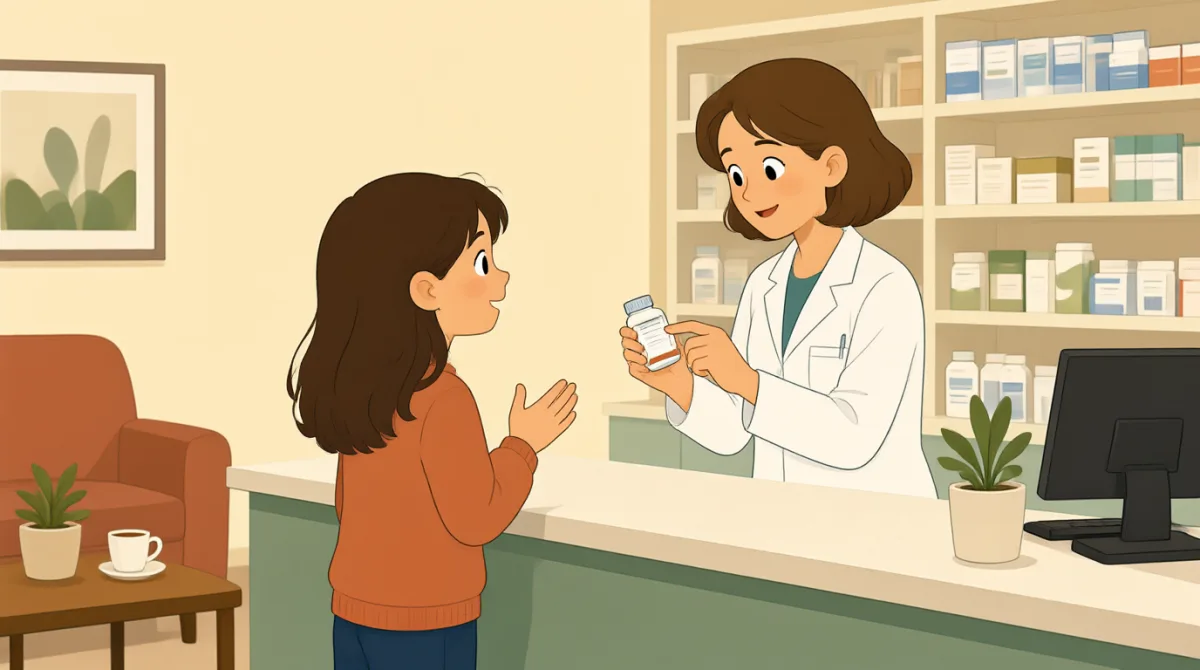

Hi, Grace. I need medicine for my child’s fever. The doctor said to use this.
สวัสดี เกรซ ฉันต้องการยาลดไข้ให้ลูก หมอบอกให้ใช้ยานี้

Sure. How old is your child, and what does the label say?
ได้เลยค่ะ ลูกคุณอายุเท่าไร แล้วฉลากเขียนว่าอย่างไรคะ
My child is six. I’m not sure how much to give.
ลูกฉันอายุหกขวบ ฉันไม่แน่ใจว่าควรให้เท่าไร
Let’s check the label. It says to give five milliliters every six hours.
มาดูฉลากกันค่ะ เขียนว่าให้ครั้งละห้ามิลลิลิตร ทุกหกชั่วโมง
Should I give it with food, or can I give it now?
ควรให้ยาพร้อมอาหารไหมคะ หรือให้ตอนนี้ได้เลย
You can give it now. Use the measuring cup, not a kitchen spoon.
ให้ตอนนี้ได้ค่ะ ใช้ถ้วยตวงนะคะ อย่าใช้ช้อนกินข้าว
Okay. Can I give another dose if the fever comes back sooner?
เข้าใจแล้วค่ะ ถ้าไข้กลับมาเร็วกว่านั้น ฉันให้ยาอีกครั้งได้ไหม
No. Wait six hours, and don’t give more than the label says.
ไม่ได้นะคะ รอให้ครบหกชั่วโมง และอย่าให้ยาเกินที่ฉลากระบุค่ะ
Got it. I’ll write down each time I give the medicine. Thank you.
เข้าใจแล้วค่ะ ฉันจะจดเวลาทุกครั้งที่ให้ยา ขอบคุณค่ะ
คำศัพท์8
- how much to giveให้ยาเท่าไร
This asks about the amount of medicine to use. You can use it to ask how much of something is needed.
ใช้ถามเกี่ยวกับปริมาณยาที่ควรใช้ และยังใช้ถามได้ว่าต้องใช้สิ่งใดสิ่งหนึ่งมากน้อยแค่ไหน
- check the labelตรวจดูฉลาก
This means to read the instructions on the medicine package. You can check a label to find important information.
หมายถึงอ่านคำแนะนำบนบรรจุภัณฑ์ยา การตรวจดูฉลากช่วยให้รู้ข้อมูลสำคัญ
- five millilitersห้ามิลลิลิตร
This is the amount of medicine the label says to give. Milliliters are used to measure liquids.
นี่คือปริมาณยาที่ฉลากระบุให้ใช้ มิลลิลิตรเป็นหน่วยวัดของเหลว
- every six hoursทุกหกชั่วโมง
This tells you how often to give the medicine. You can use “every” with a time period to describe how often something happens.
วลีนี้บอกว่าควรให้ยาบ่อยแค่ไหน คุณใช้ “every” คู่กับช่วงเวลาเพื่อบอกว่าสิ่งหนึ่งเกิดขึ้นบ่อยเพียงใดได้
- measuring cupถ้วยตวง
This is a small cup used to measure the right amount of liquid medicine. Use it when you need an accurate amount.
ถ้วยขนาดเล็กที่ใช้ตวงปริมาณยาน้ำให้ถูกต้อง ควรใช้เมื่อต้องการตวงให้ได้ปริมาณที่แม่นยำ
- comes back soonerกลับมาเร็วกว่ากำหนด
Here, this means the fever returns before it is time for the next dose. “Come back” can describe a problem that returns.
ในที่นี้หมายถึงไข้กลับมาก่อนถึงเวลาให้ยาครั้งถัดไป “Come back” ใช้พูดถึงปัญหาที่กลับมาเกิดขึ้นอีกได้
- give another doseให้ยาอีกครั้ง
This means to give one more amount of medicine. You can use “another dose” when talking about taking medicine again.
หมายถึงให้ยาเพิ่มอีกหนึ่งครั้ง ใช้ “another dose” เมื่อพูดถึงการกินยาหรือให้ยาอีกครั้ง
- write downจดบันทึก
This means to record something on paper. You can write down the time you give medicine so you can keep track.
หมายถึงเขียนบันทึกข้อมูลลงบนกระดาษ คุณจดเวลาให้ยาไว้ได้เพื่อจะได้ติดตามว่าให้ยาไปเมื่อไร
ประโยคสำคัญ7
- 1
How old is your child, and what does the label say?
ลูกคุณอายุเท่าไร แล้วฉลากเขียนว่าอย่างไรคะ
This is a useful way to ask for a child’s age and check instructions. You can reuse the question to ask about someone’s age and what a label or notice says.
ประโยคนี้ใช้ถามอายุของเด็กและตรวจสอบคำแนะนำได้ คุณนำรูปแบบคำถามนี้ไปถามอายุของใครสักคน และถามว่าฉลากหรือประกาศเขียนว่าอย่างไรได้
- 2
I’m not sure how much to give.
ฉันไม่แน่ใจว่าควรให้เท่าไร
Use this when you do not know the right amount of something. Replace “give” with another verb to ask about a task you are unsure how to do.
ใช้ประโยคนี้เมื่อคุณไม่รู้ว่าควรใช้สิ่งใดสิ่งหนึ่งในปริมาณเท่าไร คุณเปลี่ยน “give” เป็นคำกริยาอื่นเพื่อถามเกี่ยวกับสิ่งที่ไม่แน่ใจว่าควรทำอย่างไรได้
- 3
It says to give five milliliters every six hours.
เขียนว่าให้ครั้งละห้ามิลลิลิตรทุกหกชั่วโมง
This sentence explains an instruction and how often to follow it. You can use “It says to…” to report directions from a label or other source.
ประโยคนี้บอกคำแนะนำและความถี่ในการทำตาม ใช้ “It says to…” เพื่อบอกต่อคำแนะนำจากฉลากหรือแหล่งข้อมูลอื่นได้
- 4
Should I give it with food, or can I give it now?
ควรให้ยาพร้อมอาหารไหมคะ หรือให้ตอนนี้ได้เลย
This asks whether something should be done with food or can be done right away. You can reuse this pattern to ask about the right time or conditions for an action.
ประโยคนี้ใช้ถามว่าควรทำสิ่งหนึ่งพร้อมอาหารหรือทำได้ทันที คุณนำรูปแบบนี้ไปถามเกี่ยวกับเวลาหรือเงื่อนไขที่เหมาะสมในการทำสิ่งต่าง ๆ ได้
- 5
Use the measuring cup, not a kitchen spoon.
ใช้ถ้วยตวงนะคะ อย่าใช้ช้อนกินข้าว
This gives a clear instruction and says what not to use. You can use “Use X, not Y” to recommend one option over another.
ประโยคนี้บอกวิธีทำอย่างชัดเจนและระบุสิ่งที่ไม่ควรใช้ คุณใช้รูปแบบ “Use X, not Y” เพื่อแนะนำให้เลือกสิ่งหนึ่งแทนอีกสิ่งหนึ่งได้
- 6
No. Wait six hours, and don’t give more than the label says.
ไม่ค่ะ รอให้ครบหกชั่วโมง และอย่าให้ยาเกินที่ฉลากระบุ
This gives a warning and a clear limit. You can use “don’t give more than…” to remind someone not to exceed an amount or recommendation.
ประโยคนี้เป็นคำเตือนและระบุขีดจำกัดไว้อย่างชัดเจน คุณใช้ “don’t give more than…” เพื่อเตือนใครสักคนว่าอย่าใช้หรือให้เกินปริมาณหรือคำแนะนำที่กำหนด
- 7
I’ll write down each time I give the medicine.
ฉันจะจดเวลาทุกครั้งที่ให้ยา
This says what someone plans to do to keep track of medicine. You can use “I’ll write down…” to describe a plan to record important information.
ประโยคนี้บอกแผนว่าจะติดตามการให้ยาอย่างไร คุณใช้ “I’ll write down…” เพื่อพูดถึงแผนที่จะจดข้อมูลสำคัญได้