Finding Seats Outside
หาที่นั่งด้านนอก
On the ferry, Emma and Jack look for seats outside. They find a place to sit and enjoy the view.
บนเรือเฟอร์รี เอ็มมากับแจ็กมองหาที่นั่งด้านนอก ทั้งคู่หาที่นั่งได้และเพลิดเพลินกับทิวทัศน์
บทสนทนา8
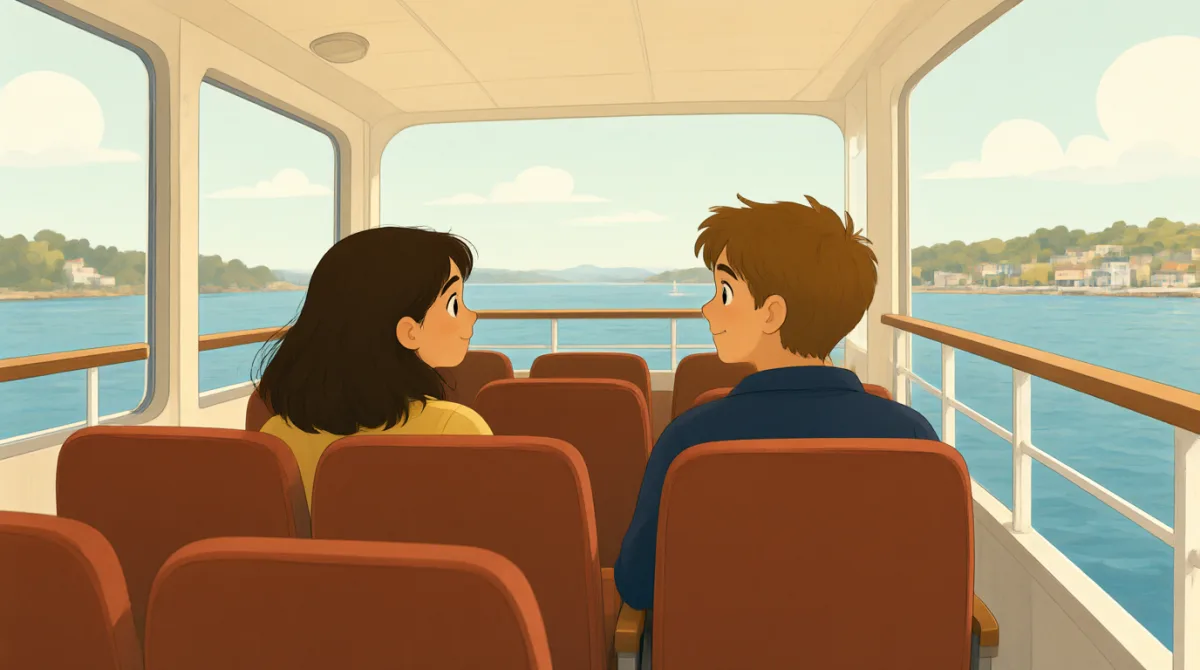

Is there a place to sit outside? I’d love to see the view.
มีที่นั่งด้านนอกไหมนะ? ฉันอยากชมวิวจัง

I think there are seats on the upper deck. Let’s go up.
คิดว่าบนดาดฟ้าชั้นบนมีที่นั่งนะ ขึ้นไปกันเถอะ
Are these seats free? I don’t see anyone here.
ที่นั่งพวกนี้ว่างไหม? ไม่เห็นมีใครอยู่เลย
They look free. Let’s sit here, near the rail.
ดูเหมือนจะว่างนะ นั่งตรงนี้ใกล้ราวกันเถอะ
Great! The water looks so blue today.
เยี่ยมเลย! วันนี้น้ำทะเลสีฟ้าสวยมาก
Yeah, and we can see the island from here.
ใช่ แล้วจากตรงนี้เราก็มองเห็นเกาะด้วย
I’m glad we came outside. It’s much nicer up here.
ดีใจจังที่เราออกมาข้างนอก ตรงนี้ดีกว่าเยอะเลย
Me too. Let’s enjoy the ride before we arrive.
ฉันก็เหมือนกัน มาเพลิดเพลินกับการนั่งเรือก่อนที่เราจะถึงที่หมายกันเถอะ
คำศัพท์8
- outsideด้านนอก
In this conversation, outside means in the open air, not inside the ferry. You can ask, “Can we sit outside?”
ในบทสนทนานี้ outside หมายถึงอยู่กลางแจ้ง ไม่ได้อยู่ข้างในเรือเฟอร์รี ถามได้ว่า “Can we sit outside?” (เรานั่งข้างนอกได้ไหม?)
- the viewทิวทัศน์
The view is what you can see around you, such as the sea and the island. Use “I’d love to see the view” to say you want to look at the scenery.
The view คือสิ่งที่มองเห็นรอบตัว เช่น ทะเลกับเกาะ ใช้ “I’d love to see the view” เพื่อบอกว่าอยากชมทิวทัศน์
- upper deckดาดฟ้าชั้นบน
The upper deck is the higher level of a boat or ferry. You can say, “Let’s go up to the upper deck.”
The upper deck คือชั้นที่อยู่สูงกว่าของเรือหรือเรือเฟอร์รี พูดได้ว่า “Let’s go up to the upper deck.” (ขึ้นไปที่ดาดฟ้าชั้นบนกันเถอะ)
- freeว่าง
Here, free means available for someone to use, not costing no money. You can ask, “Is this seat free?”
ในที่นี้ free หมายถึงมีที่ว่างให้ใช้ ไม่ได้หมายถึงไม่เสียเงิน ถามได้ว่า “Is this seat free?” (ที่นั่งนี้ว่างไหม?)
- near the railใกล้ราวกั้น
Near the rail means close to the barrier along the edge of the deck. You can use this phrase to describe where you want to sit.
Near the rail หมายถึงอยู่ใกล้ราวกั้นที่ขอบดาดฟ้า ใช้คำนี้บอกได้ว่าอยากนั่งตรงไหน
- the islandเกาะ
An island is land with water all around it. In this dialogue, Emma and Jack can see the island from the ferry.
An island คือผืนดินที่มีน้ำล้อมรอบ ในบทสนทนานี้ เอ็มมากับแจ็กมองเห็นเกาะจากเรือเฟอร์รี
- came outsideออกมาข้างนอก
“Came outside” means moved from inside to a place outdoors. You can say, “I’m glad we came outside” when you are happy you went outdoors.
“Came outside” หมายถึงออกจากข้างในไปอยู่กลางแจ้ง พูดว่า “I’m glad we came outside” ได้เมื่อดีใจที่ได้ออกมาข้างนอก
- arriveมาถึง
To arrive means to reach a place. Use “before we arrive” to talk about what you can do before reaching your destination.
To arrive หมายถึงไปถึงสถานที่หนึ่ง ใช้ “before we arrive” พูดถึงสิ่งที่ทำได้ก่อนถึงจุดหมาย
ประโยคสำคัญ7
- 1
Is there a place to sit outside?
มีที่นั่งข้างนอกไหม?
Use this question to ask if there is somewhere to sit outdoors. You can replace “outside” with another place, such as “near the window.”
ใช้คำถามนี้ถามว่ามีที่นั่งกลางแจ้งไหม แทน “outside” ด้วยสถานที่อื่นได้ เช่น “near the window” (ใกล้หน้าต่าง)
- 2
I think there are seats on the upper deck.
คิดว่าบนดาดฟ้าชั้นบนน่าจะมีที่นั่งนะ
This is a useful way to share information when you are not completely sure. You can replace “seats” or “on the upper deck” with other details.
ประโยคนี้ใช้บอกข้อมูลเมื่อยังไม่แน่ใจเต็มที่ แทน “seats” หรือ “on the upper deck” ด้วยรายละเอียดอื่นได้
- 3
Are these seats free?
ที่นั่งพวกนี้ว่างไหม?
Use this question to check if seats are available. You can also ask, “Is this seat free?” when asking about one seat.
ใช้คำถามนี้เช็กว่ามีที่นั่งว่างไหม ถ้าถามถึงที่นั่งเดียวก็ถามได้ว่า “Is this seat free?”
- 4
Let’s sit here, near the rail.
นั่งตรงนี้ใกล้ราวกันเถอะ
Use “Let’s” to suggest doing something together, and add a place to say where. For example, “Let’s sit here, near the window.”
ใช้ “Let’s” เพื่อชวนทำอะไรด้วยกัน แล้วเติมสถานที่เพื่อบอกว่าจะทำที่ไหน เช่น “Let’s sit here, near the window.”
- 5
The water looks so blue today.
วันนี้น้ำทะเลดูสีฟ้าสวยมาก
This sentence describes what you see and gives a simple opinion. You can change “blue” to another describing word, such as “calm.”
ประโยคนี้บรรยายสิ่งที่เห็นพร้อมแสดงความเห็นง่าย ๆ เปลี่ยน “blue” เป็นคำบรรยายอื่นได้ เช่น “calm”
- 6
I’m glad we came outside.
ดีใจจังที่เราออกมาข้างนอก
Use this sentence to say you are happy about a choice you made. You can replace “came outside” with another activity, such as “took the ferry.”
ใช้ประโยคนี้บอกว่าดีใจกับสิ่งที่เลือกทำ แทน “came outside” ด้วยกิจกรรมอื่นได้ เช่น “took the ferry”
- 7
Let’s enjoy the ride before we arrive.
มาเพลิดเพลินกับการนั่งเรือก่อนที่เราจะถึงที่หมายกันเถอะ
This is a friendly suggestion to enjoy a journey before reaching your destination. You can replace “the ride” with “the trip.”
ประโยคนี้เป็นคำชวนอย่างเป็นกันเองให้เพลิดเพลินกับการเดินทางก่อนถึงจุดหมาย แทน “the ride” ด้วย “the trip” ได้