Arriving on the Island
มาถึงเกาะ
The ferry reaches the island, and Emma and Jack get ready to go ashore. They talk about what to see first.
เรือเฟอร์รี่มาถึงเกาะแล้ว เอ็มมาและแจ็กเตรียมตัวลงจากเรือ ทั้งคู่คุยกันว่าจะไปเที่ยวที่ไหนก่อน
บทสนทนา8
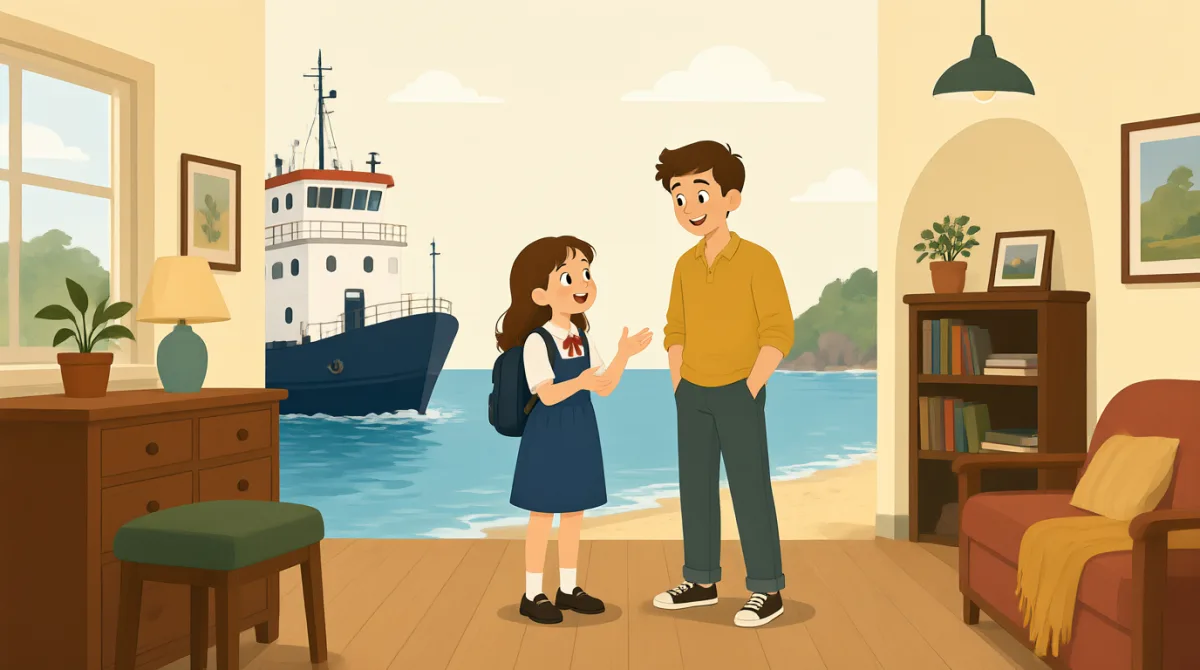

We’re here! The ferry is slowing down, so let’s get our bags ready.
ถึงแล้ว! เรือเฟอร์รี่กำลังชะลอความเร็ว เตรียมกระเป๋ากันเถอะ

Great! I can see the island now. Do we walk off this way?
ดีเลย! ตอนนี้ฉันเห็นเกาะแล้ว เราลงจากเรือทางนี้ใช่ไหม
Yes, follow the signs to the exit. The crew will open the gate soon.
ใช่ เดินตามป้ายไปทางออกนะ ลูกเรือจะเปิดประตูให้ในไม่ช้า
I’m excited to explore! What should we see first?
ตื่นเต้นจัง อยากไปสำรวจแล้ว! เราควรไปดูอะไรก่อนดี
Let’s walk to the harbor and find the visitor center. It’s nearby.
เดินไปที่ท่าเรือแล้วหาศูนย์บริการนักท่องเที่ยวกันเถอะ อยู่ใกล้ๆ นี่เอง
Good idea. We can pick up a map and ask about the beach.
เป็นความคิดที่ดี เราไปหยิบแผนที่แล้วถามเรื่องชายหาดกันได้
Sure. After that, we can follow the path along the water.
ได้เลย หลังจากนั้นเราก็เดินตามทางเลียบชายฝั่งได้
Perfect! I’ll take my bag. Let’s go ashore.
เยี่ยมเลย! ฉันจะถือกระเป๋าเอง ลงจากเรือกันเถอะ
คำศัพท์8
- get our bags readyเตรียมกระเป๋าให้พร้อม
To prepare your bags so you can take them with you. You can say this when you are about to leave a place.
เตรียมกระเป๋าไว้ให้พร้อมเพื่อจะได้เอาติดตัวไปด้วย ใช้พูดได้เมื่อกำลังจะออกจากที่แห่งหนึ่ง
- walk offเดินลงจากเรือ
To leave a boat or other vehicle by walking. Here, Emma asks if this is the way to leave the ferry.
ลงจากเรือหรือยานพาหนะอื่นด้วยการเดิน ในบทสนทนานี้ เอ็มมาถามว่าทางนี้เป็นทางลงจากเรือเฟอร์รี่หรือเปล่า
- follow the signsเดินตามป้าย
To go in the direction shown by signs. This is useful when finding your way around a station, airport, or ferry terminal.
เดินไปตามทิศทางที่ป้ายบอก วลีนี้มีประโยชน์เวลาเดินหาทางในสถานี สนามบิน หรือท่าเรือเฟอร์รี่
- crewลูกเรือ
The people who work on a ship or ferry. Here, the crew will open the gate for passengers.
คนที่ทำงานบนเรือหรือเรือเฟอร์รี่ ในที่นี้ ลูกเรือจะเปิดประตูให้ผู้โดยสาร
- visitor centerศูนย์บริการนักท่องเที่ยว
A place where visitors can get information about an area. You can often pick up maps and ask questions there.
สถานที่ที่นักท่องเที่ยวไปขอข้อมูลเกี่ยวกับบริเวณนั้นได้ ที่นั่นมักมีแผนที่ให้หยิบและเปิดโอกาสให้สอบถามได้
- pick up a mapหยิบแผนที่
To get or collect a map. You can use this phrase when you need a map for a new place.
รับหรือหยิบแผนที่มาใช้ วลีนี้ใช้ได้เมื่อคุณต้องการแผนที่สำหรับสถานที่ใหม่
- along the waterเลียบชายฝั่ง
Beside the water, following its edge. You can use this phrase to describe a path or walk near the sea, a lake, or a river.
อยู่ข้างแหล่งน้ำและไปตามแนวขอบของแหล่งน้ำนั้น ใช้บรรยายเส้นทางหรือการเดินใกล้ทะเล ทะเลสาบ หรือแม่น้ำได้
- go ashoreลงจากเรือ
To leave a boat and step onto land. This phrase is often used when arriving by ferry or ship.
ออกจากเรือแล้วก้าวขึ้นบนฝั่ง วลีนี้มักใช้เมื่อเดินทางมาถึงด้วยเรือเฟอร์รี่หรือเรือโดยสาร
ประโยคสำคัญ8
- 1
The ferry is slowing down, so let’s get our bags ready.
เรือเฟอร์รี่กำลังชะลอความเร็ว เตรียมกระเป๋ากันเถอะ
This sentence explains what is happening and suggests what to do next. Use “Let’s get [something] ready” to prepare for an upcoming activity.
ประโยคนี้บอกว่าเกิดอะไรขึ้นและชวนให้ทำสิ่งต่อไป ใช้ “Let’s get [something] ready” เพื่อบอกให้เตรียมบางอย่างให้พร้อมสำหรับกิจกรรมที่กำลังจะมาถึง
- 2
Do we walk off this way?
เราลงจากเรือทางนี้ใช่ไหม
This is a simple way to check which direction to go when leaving a boat or vehicle. You can replace “walk off” with another action, such as “go out.”
นี่เป็นวิธีง่ายๆ ในการถามว่าควรไปทางไหนเมื่อลงจากเรือหรือยานพาหนะ คุณเปลี่ยน “walk off” เป็นการกระทำอย่างอื่นได้ เช่น “go out”
- 3
The crew will open the gate soon.
ลูกเรือจะเปิดประตูให้ในไม่ช้า
This sentence uses “will” to talk about something that is expected to happen. You can use the pattern “will [action] soon” for near-future events.
ประโยคนี้ใช้ “will” พูดถึงสิ่งที่คาดว่าจะเกิดขึ้น คุณใช้รูปแบบ “will [action] soon” กับเหตุการณ์ที่จะเกิดขึ้นในอนาคตอันใกล้ได้
- 4
What should we see first?
เราควรไปดูอะไรก่อนดี
This is a useful question when deciding what to visit or do. You can replace “see” with another verb, such as “do” or “try.”
คำถามนี้มีประโยชน์เวลาตัดสินใจว่าจะไปเที่ยวหรือทำอะไรก่อน คุณเปลี่ยน “see” เป็นคำกริยาอื่นได้ เช่น “do” หรือ “try”
- 5
Let’s walk to the harbor and find the visitor center.
เดินไปที่ท่าเรือแล้วหาศูนย์บริการนักท่องเที่ยวกันเถอะ
This sentence suggests a plan and gives two things to do. Use “Let’s [action] and [action]” to make a friendly suggestion.
ประโยคนี้เสนอแผนและบอกสิ่งที่ควรทำสองอย่าง ใช้ “Let’s [action] and [action]” เพื่อชวนกันทำอะไรอย่างเป็นกันเอง
- 6
We can pick up a map and ask about the beach.
เราไปหยิบแผนที่แล้วถามเรื่องชายหาดกันได้
This sentence uses “can” to describe possible activities. You can use the same pattern to suggest useful things to do in a new place.
ประโยคนี้ใช้ “can” เพื่อพูดถึงกิจกรรมที่ทำได้ คุณใช้รูปแบบเดียวกันนี้เพื่อเสนอสิ่งที่เป็นประโยชน์ให้ทำเมื่อไปสถานที่ใหม่ได้
- 7
After that, we can follow the path along the water.
หลังจากนั้นเราก็เดินตามทางเลียบชายฝั่งได้
“After that” helps put activities in order. Use it to explain what you plan to do next.
“After that” ช่วยเรียงลำดับกิจกรรม ใช้บอกว่าคุณวางแผนจะทำอะไรต่อ
- 8
Let’s go ashore.
ลงจากเรือกันเถอะ
This is a short, natural way to suggest leaving a boat and going onto land. You can also say “Let’s go inside” or “Let’s go outside” when changing places.
นี่เป็นวิธีสั้นๆ ที่ฟังเป็นธรรมชาติในการชวนลงจากเรือและขึ้นฝั่ง เมื่อต้องการเปลี่ยนไปอีกที่หนึ่ง คุณยังพูดว่า “Let’s go inside” หรือ “Let’s go outside” ได้ด้วย