Meeting the Host Family
พบครอบครัวเจ้าบ้าน
Emma arrives at the family home and meets Grace and Jack. They help her feel welcome and show her where she will stay.
เอ็มมามาถึงบ้านของครอบครัวเจ้าบ้านและพบกับเกรซกับแจ็ก ทั้งคู่ช่วยให้เธอรู้สึกอบอุ่นใจและพาไปดูที่พักของเธอ
บทสนทนา8
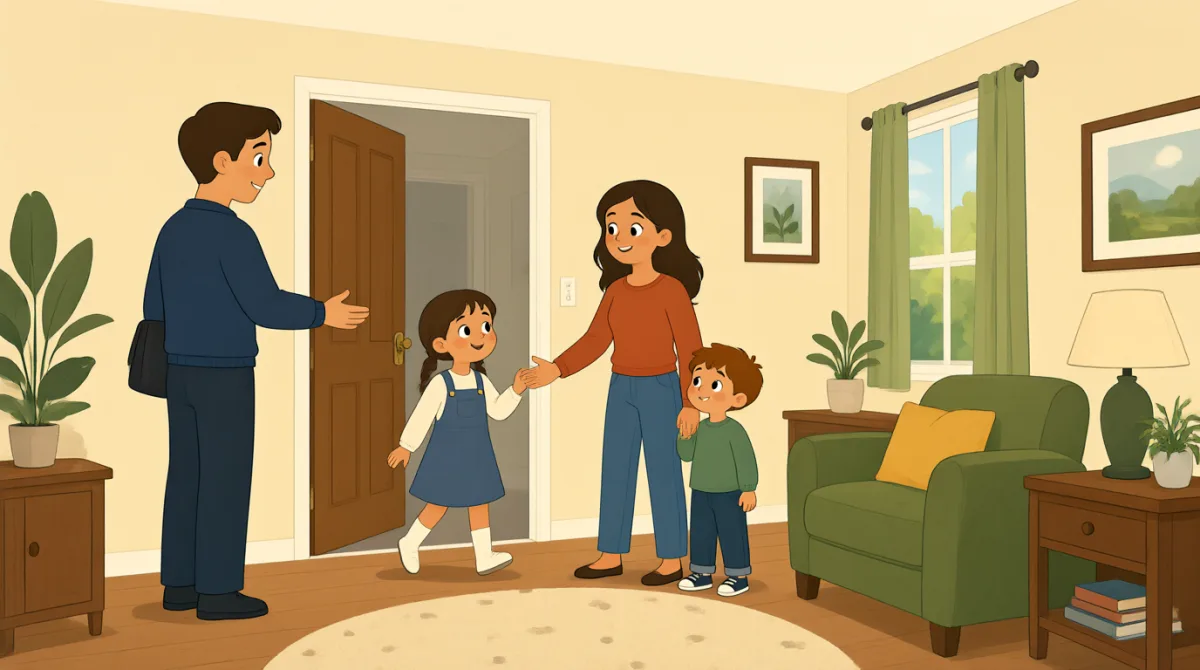

Hi, I’m Emma. Thanks for having me. It’s nice to meet you!
สวัสดี ฉันชื่อเอ็มมา ขอบคุณที่ให้ฉันมาพักนะ ดีใจที่ได้พบทุกคน!

Welcome, Emma! I’m Grace, and this is my son, Jack. Come on in.
ยินดีต้อนรับนะ เอ็มมา! ฉันชื่อเกรซ ส่วนนี่แจ็ก ลูกชายฉัน เข้ามาเลยจ้ะ

Hi, Emma! Let me take your bag. Was your trip okay?
สวัสดี เอ็มมา! เดี๋ยวฉันช่วยถือกระเป๋าให้นะ เดินทางมาโอเคไหม?
Thanks! Yes, it was good, but I’m a little tired.
ขอบคุณนะ! ดีเลย แต่ฉันเหนื่อยนิดหน่อย
That’s understandable. Your room is upstairs. I’ll show you the way.
เข้าใจได้จ้ะ ห้องของเธออยู่ชั้นบนนะ เดี๋ยวฉันพาไป
Great, thank you. Is there a bathroom near my room?
ดีเลย ขอบคุณนะ ห้องฉันมีห้องน้ำอยู่ใกล้ ๆ ไหม?
Yes, there is. It’s at the end of the hall, next to your room.
มีสิ อยู่สุดทางเดิน ถัดจากห้องเธอเลย
Here we are! You can unpack and rest. We’ll have dinner at seven.
ถึงแล้ว! เธอจัดของแล้วพักผ่อนได้เลย เราจะกินมื้อเย็นกันตอนหนึ่งทุ่มนะ
คำศัพท์8
- Thanks for having me.ขอบคุณที่ให้ฉันมาพัก
This is a polite way to thank someone for inviting you to stay or visit.
ใช้คำนี้กล่าวขอบคุณอย่างสุภาพ เมื่อมีคนชวนคุณมาพักหรือมาเยี่ยม
- Come on in.เข้ามาเลย
This friendly phrase invites someone to enter a home. You can also say it to welcome a visitor inside.
วลีเป็นกันเองที่ใช้ชวนใครสักคนเข้าบ้าน และยังใช้ต้อนรับแขกให้เข้ามาข้างในได้ด้วย
- Let me take your bag.เดี๋ยวฉันช่วยถือกระเป๋าให้นะ
Use this to offer to carry someone’s bag. You can also say, “Let me take your coat.”
ใช้ประโยคนี้เสนอว่าจะช่วยถือกระเป๋าให้ใครสักคน หรือจะพูดว่า “Let me take your coat.” (เดี๋ยวฉันช่วยถือเสื้อโค้ตให้นะ) ก็ได้
- a little tiredเหนื่อยนิดหน่อย
This means slightly tired, but not very tired. You can use “a little” before other describing words, such as “a little hungry.”
หมายถึงเหนื่อยเล็กน้อย แต่ไม่ได้เหนื่อยมาก คุณใช้ “a little” นำหน้าคำบอกลักษณะอื่นได้ด้วย เช่น “a little hungry” (หิวนิดหน่อย)
- That’s understandable.ก็เข้าใจได้
Say this to show that you understand why someone feels a certain way. For example, you can say it when someone is tired after a long trip.
พูดคำนี้เพื่อแสดงว่าคุณเข้าใจว่าทำไมอีกฝ่ายถึงรู้สึกแบบนั้น เช่น พูดเมื่อมีคนเหนื่อยหลังเดินทางไกล
- at the end of the hallอยู่สุดทางเดิน
This describes a place at the far end of a hallway. You can use it to explain where a room or bathroom is.
ใช้บอกตำแหน่งที่อยู่ตรงปลายสุดของทางเดิน เช่น ใช้อธิบายว่าห้องหรือห้องน้ำอยู่ตรงไหน
- unpack and restจัดของแล้วพักผ่อน
“Unpack” means to take your things out of your bag. “Rest” means to relax after doing something tiring.
“Unpack” หมายถึงเอาของออกจากกระเป๋า ส่วน “rest” หมายถึงพักผ่อนหลังจากทำอะไรที่เหนื่อยมา
- have dinner at sevenกินมื้อเย็นตอนหนึ่งทุ่ม
This tells someone the time of a meal. You can change the meal or time, as in “We’ll have lunch at one.”
ใช้บอกเวลาอาหาร คุณเปลี่ยนมื้ออาหารหรือเวลาได้ เช่น “We’ll have lunch at one.” (เราจะกินมื้อกลางวันตอนบ่ายโมง)
ประโยคสำคัญ8
- 1
Thanks for having me.
ขอบคุณที่ให้ฉันมาพัก
This is a polite way to thank a host for welcoming you. You can use it when you arrive at someone’s home or stay with them.
เป็นวิธีกล่าวขอบคุณเจ้าบ้านอย่างสุภาพที่ต้อนรับคุณ คุณใช้ประโยคนี้ได้เมื่อไปถึงบ้านใครหรือไปพักกับเขา
- 2
Was your trip okay?
เดินทางมาโอเคไหม?
This is a friendly question to ask someone after they travel. You can replace “trip” with “flight” or “train ride.”
เป็นคำถามเป็นกันเองที่ใช้ถามคนหลังจากเดินทางมา คุณเปลี่ยน “trip” เป็น “flight” หรือ “train ride” ได้
- 3
I’m a little tired.
ฉันเหนื่อยนิดหน่อย
Use this sentence to say that you feel slightly tired. You can replace “tired” with another feeling, such as “hungry” or “nervous.”
ใช้ประโยคนี้บอกว่าคุณรู้สึกเหนื่อยเล็กน้อย คุณเปลี่ยน “tired” เป็นความรู้สึกอื่นได้ เช่น “hungry” หรือ “nervous”
- 4
Your room is upstairs.
ห้องของเธออยู่ชั้นบนนะ
This gives someone simple information about where their room is. You can replace “upstairs” with a place like “down the hall.”
ใช้บอกตำแหน่งห้องของใครสักคนแบบง่าย ๆ คุณเปลี่ยน “upstairs” เป็นสถานที่อื่นได้ เช่น “down the hall”
- 5
Is there a bathroom near my room?
ห้องฉันมีห้องน้ำอยู่ใกล้ ๆ ไหม?
This is a polite way to ask if a bathroom is close to a place. You can use the same question pattern to ask about other places, such as “Is there a bus stop near the house?”
เป็นวิธีสุภาพในการถามว่ามีห้องน้ำอยู่ใกล้สถานที่หนึ่งไหม คุณใช้รูปแบบคำถามเดียวกันถามถึงสถานที่อื่นได้ เช่น “Is there a bus stop near the house?” (มีป้ายรถเมล์อยู่ใกล้บ้านไหม?)
- 6
It’s at the end of the hall, next to your room.
อยู่สุดทางเดิน ถัดจากห้องเธอเลย
This sentence explains where something is by giving two location details. You can use it to describe where a room or other place is.
ประโยคนี้บอกตำแหน่งของสิ่งหนึ่งโดยให้รายละเอียดเกี่ยวกับที่ตั้งสองอย่าง คุณใช้บรรยายว่าห้องหรือสถานที่อื่นอยู่ตรงไหนได้
- 7
You can unpack and rest.
เธอจัดของแล้วพักผ่อนได้เลย
This is a kind way to tell someone they can settle in and relax. You can replace the actions with other helpful suggestions, such as “You can sit and have some water.”
เป็นวิธีพูดอย่างมีน้ำใจว่าคนฟังจัดของเข้าที่แล้วพักผ่อนได้ คุณเปลี่ยนกิจกรรมเป็นคำแนะนำอื่นได้ เช่น “You can sit and have some water.” (นั่งพักแล้วดื่มน้ำหน่อยก็ได้นะ)
- 8
We’ll have dinner at seven.
เราจะกินมื้อเย็นกันตอนหนึ่งทุ่มนะ
Use this sentence to tell someone a future meal time. You can change the meal and time, as in “We’ll have breakfast at eight.”
ใช้ประโยคนี้บอกเวลาอาหารที่จะกินในอนาคต คุณเปลี่ยนมื้ออาหารและเวลาได้ เช่น “We’ll have breakfast at eight.” (เราจะกินมื้อเช้าตอนแปดโมง)