Meeting the Host Family
होस्ट परिवार से मिलना
Emma arrives at the family home and meets Grace and Jack. They help her feel welcome and show her where she will stay.
एमा परिवार के घर पहुँचती है और ग्रेस और जैक से मिलती है। वे उसका स्वागत करते हैं और उसे दिखाते हैं कि वह कहाँ रहेगी।
संवाद8
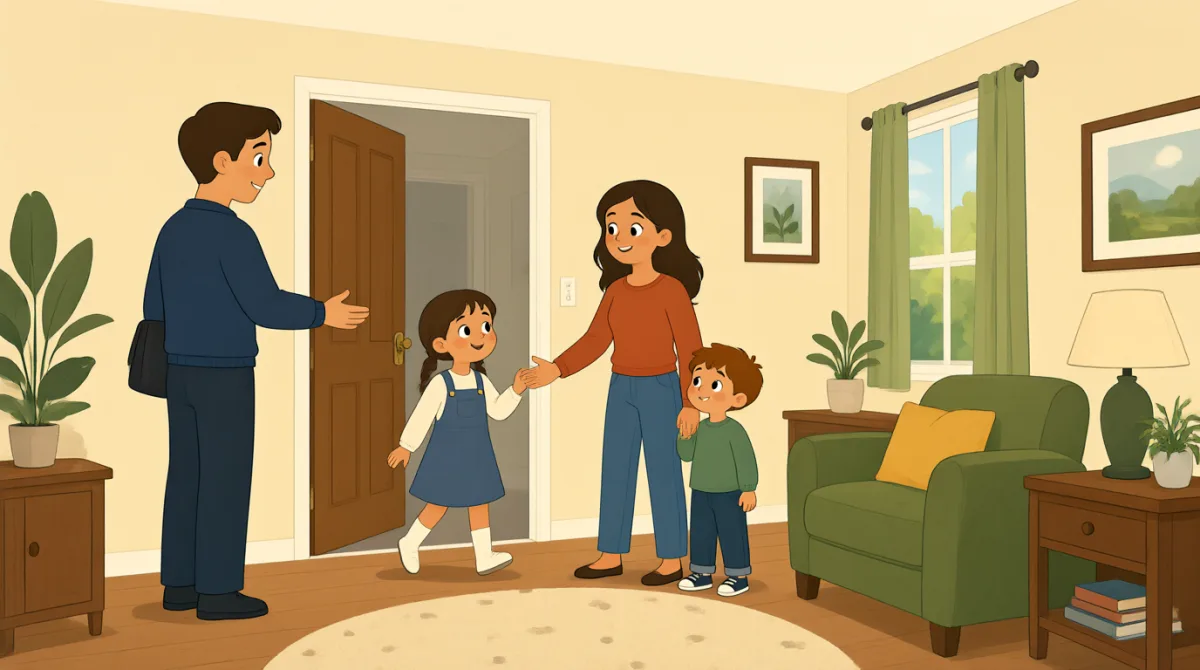

Hi, I’m Emma. Thanks for having me. It’s nice to meet you!
नमस्ते, मैं एमा हूँ। मुझे अपने यहाँ ठहराने के लिए धन्यवाद। आपसे मिलकर अच्छा लगा!

Welcome, Emma! I’m Grace, and this is my son, Jack. Come on in.
स्वागत है, एमा! मैं ग्रेस हूँ और ये मेरा बेटा जैक है। अंदर आ जाओ।

Hi, Emma! Let me take your bag. Was your trip okay?
हाय, एमा! लाओ, तुम्हारा बैग मैं ले लेता हूँ। तुम्हारा सफ़र ठीक रहा?
Thanks! Yes, it was good, but I’m a little tired.
धन्यवाद! हाँ, सफ़र अच्छा रहा, लेकिन मैं थोड़ी थक गई हूँ।
That’s understandable. Your room is upstairs. I’ll show you the way.
यह तो समझ में आता है। तुम्हारा कमरा ऊपर है। मैं तुम्हें रास्ता दिखा देती हूँ।
Great, thank you. Is there a bathroom near my room?
बहुत अच्छा, धन्यवाद। क्या मेरे कमरे के पास बाथरूम है?
Yes, there is. It’s at the end of the hall, next to your room.
हाँ, है। वह गलियारे के आख़िर में, तुम्हारे कमरे के बगल में है।
Here we are! You can unpack and rest. We’ll have dinner at seven.
लो, पहुँच गए! तुम अपना सामान खोलकर आराम कर सकती हो। रात का खाना सात बजे होगा।
शब्दावली8
- Thanks for having me.मुझे अपने यहाँ ठहराने के लिए धन्यवाद।
This is a polite way to thank someone for inviting you to stay or visit.
किसी को अपने यहाँ ठहरने या आने का न्योता देने के लिए धन्यवाद कहने का यह एक विनम्र तरीका है।
- Come on in.अंदर आ जाओ।
This friendly phrase invites someone to enter a home. You can also say it to welcome a visitor inside.
यह दोस्ताना वाक्य किसी को घर के अंदर आने का न्योता देता है। किसी मेहमान का स्वागत करके उसे अंदर बुलाने के लिए भी आप यह कह सकते हैं।
- Let me take your bag.लाओ, तुम्हारा बैग मैं ले लेता हूँ।
Use this to offer to carry someone’s bag. You can also say, “Let me take your coat.”
किसी का बैग उठाने की पेशकश करने के लिए यह कहें। आप “Let me take your coat.” (लाओ, तुम्हारा कोट मैं ले लेता हूँ।) भी कह सकते हैं।
- a little tiredथोड़ी थकी हुई
This means slightly tired, but not very tired. You can use “a little” before other describing words, such as “a little hungry.”
इसका मतलब है थोड़ा थका हुआ, लेकिन बहुत ज़्यादा नहीं। दूसरे हालात बताने वाले शब्दों से पहले भी “a little” लगा सकते हैं, जैसे “a little hungry” (थोड़ी भूख लगी है)।
- That’s understandable.यह तो समझ में आता है।
Say this to show that you understand why someone feels a certain way. For example, you can say it when someone is tired after a long trip.
किसी की भावना का कारण समझने की बात जताने के लिए यह कहें। उदाहरण के लिए, लंबे सफ़र के बाद कोई थका हो तो आप यह कह सकते हैं।
- at the end of the hallगलियारे के आख़िर में
This describes a place at the far end of a hallway. You can use it to explain where a room or bathroom is.
यह गलियारे के सबसे दूर वाले सिरे पर मौजूद जगह बताता है। किसी कमरे या बाथरूम का स्थान समझाने के लिए आप इसका इस्तेमाल कर सकते हैं।
- unpack and restसामान खोलना और आराम करना
“Unpack” means to take your things out of your bag. “Rest” means to relax after doing something tiring.
“Unpack” का मतलब है बैग से अपना सामान निकालना। “Rest” का मतलब है थका देने वाला काम करने के बाद आराम करना।
- have dinner at sevenसात बजे रात का खाना खाना
This tells someone the time of a meal. You can change the meal or time, as in “We’ll have lunch at one.”
इससे किसी को खाने का समय बताया जाता है। आप खाने या समय को बदल सकते हैं, जैसे “We’ll have lunch at one.” (हम एक बजे दोपहर का खाना खाएँगे।)
मुख्य वाक्य8
- 1
Thanks for having me.
मुझे अपने यहाँ ठहराने के लिए धन्यवाद।
This is a polite way to thank a host for welcoming you. You can use it when you arrive at someone’s home or stay with them.
मेज़बान का स्वागत करने के लिए धन्यवाद कहने का यह एक विनम्र तरीका है। किसी के घर पहुँचने पर या उनके यहाँ ठहरते समय आप यह कह सकते हैं।
- 2
Was your trip okay?
तुम्हारा सफ़र ठीक रहा?
This is a friendly question to ask someone after they travel. You can replace “trip” with “flight” or “train ride.”
सफ़र करके आए किसी व्यक्ति से यह दोस्ताना सवाल पूछ सकते हैं। “Trip” की जगह “flight” या “train ride” कह सकते हैं।
- 3
I’m a little tired.
मैं थोड़ी थक गई हूँ।
Use this sentence to say that you feel slightly tired. You can replace “tired” with another feeling, such as “hungry” or “nervous.”
थोड़ा थका हुआ महसूस करने के बारे में बताने के लिए यह वाक्य कहें। “Tired” की जगह कोई और भावना बताने वाला शब्द, जैसे “hungry” या “nervous”, रख सकते हैं।
- 4
Your room is upstairs.
तुम्हारा कमरा ऊपर है।
This gives someone simple information about where their room is. You can replace “upstairs” with a place like “down the hall.”
इससे किसी को सीधे-सीधे बताया जाता है कि उसका कमरा कहाँ है। “Upstairs” की जगह “down the hall” जैसी कोई दूसरी जगह बताई जा सकती है।
- 5
Is there a bathroom near my room?
क्या मेरे कमरे के पास बाथरूम है?
This is a polite way to ask if a bathroom is close to a place. You can use the same question pattern to ask about other places, such as “Is there a bus stop near the house?”
किसी जगह के पास बाथरूम है या नहीं, यह पूछने का यह एक विनम्र तरीका है। दूसरी जगहों के बारे में पूछने के लिए भी यही सवाल का ढाँचा इस्तेमाल कर सकते हैं, जैसे “Is there a bus stop near the house?” (क्या घर के पास बस स्टॉप है?)।
- 6
It’s at the end of the hall, next to your room.
वह गलियारे के आख़िर में, तुम्हारे कमरे के बगल में है।
This sentence explains where something is by giving two location details. You can use it to describe where a room or other place is.
इस वाक्य में किसी चीज़ की जगह बताने के लिए दो बातें दी गई हैं। किसी कमरे या दूसरी जगह का पता बताने में आप इसका इस्तेमाल कर सकते हैं।
- 7
You can unpack and rest.
तुम अपना सामान खोलकर आराम कर सकती हो।
This is a kind way to tell someone they can settle in and relax. You can replace the actions with other helpful suggestions, such as “You can sit and have some water.”
किसी को आराम से अपना सामान जमाने और सुकून करने के लिए कहने का यह एक प्यारा तरीका है। आप इन कामों की जगह मददगार सुझाव दे सकते हैं, जैसे “You can sit and have some water.” (तुम बैठकर थोड़ा पानी पी सकती हो।)।
- 8
We’ll have dinner at seven.
रात का खाना सात बजे होगा।
Use this sentence to tell someone a future meal time. You can change the meal and time, as in “We’ll have breakfast at eight.”
आने वाले समय में खाने का समय बताने के लिए यह वाक्य कहें। खाने या समय को बदल सकते हैं, जैसे “We’ll have breakfast at eight.” (हम आठ बजे नाश्ता करेंगे।)।