Meeting the Host Family
لقاء العائلة المضيفة
Emma arrives at the family home and meets Grace and Jack. They help her feel welcome and show her where she will stay.
تصل إيما إلى منزل العائلة وتلتقي بغريس وجاك. ويساعدانها على الشعور بالترحيب، ويريانها المكان الذي ستقيم فيه.
حوار8
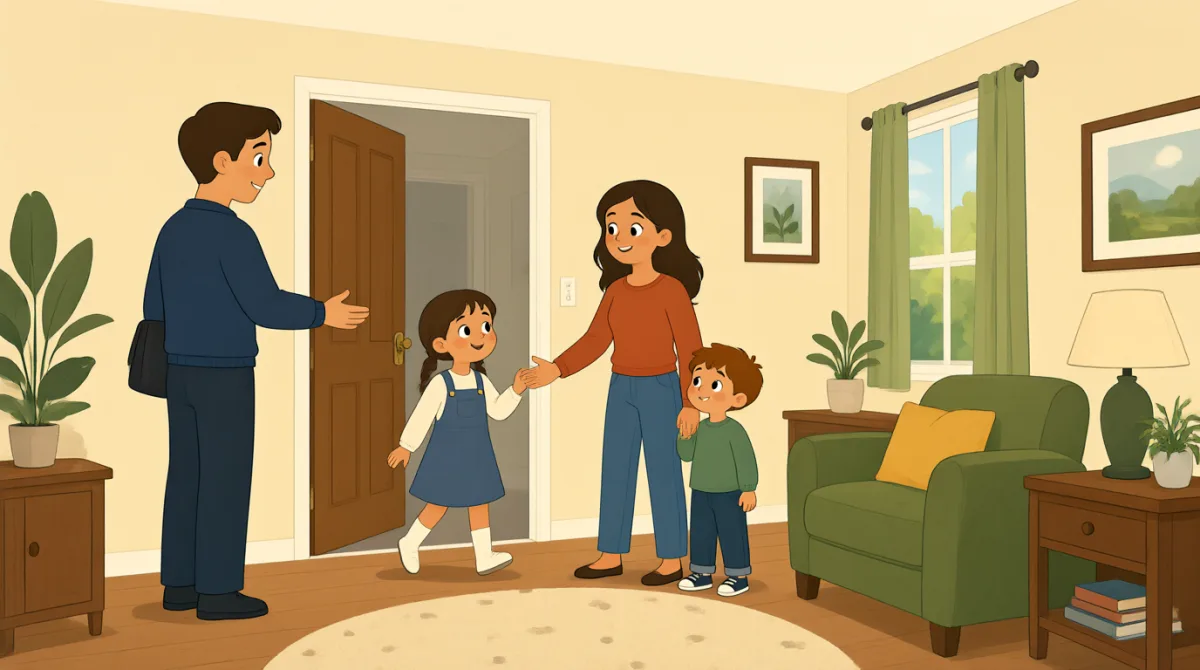

Hi, I’m Emma. Thanks for having me. It’s nice to meet you!
مرحبًا، أنا إيما. شكرًا لاستضافتي. سررت بلقائكما!

Welcome, Emma! I’m Grace, and this is my son, Jack. Come on in.
أهلًا بكِ يا إيما! أنا غريس، وهذا ابني جاك. تفضّلي بالدخول.

Hi, Emma! Let me take your bag. Was your trip okay?
مرحبًا يا إيما! دعيني أحمل حقيبتك. هل كانت رحلتك بخير؟
Thanks! Yes, it was good, but I’m a little tired.
شكرًا! نعم، كانت جيدة، لكنني متعبة قليلًا.
That’s understandable. Your room is upstairs. I’ll show you the way.
هذا مفهوم. غرفتك في الطابق العلوي. سأريكِ الطريق.
Great, thank you. Is there a bathroom near my room?
رائع، شكرًا لكِ. هل يوجد حمّام بالقرب من غرفتي؟
Yes, there is. It’s at the end of the hall, next to your room.
نعم، يوجد حمّام. إنه في نهاية الممر، بجوار غرفتك.
Here we are! You can unpack and rest. We’ll have dinner at seven.
ها نحن قد وصلنا! يمكنكِ تفريغ حقيبتك والراحة. سنتناول العشاء في الساعة السابعة.
المفردات8
- Thanks for having me.شكرًا لاستضافتي.
This is a polite way to thank someone for inviting you to stay or visit.
هذه طريقة مهذبة لشكر شخص دعاكِ للإقامة عنده أو لزيارته.
- Come on in.تفضّل بالدخول.
This friendly phrase invites someone to enter a home. You can also say it to welcome a visitor inside.
تدعو هذه العبارة الودّية شخصًا إلى دخول المنزل. ويمكنك أيضًا قولها للترحيب بضيف في الداخل.
- Let me take your bag.دعني أحمل حقيبتك.
Use this to offer to carry someone’s bag. You can also say, “Let me take your coat.”
استخدمي هذه العبارة لعرض حمل حقيبة شخص ما. ويمكنك أيضًا قول: “Let me take your coat.”
- a little tiredمتعب قليلًا.
This means slightly tired, but not very tired. You can use “a little” before other describing words, such as “a little hungry.”
تعني هذه العبارة أنك متعب بدرجة بسيطة، ولست متعبًا جدًا. يمكنك استخدام “a little” قبل صفات أخرى، مثل “a little hungry.”
- That’s understandable.هذا مفهوم.
Say this to show that you understand why someone feels a certain way. For example, you can say it when someone is tired after a long trip.
قُل هذه العبارة لتُظهر أنك تفهم سبب شعور شخص ما بطريقة معينة. فمثلًا، يمكنك قولها عندما يكون شخص متعبًا بعد رحلة طويلة.
- at the end of the hallفي نهاية الممر.
This describes a place at the far end of a hallway. You can use it to explain where a room or bathroom is.
تصف هذه العبارة مكانًا يقع في أقصى نهاية ممر. ويمكنك استخدامها لتوضيح مكان غرفة أو حمّام.
- unpack and restتفريغ الحقيبة والراحة.
“Unpack” means to take your things out of your bag. “Rest” means to relax after doing something tiring.
تعني “Unpack” إخراج أغراضك من حقيبتك. وتعني “Rest” الاسترخاء بعد القيام بشيء متعب.
- have dinner at sevenنتناول العشاء في الساعة السابعة.
This tells someone the time of a meal. You can change the meal or time, as in “We’ll have lunch at one.”
تخبر هذه العبارة شخصًا بموعد تناول وجبة. ويمكنك تغيير الوجبة أو الوقت، كما في “We’ll have lunch at one.”
الجمل الأساسية8
- 1
Thanks for having me.
شكرًا لاستضافتي.
This is a polite way to thank a host for welcoming you. You can use it when you arrive at someone’s home or stay with them.
هذه طريقة مهذبة لشكر المضيف على ترحيبه بك. يمكنك استخدامها عند وصولك إلى منزل شخص ما أو إقامتك عنده.
- 2
Was your trip okay?
هل كانت رحلتك بخير؟
This is a friendly question to ask someone after they travel. You can replace “trip” with “flight” or “train ride.”
هذا سؤال ودّي لطرحه على شخص بعد سفره. يمكنك استبدال “trip” بـ “flight” أو “train ride.”
- 3
I’m a little tired.
أنا متعب قليلًا.
Use this sentence to say that you feel slightly tired. You can replace “tired” with another feeling, such as “hungry” or “nervous.”
استخدم هذه الجملة لتقول إنك تشعر بتعب بسيط. ويمكنك استبدال “tired” بشعور آخر، مثل “hungry” أو “nervous.”
- 4
Your room is upstairs.
غرفتك في الطابق العلوي.
This gives someone simple information about where their room is. You can replace “upstairs” with a place like “down the hall.”
تقدم هذه الجملة معلومة بسيطة عن مكان الغرفة. ويمكنك استبدال “upstairs” بمكان مثل “down the hall.”
- 5
Is there a bathroom near my room?
هل يوجد حمّام بالقرب من غرفتي؟
This is a polite way to ask if a bathroom is close to a place. You can use the same question pattern to ask about other places, such as “Is there a bus stop near the house?”
هذه طريقة مهذبة للسؤال عما إذا كان الحمّام قريبًا من مكان ما. ويمكنك استخدام نمط السؤال نفسه للسؤال عن أماكن أخرى، مثل “Is there a bus stop near the house?”
- 6
It’s at the end of the hall, next to your room.
إنه في نهاية الممر، بجوار غرفتك.
This sentence explains where something is by giving two location details. You can use it to describe where a room or other place is.
توضح هذه الجملة مكان شيء ما من خلال ذكر تفصيلين عن موقعه. ويمكنك استخدامها لوصف مكان غرفة أو مكان آخر.
- 7
You can unpack and rest.
يمكنك تفريغ حقيبتك والراحة.
This is a kind way to tell someone they can settle in and relax. You can replace the actions with other helpful suggestions, such as “You can sit and have some water.”
هذه طريقة لطيفة لإخبار شخص بأنه يستطيع الاستقرار والراحة. ويمكنك استبدال الفعلين باقتراحات مفيدة أخرى، مثل “You can sit and have some water.”
- 8
We’ll have dinner at seven.
سنتناول العشاء في الساعة السابعة.
Use this sentence to tell someone a future meal time. You can change the meal and time, as in “We’ll have breakfast at eight.”
استخدم هذه الجملة لإخبار شخص بموعد تناول وجبة في المستقبل. ويمكنك تغيير الوجبة والوقت، كما في “We’ll have breakfast at eight.”