Meeting the Host Family
Poznanie rodziny goszczącej
Emma arrives at the family home and meets Grace and Jack. They help her feel welcome and show her where she will stay.
Emma przyjeżdża do domu rodziny i poznaje Grace i Jacka. Pomagają jej poczuć się mile widzianą i pokazują jej, gdzie będzie mieszkać.
Dialog8
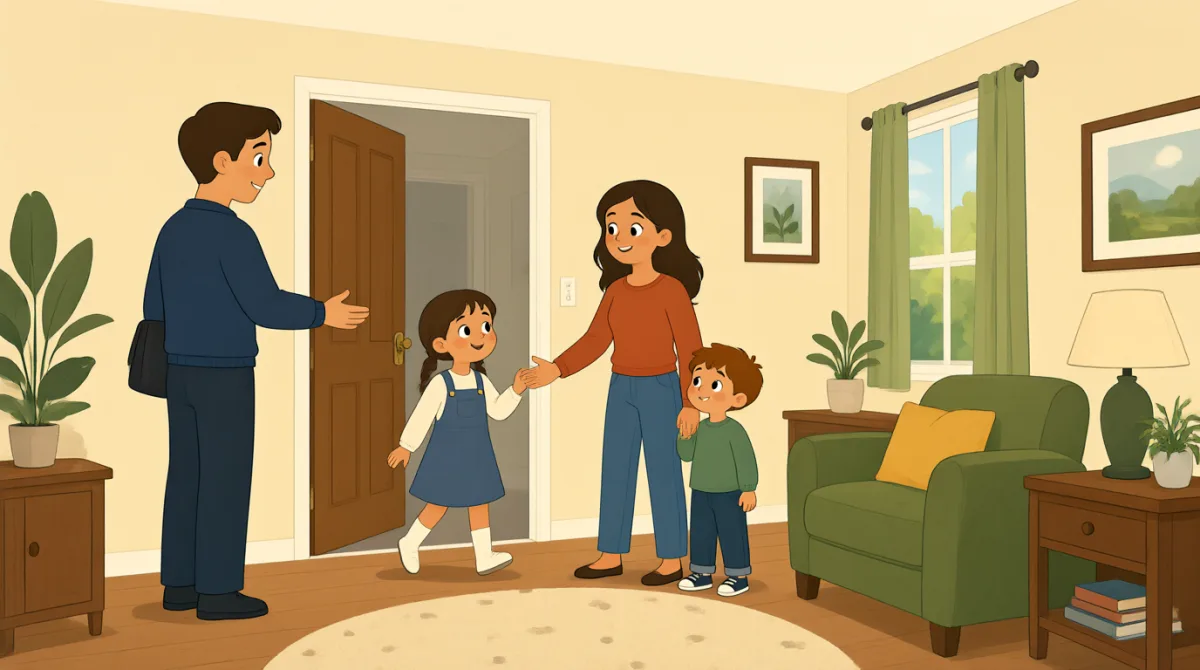

Hi, I’m Emma. Thanks for having me. It’s nice to meet you!
Cześć, jestem Emma. Dziękuję, że mnie przyjęliście. Miło was poznać!

Welcome, Emma! I’m Grace, and this is my son, Jack. Come on in.
Witaj, Emma! Jestem Grace, a to mój syn, Jack. Wejdź śmiało.

Hi, Emma! Let me take your bag. Was your trip okay?
Cześć, Emma! Pozwól, że wezmę twoją torbę. Podróż minęła w porządku?
Thanks! Yes, it was good, but I’m a little tired.
Dzięki! Tak, była udana, ale jestem trochę zmęczona.
That’s understandable. Your room is upstairs. I’ll show you the way.
To zrozumiałe. Twój pokój jest na piętrze. Pokażę ci drogę.
Great, thank you. Is there a bathroom near my room?
Świetnie, dziękuję. Czy w pobliżu mojego pokoju jest łazienka?
Yes, there is. It’s at the end of the hall, next to your room.
Tak, jest. Na końcu korytarza, obok twojego pokoju.
Here we are! You can unpack and rest. We’ll have dinner at seven.
Jesteśmy na miejscu! Możesz rozpakować rzeczy i odpocząć. Kolację jemy o siódmej.
Słownictwo8
- Thanks for having me.Dziękuję, że mnie przyjęliście.
This is a polite way to thank someone for inviting you to stay or visit.
To uprzejmy sposób, by podziękować komuś za zaproszenie do siebie na pobyt lub wizytę.
- Come on in.Wejdź śmiało.
This friendly phrase invites someone to enter a home. You can also say it to welcome a visitor inside.
Ten przyjazny zwrot zaprasza kogoś do wejścia do domu. Możesz też tak powitać gościa, zapraszając go do środka.
- Let me take your bag.Pozwól, że wezmę twoją torbę.
Use this to offer to carry someone’s bag. You can also say, “Let me take your coat.”
Użyj tego zwrotu, gdy chcesz zaoferować, że poniesiesz czyjąś torbę. Możesz też powiedzieć: “Let me take your coat.”
- a little tiredtrochę zmęczony
This means slightly tired, but not very tired. You can use “a little” before other describing words, such as “a little hungry.”
“a little tired” oznacza lekko zmęczony, ale nie bardzo. “a little” możesz postawić przed innymi określeniami, na przykład “a little hungry”.
- That’s understandable.To zrozumiałe.
Say this to show that you understand why someone feels a certain way. For example, you can say it when someone is tired after a long trip.
Powiedz tak, by pokazać, że rozumiesz, dlaczego ktoś czuje się w określony sposób. Na przykład możesz tak powiedzieć, gdy ktoś jest zmęczony po długiej podróży.
- at the end of the hallna końcu korytarza
This describes a place at the far end of a hallway. You can use it to explain where a room or bathroom is.
Ten zwrot opisuje miejsce na drugim końcu korytarza. Możesz go użyć, by wyjaśnić, gdzie znajduje się pokój lub łazienka.
- unpack and restrozpakować rzeczy i odpocząć
“Unpack” means to take your things out of your bag. “Rest” means to relax after doing something tiring.
“Unpack” znaczy wyjąć swoje rzeczy z torby. “Rest” oznacza odpocząć po czymś męczącym.
- have dinner at sevenzjeść kolację o siódmej
This tells someone the time of a meal. You can change the meal or time, as in “We’ll have lunch at one.”
Ten zwrot informuje o godzinie posiłku. Możesz zmienić nazwę posiłku lub godzinę, na przykład: “We’ll have lunch at one.”
Kluczowe zdania8
- 1
Thanks for having me.
Dziękuję, że mnie przyjęliście.
This is a polite way to thank a host for welcoming you. You can use it when you arrive at someone’s home or stay with them.
To uprzejmy sposób, by podziękować gospodarzowi za gościnne przyjęcie. Możesz użyć tego zwrotu, gdy przyjeżdżasz do czyjegoś domu lub u kogoś mieszkasz.
- 2
Was your trip okay?
Podróż minęła w porządku?
This is a friendly question to ask someone after they travel. You can replace “trip” with “flight” or “train ride.”
To przyjazne pytanie, które można zadać komuś po podróży. Zamiast “trip” możesz użyć “flight” lub “train ride”.
- 3
I’m a little tired.
Jestem trochę zmęczona.
Use this sentence to say that you feel slightly tired. You can replace “tired” with another feeling, such as “hungry” or “nervous.”
Użyj tego zdania, by powiedzieć, że jesteś lekko zmęczona. Zamiast “tired” możesz podać inne odczucie, na przykład “hungry” lub “nervous”.
- 4
Your room is upstairs.
Twój pokój jest na piętrze.
This gives someone simple information about where their room is. You can replace “upstairs” with a place like “down the hall.”
To prosta informacja o tym, gdzie znajduje się czyjś pokój. Zamiast “upstairs” możesz podać inne miejsce, na przykład “down the hall”.
- 5
Is there a bathroom near my room?
Czy w pobliżu mojego pokoju jest łazienka?
This is a polite way to ask if a bathroom is close to a place. You can use the same question pattern to ask about other places, such as “Is there a bus stop near the house?”
To uprzejmy sposób, by zapytać, czy łazienka znajduje się blisko jakiegoś miejsca. Tego samego wzoru pytania możesz użyć, by zapytać o inne miejsca, na przykład: “Is there a bus stop near the house?”
- 6
It’s at the end of the hall, next to your room.
Jest na końcu korytarza, obok twojego pokoju.
This sentence explains where something is by giving two location details. You can use it to describe where a room or other place is.
To zdanie wyjaśnia, gdzie coś się znajduje, podając dwie wskazówki dotyczące położenia. Możesz go użyć, by opisać, gdzie jest pokój lub inne miejsce.
- 7
You can unpack and rest.
Możesz rozpakować rzeczy i odpocząć.
This is a kind way to tell someone they can settle in and relax. You can replace the actions with other helpful suggestions, such as “You can sit and have some water.”
To życzliwy sposób, by powiedzieć komuś, że może się rozgościć i odpocząć. Możesz zaproponować inne pomocne czynności, na przykład: “You can sit and have some water.”
- 8
We’ll have dinner at seven.
Kolację jemy o siódmej.
Use this sentence to tell someone a future meal time. You can change the meal and time, as in “We’ll have breakfast at eight.”
Użyj tego zdania, by poinformować kogoś o godzinie przyszłego posiłku. Możesz zmienić posiłek i godzinę, na przykład: “We’ll have breakfast at eight.”