Hot Chocolate After Skiing
ดื่มช็อกโกแลตร้อนหลังเล่นสกี
After the lesson, Emma and Jack warm up with hot chocolate. Emma tells Jack what she enjoyed and what she wants to practice next time.
หลังจบบทเรียน เอ็มมากับแจ็กดื่มช็อกโกแลตร้อนเพื่อคลายหนาว เอ็มมาเล่าให้แจ็กฟังว่าเธอชอบอะไร และอยากฝึกอะไรในครั้งหน้า
บทสนทนา8
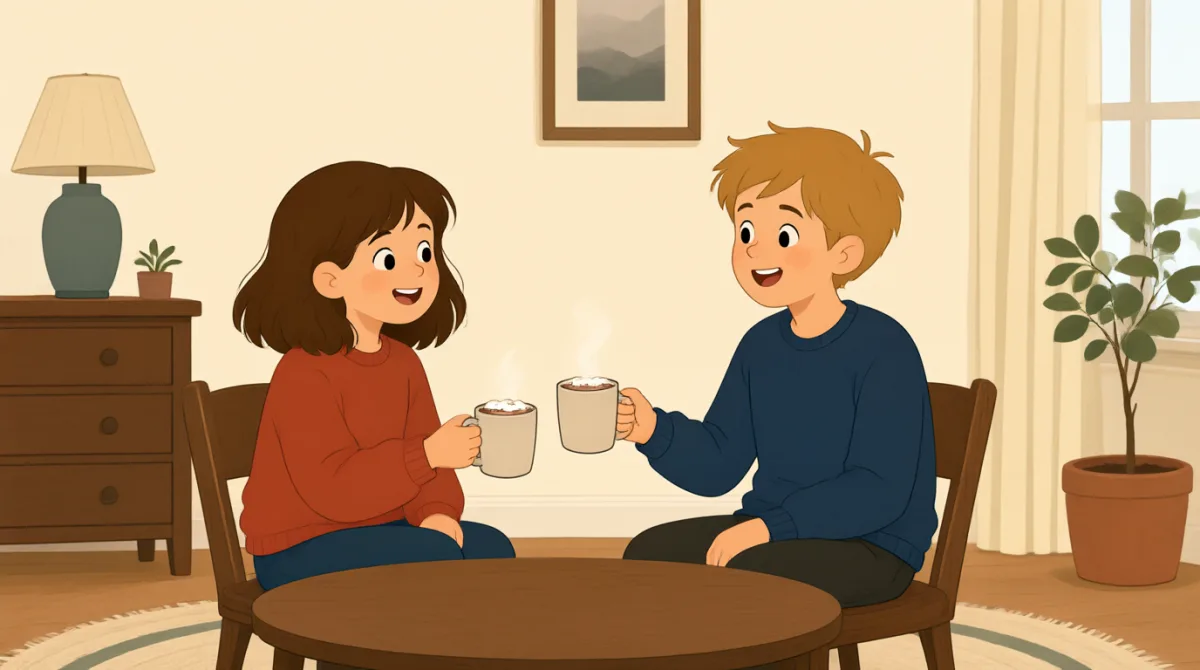

This hot chocolate is just what I need. My hands are still cold.
ช็อกโกแลตร้อนแก้วนี้เหมาะกับฉันตอนนี้พอดีเลย มือฉันยังเย็นอยู่เลย

You did well today. How did you like your first ski lesson?
วันนี้เธอทำได้ดีนะ ชอบเรียนสกีครั้งแรกไหม?
I loved it! Moving on the snow was fun, even when I fell.
ฉันชอบมากเลย! ไถลไปบนหิมะสนุกดี ถึงจะล้มก็เถอะ
You got back up and tried again. That was the important part.
เธอลุกขึ้นแล้วลองใหม่ นั่นแหละที่สำคัญ
I want to practice stopping more next time. I still feel nervous.
ครั้งหน้าฉันอยากฝึกหยุดให้มากกว่านี้ ฉันยังรู้สึกกลัวอยู่เลย
That makes sense. You’ll feel more sure after a little practice.
ก็เข้าใจได้นะ ฝึกอีกสักหน่อย เธอก็จะมั่นใจขึ้น
Let’s come back next weekend. I’d like to try that easy slope.
สุดสัปดาห์หน้าเรากลับมาอีกกันเถอะ ฉันอยากลองเนินง่าย ๆ นั่น
Sounds good. We can warm up with hot chocolate again afterward.
ดีเลย หลังจากนั้นเรามาดื่มช็อกโกแลตร้อนให้ร่างกายอบอุ่นกันอีกนะ
คำศัพท์8
- warm upทำให้ร่างกายอบอุ่น
To get warm after being cold. Here, Emma and Jack warm up by drinking hot chocolate.
หมายถึงทำให้ร่างกายอุ่นขึ้นหลังจากที่หนาว ในที่นี้ เอ็มมากับแจ็กทำให้ร่างกายอบอุ่นด้วยการดื่มช็อกโกแลตร้อน
- How did you like your first ski lesson?ชอบเรียนสกีครั้งแรกไหม?
A friendly way to ask what someone thought of an experience. You can use “How did you like...?” to ask about a class, trip, or activity.
เป็นวิธีถามอย่างเป็นกันเองว่าอีกฝ่ายรู้สึกอย่างไรกับประสบการณ์หนึ่ง ใช้ “How did you like...?” ถามเกี่ยวกับชั้นเรียน ทริป หรือกิจกรรมได้
- got back upลุกขึ้นอีกครั้ง
Stood up again after falling down. Use “get back up” when someone stands after a fall.
หมายถึงลุกขึ้นยืนอีกครั้งหลังจากล้ม ใช้ “get back up” เมื่อใครบางคนลุกขึ้นหลังจากหกล้ม
- tried againลองใหม่อีกครั้ง
Made another attempt after something did not go as planned. You can use this phrase to talk about practicing or not giving up.
หมายถึงลองทำอีกครั้งหลังจากที่สิ่งต่าง ๆ ไม่เป็นไปตามแผน ใช้วลีนี้พูดถึงการฝึกฝนหรือการไม่ยอมแพ้ได้
- next timeครั้งหน้า
On the next occasion. Use it when talking about what you want to do or change in the future.
หมายถึงโอกาสถัดไป ใช้พูดถึงสิ่งที่อยากทำหรือเปลี่ยนแปลงในอนาคต
- That makes sense.ก็เข้าใจได้นะ
A way to say that you understand why someone feels or thinks something. You can use it to respond supportively.
เป็นวิธีบอกว่าเราเข้าใจว่าทำไมอีกฝ่ายถึงรู้สึกหรือคิดแบบนั้น ใช้ตอบกลับเพื่อแสดงความเข้าใจและให้กำลังใจได้
- come backกลับมา
Return to a place. Here, Emma suggests returning to the ski area next weekend.
หมายถึงกลับไปยังสถานที่หนึ่ง ในที่นี้ เอ็มมาเสนอให้กลับมาที่ลานสกีในสุดสัปดาห์หน้า
- afterwardหลังจากนั้น
At a later time, after something else happens. Here, Jack means they can have hot chocolate after skiing.
หมายถึงในเวลาต่อมา หลังจากที่สิ่งอื่นเกิดขึ้นแล้ว ในที่นี้ แจ็กหมายถึงพวกเขาดื่มช็อกโกแลตร้อนหลังเล่นสกีได้
ประโยคสำคัญ8
- 1
This hot chocolate is just what I need.
ช็อกโกแลตร้อนแก้วนี้เหมาะกับฉันตอนนี้พอดีเลย
Use this to say that something is exactly right for you at the moment. Replace “hot chocolate” with something else you need, such as “a warm coat” or “a break.”
ใช้ประโยคนี้เพื่อบอกว่าบางสิ่งเหมาะกับสิ่งที่คุณต้องการในตอนนี้พอดี ลองเปลี่ยน “hot chocolate” เป็นสิ่งอื่นที่คุณต้องการ เช่น “a warm coat” หรือ “a break”
- 2
How did you like your first ski lesson?
ชอบเรียนสกีครั้งแรกไหม?
This is a natural way to ask someone what they thought of an experience. Replace “ski lesson” with another activity or event.
นี่เป็นวิธีถามอย่างเป็นธรรมชาติว่าอีกฝ่ายคิดอย่างไรกับประสบการณ์หนึ่ง ลองเปลี่ยน “ski lesson” เป็นกิจกรรมหรือเหตุการณ์อื่น
- 3
Moving on the snow was fun, even when I fell.
ไถลไปบนหิมะสนุกดี ถึงจะล้มก็เถอะ
Use “...was fun, even when...” to say you enjoyed an activity despite a difficulty. You can change the activity and the challenge to fit your experience.
ใช้ “...was fun, even when...” เพื่อบอกว่าคุณสนุกกับกิจกรรม แม้จะมีอุปสรรค ลองเปลี่ยนกิจกรรมและอุปสรรคให้ตรงกับประสบการณ์ของคุณ
- 4
You got back up and tried again.
เธอลุกขึ้นแล้วลองใหม่
This sentence encourages someone by recognizing that they kept going after a problem. Use “got back up” and “tried again” to describe persistence.
ประโยคนี้ให้กำลังใจอีกฝ่ายด้วยการชื่นชมที่เขาพยายามต่อหลังจากเจอปัญหา ใช้ “got back up” และ “tried again” เพื่อพูดถึงความมุ่งมั่นไม่ยอมแพ้
- 5
I want to practice stopping more next time.
ครั้งหน้าฉันอยากฝึกหยุดให้มากกว่านี้
Use this sentence to say what skill you want to improve in the future. Replace “stopping” with another skill, such as “turning” or “speaking.”
ใช้ประโยคนี้เพื่อบอกว่าคุณอยากพัฒนาทักษะอะไรในอนาคต ลองเปลี่ยน “stopping” เป็นทักษะอื่น เช่น “turning” หรือ “speaking”
- 6
You’ll feel more sure after a little practice.
ฝึกอีกสักหน่อย เธอก็จะมั่นใจขึ้น
This is a reassuring way to say that practice can build confidence. You can use “You’ll feel more sure” to encourage someone learning a new skill.
เป็นวิธีพูดให้กำลังใจว่าเมื่อฝึกฝนแล้วก็จะมั่นใจขึ้น ใช้ “You’ll feel more sure” เพื่อให้กำลังใจคนที่กำลังเรียนรู้ทักษะใหม่ได้
- 7
Let’s come back next weekend.
สุดสัปดาห์หน้าเรากลับมาอีกกันเถอะ
Use “Let’s...” to suggest doing something together, and “come back” to suggest returning to a place. Replace “next weekend” with another time.
ใช้ “Let’s...” เพื่อชวนทำบางสิ่งด้วยกัน และใช้ “come back” เพื่อชวนกลับไปยังสถานที่หนึ่ง ลองเปลี่ยน “next weekend” เป็นช่วงเวลาอื่น
- 8
We can warm up with hot chocolate again afterward.
หลังจากนั้นเรามาดื่มช็อกโกแลตร้อนให้ร่างกายอบอุ่นกันอีกนะ
This sentence suggests a plan for what to do after an activity. Replace “hot chocolate” with another way to warm up or relax.
ประโยคนี้เสนอแผนว่าจะทำอะไรหลังจากทำกิจกรรมเสร็จ ลองเปลี่ยน “hot chocolate” เป็นวิธีอื่นในการทำให้ร่างกายอบอุ่นหรือผ่อนคลาย