The First Lesson
บทเรียนแรก
Emma joins a beginner lesson with Grace, the ski instructor. Grace shows her how to stand, move, and stop on the snow.
เอ็มมาเข้าร่วมบทเรียนสำหรับมือใหม่กับเกรซ ครูสอนสกี เกรซสอนเธอยืน เคลื่อนที่ และหยุดบนหิมะ
บทสนทนา8
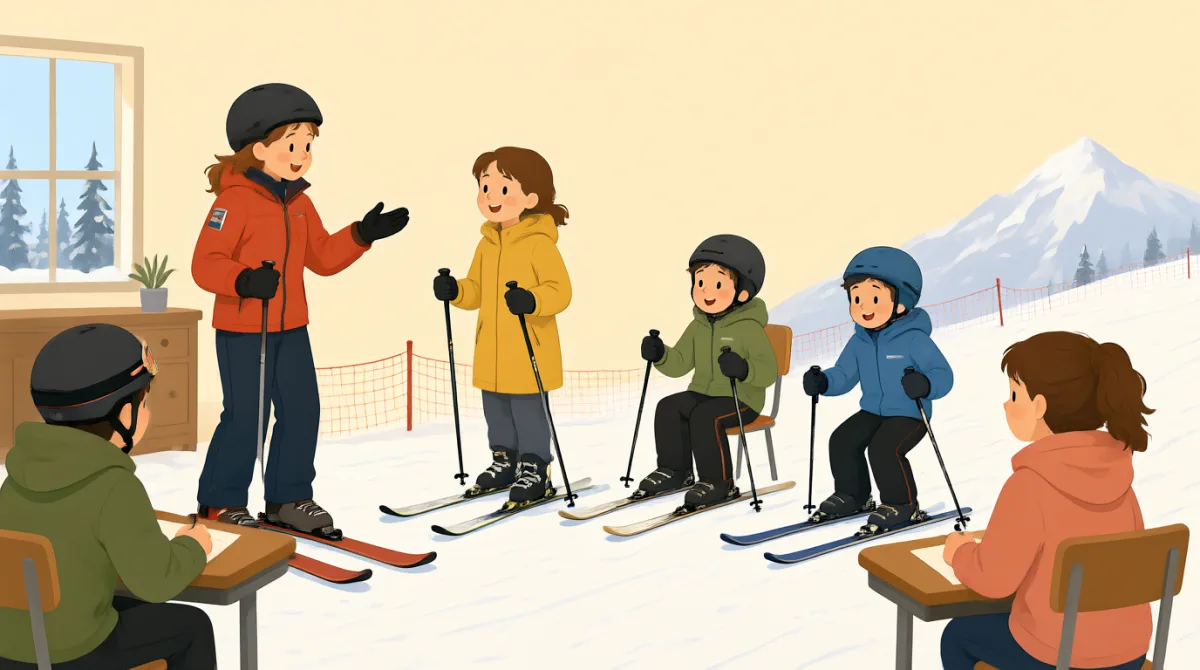

Welcome to your first ski lesson, Emma. Is this your first time on snow?
ยินดีต้อนรับสู่บทเรียนสกีครั้งแรกนะ เอ็มมา เคยมาเล่นบนหิมะมาก่อนไหม?

Yes! I’m excited, but these boots feel a little strange.
เคยไหม? ไม่เคยเลย! ตื่นเต้นจัง แต่รองเท้าบูตคู่นี้รู้สึกแปลกๆ นิดหน่อย
That’s normal. First, stand with your feet about shoulder-width apart.
เป็นเรื่องปกติจ้ะ ก่อนอื่นยืนแยกเท้าให้ห่างกันประมาณช่วงไหล่
Like this? Should I bend my knees a little?
แบบนี้เหรอ? ต้องงอเข่านิดหน่อยไหม?
Exactly. Keep your knees soft, and lean forward just a little.
ใช่เลย ผ่อนเข่าไว้ แล้วโน้มตัวไปข้างหน้าแค่นิดเดียว
How do I move on the snow without sliding too fast?
จะเคลื่อนที่บนหิมะยังไงไม่ให้ไถลเร็วเกินไป?
Take small steps first. To stop, point your ski tips toward each other.
เริ่มจากก้าวสั้นๆ ก่อนนะ ถ้าจะหยุด ให้ปลายสกีหันเข้าหากัน
Oh, that makes a snowplow shape. I’ll try it now!
อ๋อ ท่านั้นทำให้เป็นรูปคันไถหิมะนี่เอง เดี๋ยวลองทำเลย!
คำศัพท์8
- first time on snowเคยเล่นบนหิมะมาก่อน
This means the first time someone has been on snow. Use it to ask if an activity is new for someone.
หมายถึงการที่ใครสักคนได้อยู่บนหิมะเป็นครั้งแรก ใช้ถามว่ากิจกรรมนี้เป็นประสบการณ์ใหม่สำหรับอีกฝ่ายหรือเปล่า
- feel a little strangeรู้สึกแปลกๆ นิดหน่อย
This means something feels unusual or unfamiliar. Use it to describe how new clothes or equipment feel.
หมายถึงรู้สึกไม่คุ้นหรือไม่เหมือนที่เคย ใช้บรรยายความรู้สึกเมื่อใส่เสื้อผ้าหรือใช้อุปกรณ์ใหม่ๆ
- shoulder-width apartแยกห่างกันประมาณช่วงไหล่
This means your feet are as far apart as the width of your shoulders. It describes a stable standing position.
หมายถึงวางเท้าให้ห่างกันเท่ากับความกว้างของไหล่ เป็นการยืนที่ช่วยให้ทรงตัวได้มั่นคง
- bend my kneesงอเข่า
This means to move your knees so they are not straight. Use it when talking about posture or exercise.
หมายถึงขยับเข่าให้งอ ไม่เหยียดตรง ใช้พูดถึงท่าทางหรือการออกกำลังกาย
- lean forwardโน้มตัวไปข้างหน้า
This means to move the top of your body toward the front. Use it to give or follow instructions about body position.
หมายถึงขยับช่วงบนของร่างกายไปทางด้านหน้า ใช้บอกหรือทำตามคำแนะนำเกี่ยวกับท่าทาง
- take small stepsก้าวสั้นๆ
This means to move by making short steps. It is useful advice when you want to move carefully.
หมายถึงเคลื่อนที่ด้วยการก้าวทีละก้าวสั้นๆ เป็นคำแนะนำที่มีประโยชน์เมื่อต้องการเคลื่อนที่อย่างระมัดระวัง
- ski tipsปลายสกี
These are the front ends of skis. Ski instructors may use this phrase when explaining how to move or stop.
คือส่วนหน้าสุดของสกี ครูสอนสกีอาจใช้คำนี้เมื่ออธิบายวิธีเคลื่อนที่หรือหยุด
- snowplow shapeท่ารูปคันไถหิมะ
This is a shape made when the front ends of the skis point toward each other. Beginners use this position to help stop.
เป็นท่าที่ปลายสกีทั้งสองข้างหันเข้าหากัน นักสกีมือใหม่ใช้ท่านี้เพื่อช่วยหยุด
ประโยคสำคัญ8
- 1
Is this your first time on snow?
เคยมาเล่นบนหิมะมาก่อนไหม?
This is a friendly way to ask if someone has done a snow activity before. You can reuse “Is this your first time at/in…?” to ask about a new experience.
ประโยคนี้เป็นวิธีถามอย่างเป็นกันเองว่าอีกฝ่ายเคยทำกิจกรรมบนหิมะมาก่อนหรือไม่ นำรูปแบบ “Is this your first time at/in…?” ไปใช้ถามถึงประสบการณ์ใหม่ๆ ได้
- 2
These boots feel a little strange.
รองเท้าบูตคู่นี้รู้สึกแปลกๆ นิดหน่อย
Use this sentence to say that new footwear or equipment feels unusual. You can replace “boots” with another item, such as “These gloves feel a little strange.”
ใช้ประโยคนี้บอกว่ารองเท้าหรืออุปกรณ์ใหม่ให้ความรู้สึกไม่คุ้นเคย เปลี่ยน “boots” เป็นสิ่งของอย่างอื่นได้ เช่น “These gloves feel a little strange.”
- 3
First, stand with your feet about shoulder-width apart.
ก่อนอื่นยืนแยกเท้าให้ห่างกันประมาณช่วงไหล่
This gives a simple instruction for standing in a stable position. “Stand with your feet…” is useful for explaining how to get ready for an activity.
ประโยคนี้เป็นคำแนะนำง่ายๆ ให้ยืนในท่าที่มั่นคง รูปแบบ “Stand with your feet…” ใช้อธิบายวิธีเตรียมตัวก่อนทำกิจกรรมได้
- 4
Should I bend my knees a little?
ต้องงอเข่านิดหน่อยไหม?
This is a polite way to check whether you are doing something correctly. You can reuse “Should I… a little?” when asking about an action.
ใช้ถามอย่างสุภาพว่ากำลังทำสิ่งนั้นถูกต้องไหม นำรูปแบบ “Should I… a little?” ไปใช้ถามเกี่ยวกับการกระทำต่างๆ ได้
- 5
Keep your knees soft, and lean forward just a little.
ผ่อนเข่าไว้ แล้วโน้มตัวไปข้างหน้าแค่นิดเดียว
This sentence gives two clear instructions about body position. “Keep…” and “lean…” are useful verbs for giving movement directions.
ประโยคนี้ให้คำแนะนำชัดเจนสองข้อเกี่ยวกับท่าทาง คำกริยา “Keep…” และ “lean…” มีประโยชน์เมื่อต้องบอกทิศทางการเคลื่อนไหว
- 6
How do I move on the snow without sliding too fast?
จะเคลื่อนที่บนหิมะยังไงไม่ให้ไถลเร็วเกินไป?
Use this question to ask how to do something safely. You can replace “move on the snow” with another activity, such as “walk on the ice.”
ใช้คำถามนี้ถามวิธีทำสิ่งต่างๆ อย่างปลอดภัย เปลี่ยน “move on the snow” เป็นกิจกรรมอื่นได้ เช่น “walk on the ice.”
- 7
Take small steps first.
เริ่มจากก้าวสั้นๆ ก่อนนะ
This is a short instruction to move carefully and slowly. You can use “Take small steps” for other activities that require balance.
นี่เป็นคำแนะนำสั้นๆ ให้เคลื่อนที่อย่างระมัดระวังและช้าๆ ใช้ “Take small steps” กับกิจกรรมอื่นที่ต้องอาศัยการทรงตัวได้ด้วย
- 8
To stop, point your ski tips toward each other.
ถ้าจะหยุด ให้ปลายสกีหันเข้าหากัน
This explains how to stop while skiing. “To [verb],…” is a useful way to introduce an instruction or explain how to do something.
ประโยคนี้อธิบายวิธีหยุดขณะเล่นสกี รูปแบบ “To [verb],…” เป็นวิธีที่มีประโยชน์ในการเริ่มบอกคำแนะนำหรืออธิบายวิธีทำสิ่งต่างๆ