Reading the Sign
อ่านป้ายให้เข้าใจ
Emma and Jack look at the parking sign near the car. They figure out which rule Emma broke and when parking is allowed.
เอ็มมากับแจ็กดูป้ายจอดรถใกล้รถ ทั้งคู่ช่วยกันดูว่าเอ็มฝ่าฝืนกฎข้อไหน และจอดรถได้เวลาไหนบ้าง
บทสนทนา8
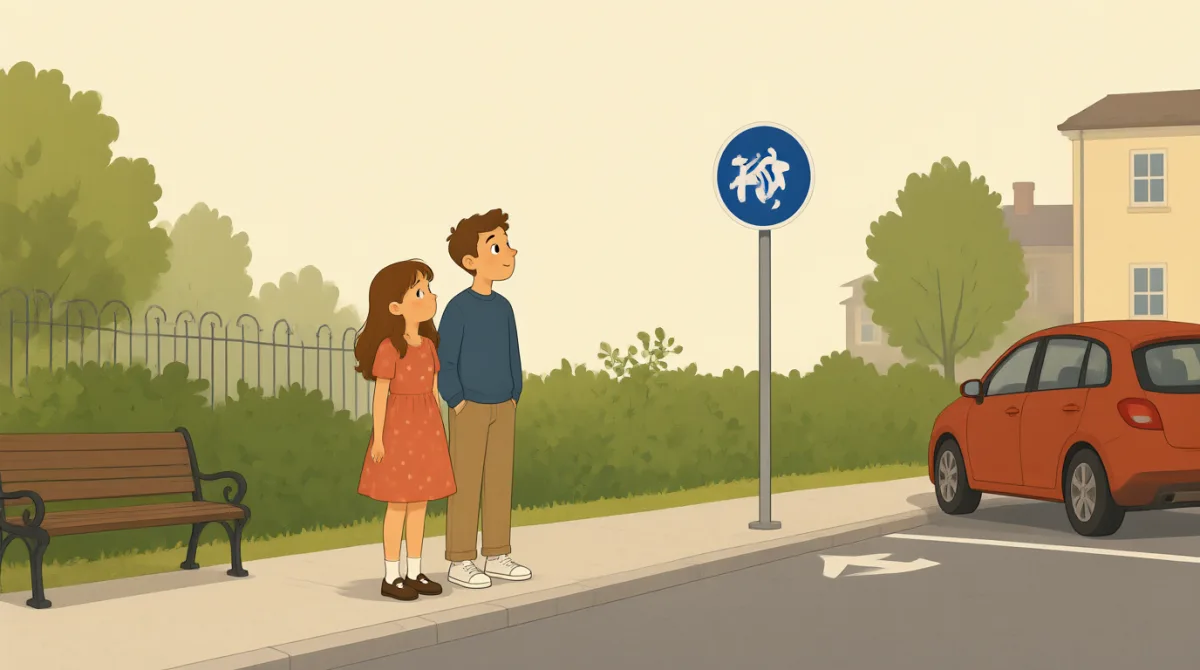

The sign says no parking from four to six. Is it four o’clock now?
ป้ายเขียนว่าห้ามจอดตั้งแต่สี่โมงถึงหกโมง ตอนนี้สี่โมงแล้วหรือยัง?

It’s five thirty. You parked here during those hours.
ตอนนี้ห้าโมงครึ่ง เธอจอดรถที่นี่ในช่วงเวลานั้นพอดี
Oh, I didn’t see that part. When can I park here?
อ๋อ ฉันไม่เห็นตรงนั้นเลย แล้วจอดที่นี่ได้ตอนไหนบ้าง?
You can park here before four or after six, but check the whole sign.
จอดที่นี่ได้ก่อนสี่โมงหรือหลังหกโมงนะ แต่อ่านป้ายให้ครบด้วยล่ะ
There’s another line. It says no parking on Mondays, too.
มีอีกบรรทัดด้วย เขียนว่าห้ามจอดวันจันทร์ด้วยนะ
Today’s Tuesday, so that rule doesn’t apply. The time rule does.
วันนี้วันอังคาร กฎข้อนั้นเลยไม่เกี่ยว แต่กฎเรื่องเวลายังมีผลอยู่
I see. I got the ticket because I parked here before six.
เข้าใจแล้ว ฉันโดนใบสั่งเพราะจอดที่นี่ก่อนหกโมง
Right. Move the car after six, and you should be fine.
ใช่ ย้ายรถหลังหกโมงก็ไม่น่ามีปัญหาแล้ว
คำศัพท์8
- no parkingห้ามจอด
This means cars are not allowed to park in a place. You might see it on a road sign.
หมายถึงห้ามนำรถมาจอดในบริเวณนั้น มักเห็นคำนี้บนป้ายจราจร
- during those hoursในช่วงเวลาดังกล่าว
This means within the times just mentioned. Use it to talk about when something happens.
หมายถึงภายในช่วงเวลาที่เพิ่งพูดถึง ใช้บอกว่าเหตุการณ์หนึ่งเกิดขึ้นเมื่อไร
- that partตรงส่วนนั้น
This means a specific section of something, such as a sign or a document. You can use it when you did not notice a detail.
หมายถึงส่วนใดส่วนหนึ่งโดยเฉพาะ เช่น ส่วนหนึ่งของป้ายหรือเอกสาร ใช้พูดเมื่อเราไม่ทันสังเกตรายละเอียด
- park hereจอดรถที่นี่
This means leave your car in this place for a time. You can ask, “Can I park here?”
หมายถึงจอดรถทิ้งไว้ตรงนี้ช่วงหนึ่ง ถามได้ว่า “Can I park here?” (ฉันจอดที่นี่ได้ไหม?)
- check the whole signอ่านป้ายให้ครบ
This means read all the information on the sign, not just one line. It is useful when signs have several rules.
หมายถึงอ่านข้อมูลทั้งหมดบนป้าย ไม่ใช่ดูแค่บรรทัดเดียว มีประโยชน์เวลาป้ายมีข้อกำหนดหลายข้อ
- doesn’t applyไม่มีผลใช้บังคับ
This means a rule or fact is not relevant in this situation. You can use it to explain why a rule does not affect someone.
หมายถึงกฎหรือข้อเท็จจริงนั้นไม่เกี่ยวข้องกับสถานการณ์นี้ ใช้อธิบายว่ากฎข้อหนึ่งไม่มีผลกับใครบางคน
- got the ticketโดนใบสั่ง
This means received a parking ticket or another official notice. Use it to say what happened in the past.
หมายถึงได้รับใบสั่งจอดรถหรือหนังสือแจ้งอย่างเป็นทางการอื่น ๆ ใช้พูดถึงสิ่งที่เกิดขึ้นในอดีต
- be fineไม่มีปัญหา
Here, this means there will probably be no problem. You can use “should be fine” to give simple reassurance.
ในที่นี้หมายถึงน่าจะไม่มีปัญหา ใช้ “should be fine” (ก็น่าจะไม่มีปัญหา) เพื่อปลอบใจหรือให้ความมั่นใจง่าย ๆ
ประโยคสำคัญ7
- 1
Is it four o’clock now?
ตอนนี้สี่โมงแล้วหรือยัง?
This is a simple way to ask about the current time. You can replace “four o’clock” with any time.
ประโยคนี้เป็นวิธีถามเวลาตอนนี้แบบง่าย ๆ เปลี่ยน “four o’clock” เป็นเวลาอื่นได้
- 2
You parked here during those hours.
เธอจอดรถที่นี่ในช่วงเวลาดังกล่าว
This sentence explains that someone parked during a restricted time. Use “during those hours” to refer to times already mentioned.
ประโยคนี้บอกว่ามีคนจอดรถในช่วงเวลาที่ห้ามจอด ใช้ “during those hours” เพื่ออ้างถึงช่วงเวลาที่พูดถึงไปแล้ว
- 3
When can I park here?
ฉันจอดที่นี่ได้ตอนไหนบ้าง?
This is a useful question when you want to know the allowed times for parking. You can replace “park” with another activity.
เป็นคำถามที่มีประโยชน์เมื่ออยากรู้ว่าจอดรถได้ช่วงเวลาไหนบ้าง เปลี่ยน “park” เป็นกิจกรรมอื่นได้
- 4
You can park here before four or after six, but check the whole sign.
จอดที่นี่ได้ก่อนสี่โมงหรือหลังหกโมง แต่อ่านป้ายให้ครบด้วยล่ะ
This explains when parking is allowed and reminds someone to read all the rules. Use “before” and “after” to describe times.
ประโยคนี้บอกว่าจอดรถได้ตอนไหน พร้อมเตือนให้อ่านกฎทุกข้อ ใช้ “before” และ “after” เพื่อบอกช่วงเวลา
- 5
Today’s Tuesday, so that rule doesn’t apply.
วันนี้วันอังคาร กฎข้อนั้นเลยไม่มีผล
This explains that a rule does not affect today because of the day of the week. You can change “Tuesday” to another day.
ประโยคนี้อธิบายว่ากฎไม่มีผลในวันนี้เพราะเป็นวันอะไร เปลี่ยน “Tuesday” เป็นวันอื่นได้
- 6
I got the ticket because I parked here before six.
ฉันโดนใบสั่งเพราะจอดที่นี่ก่อนหกโมง
This sentence gives a reason for getting a ticket. Use “because” to explain why something happened.
ประโยคนี้บอกเหตุผลที่โดนใบสั่ง ใช้ “because” เพื่ออธิบายว่าทำไมบางอย่างจึงเกิดขึ้น
- 7
Move the car after six, and you should be fine.
ย้ายรถหลังหกโมง แล้วก็น่าจะไม่มีปัญหา
This gives simple advice and reassurance. You can use “should be fine” when you think there will be no problem.
ประโยคนี้ให้คำแนะนำและช่วยให้มั่นใจแบบง่าย ๆ ใช้ “should be fine” เมื่อคิดว่าน่าจะไม่มีปัญหา