At the Tire Shop
في محل الإطارات
Emma and Jack visit a tire shop to have the damaged tire checked. They ask the mechanic about repair options and the cost.
تزور إيما وجاك محلًا للإطارات لفحص الإطار المتضرر. ويسألان الميكانيكي عن خيارات الإصلاح والتكلفة.
حوار8
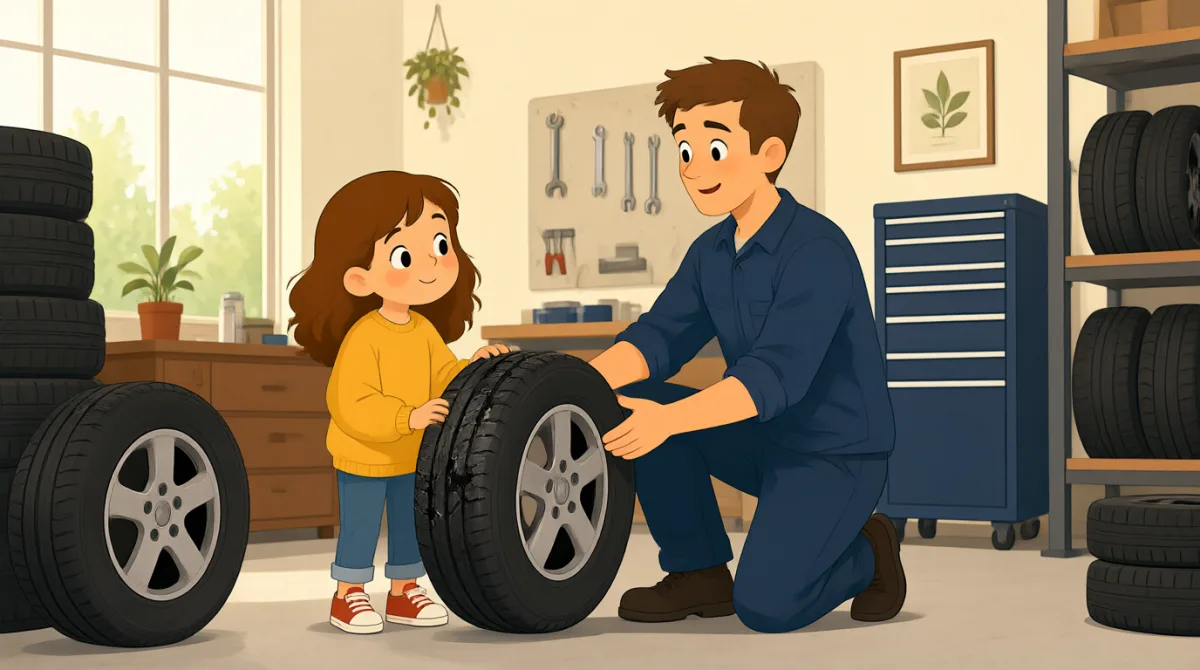

Hi, we have a flat tire. Could you check if you can repair it?
مرحبًا، لدينا إطار مثقوب. هل يمكنك فحصه لمعرفة ما إذا كان بالإمكان إصلاحه؟

Sure. I'll take a look. Did you hit anything on the road?
بالطبع. سألقي عليه نظرة. هل اصطدمتم بشيء على الطريق؟

We heard a loud thump, then the tire went flat.
سمعنا صوت ارتطام قوي، ثم فرغ هواء الإطار.
I see a nail in the tire. I'll check how deep the damage is.
أرى مسمارًا في الإطار. سأفحص مدى عمق الضرر.
Can you patch it, or will we need a new tire?
هل يمكنك ترقيعه، أم سنحتاج إلى إطار جديد؟
The hole looks small, but I need to check the inside, too.
يبدو الثقب صغيرًا، لكن عليّ فحص الجزء الداخلي أيضًا.
How long will the check take? We have the spare on now.
كم سيستغرق الفحص؟ الإطار الاحتياطي مركّب الآن.
About fifteen minutes. Please leave the car here, and I'll let you know.
حوالي خمس عشرة دقيقة. يُرجى ترك السيارة هنا، وسأخبركما.
المفردات8
- flat tireإطار مثقوب
A flat tire has lost its air and cannot work properly. You can use this phrase to explain a problem with a car tire.
الإطار المثقوب هو إطار فقد هواءه ولم يعد يعمل كما ينبغي. يمكنك استخدام هذه العبارة لوصف مشكلة في إطار السيارة.
- take a lookيلقي نظرة
This means to examine or check something. You can ask someone to take a look when you need help finding a problem.
تعني هذه العبارة أن تفحص شيئًا أو تتفقده. يمكنك أن تطلب من شخص أن يلقي نظرة عندما تحتاج إلى مساعدة في اكتشاف مشكلة.
- hit anythingيصطدم بشيء
Here, this means to bump or strike something while driving. You can ask, “Did you hit anything?” to find out what may have caused damage.
تعني هنا أن تصطدم بشيء أو ترتطم به أثناء القيادة. يمكنك أن تسأل “Did you hit anything?” لمعرفة سبب محتمل للضرر.
- went flatفرغ هواؤه
This means the tire lost its air. Use “went” to describe when it happened in the past.
تعني هذه العبارة أن الإطار فقد هواءه. استخدم “went” لوصف وقت حدوث ذلك في الماضي.
- check the insideيفحص الجزء الداخلي
This means to examine the inner part of something. At a tire shop, the mechanic may check inside the tire for damage.
تعني هذه العبارة فحص الجزء الداخلي من شيء ما. في محل الإطارات، قد يفحص الميكانيكي داخل الإطار بحثًا عن ضرر.
- patch itيرقّعه
To patch a tire means to cover and repair a small hole. You can ask if something can be patched instead of replaced.
ترقيع الإطار يعني تغطية ثقب صغير وإصلاحه. يمكنك أن تسأل إن كان بالإمكان ترقيع شيء بدلًا من استبداله.
- spareإطار احتياطي
A spare is an extra tire kept for use when another tire is damaged. You can say, “We have the spare on” to explain that it is currently being used.
الإطار الاحتياطي إطار إضافي يُحتفظ به لاستخدامه عند تلف إطار آخر. يمكنك أن تقول “We have the spare on” لتوضيح أنه مستخدم الآن.
- let you knowيخبرك
This means to tell someone information when you have it. You can use it when you promise to give someone an update.
تعني هذه العبارة إخبار شخص بمعلومة عندما تصبح متاحة. يمكنك استخدامها عندما تعد شخصًا بأن تطلعه على المستجدات.
الجمل الأساسية7
- 1
Could you check if you can repair it?
هل يمكنك فحصه لمعرفة ما إذا كان بالإمكان إصلاحه؟
This is a polite way to ask someone to see whether something can be fixed. You can reuse “Could you check if you can [do something]?” for other requests.
هذه طريقة مهذبة لطلب فحص إمكانية إصلاح شيء ما. يمكنك استخدام “Could you check if you can [do something]?” في طلبات أخرى.
- 2
Did you hit anything on the road?
هل اصطدمتم بشيء على الطريق؟
This question asks if something caused damage while someone was driving. You can use “Did you hit anything?” to ask about a possible accident or bump.
يسأل هذا السؤال عما إذا كان شيء ما قد تسبب بضرر أثناء القيادة. يمكنك استخدام “Did you hit anything?” للسؤال عن حادث أو ارتطام محتمل.
- 3
We heard a loud thump, then the tire went flat.
سمعنا صوت ارتطام قويًا، ثم فرغ هواء الإطار.
This sentence explains what happened and in what order. Use “We heard [sound], then [event]” to describe a problem.
توضح هذه الجملة ما حدث وترتيب حدوثه. استخدم “We heard [sound], then [event]” لوصف مشكلة.
- 4
I'll check how deep the damage is.
سأفحص مدى عمق الضرر.
This is a useful way to say what you will examine next. You can use “I’ll check how [adjective] it is” when you need to measure or assess something.
هذه طريقة مفيدة لقول ما ستفحصه بعد ذلك. يمكنك استخدام “I’ll check how [adjective] it is” عندما تحتاج إلى قياس شيء أو تقييمه.
- 5
Can you patch it, or will we need a new tire?
هل يمكنك ترقيعه، أم سنحتاج إلى إطار جديد؟
This asks about two possible solutions. You can reuse “Can you [repair it], or will we need [a replacement]?” when discussing a damaged item.
يسأل هذا عن حلين محتملين. يمكنك إعادة استخدام “Can you [repair it], or will we need [a replacement]?” عند مناقشة إصلاح غرض متضرر.
- 6
How long will the check take?
كم سيستغرق الفحص؟
Use this question to ask how much time a task will need. You can change “the check” to another activity, such as “the repair.”
استخدم هذا السؤال للاستفسار عن الوقت الذي ستستغرقه مهمة ما. يمكنك استبدال “the check” بنشاط آخر، مثل “the repair.”
- 7
Please leave the car here, and I'll let you know.
يُرجى ترك السيارة هنا، وسأخبركما.
This gives a polite instruction and explains that you will provide an update later. You can use “I’ll let you know” when you promise to share information.
تتضمن هذه العبارة توجيهًا مهذبًا وتوضح أنك ستطلع الشخص على المستجدات لاحقًا. يمكنك استخدام “I’ll let you know” عندما تعد بمشاركة المعلومات.