At the Tire Shop
타이어 가게에서
Emma and Jack visit a tire shop to have the damaged tire checked. They ask the mechanic about repair options and the cost.
에마와 잭은 손상된 타이어를 점검받으러 타이어 가게에 갑니다. 정비사에게 수리 방법과 비용을 물어봅니다.
대화8
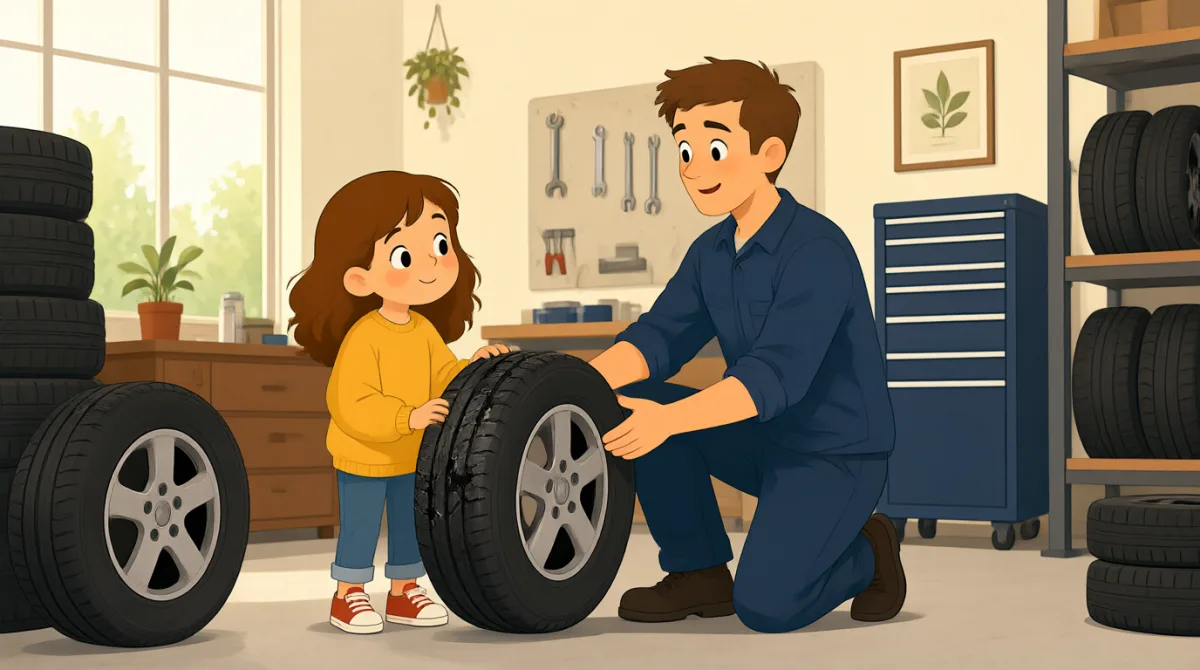

Hi, we have a flat tire. Could you check if you can repair it?
안녕하세요. 타이어가 펑크 났는데요. 수리할 수 있는지 확인해 주시겠어요?

Sure. I'll take a look. Did you hit anything on the road?
물론이죠. 한번 살펴볼게요. 운전하다가 뭔가에 부딪히셨나요?

We heard a loud thump, then the tire went flat.
큰 소리가 나더니 타이어가 펑크 났어요.
I see a nail in the tire. I'll check how deep the damage is.
타이어에 못이 박혀 있네요. 손상이 얼마나 깊은지 확인해 볼게요.
Can you patch it, or will we need a new tire?
땜질해서 고칠 수 있나요, 아니면 새 타이어가 필요한가요?
The hole looks small, but I need to check the inside, too.
구멍은 작아 보이지만, 안쪽도 확인해야 해요.
How long will the check take? We have the spare on now.
점검하는 데 얼마나 걸릴까요? 지금은 스페어타이어를 끼워 뒀어요.
About fifteen minutes. Please leave the car here, and I'll let you know.
15분 정도 걸립니다. 차는 여기에 두고 가세요. 확인한 뒤에 알려드릴게요.
어휘8
- flat tire펑크 난 타이어
A flat tire has lost its air and cannot work properly. You can use this phrase to explain a problem with a car tire.
“flat tire”는 공기가 빠져 제대로 작동하지 않는 타이어를 말해요. 자동차 타이어에 문제가 생겼다고 설명할 때 쓰는 표현이에요.
- take a look살펴보다
This means to examine or check something. You can ask someone to take a look when you need help finding a problem.
“take a look”은 무언가를 살펴보거나 확인한다는 뜻이에요. 문제를 찾는 데 도움이 필요할 때 누군가에게 살펴봐 달라고 할 수 있어요.
- hit anything무언가에 부딪히다
Here, this means to bump or strike something while driving. You can ask, “Did you hit anything?” to find out what may have caused damage.
여기서 “hit anything”은 운전하다가 무언가에 부딪히거나 충돌한다는 뜻이에요. “Did you hit anything?”이라고 물으면 무엇 때문에 손상이 생겼는지 알아볼 수 있어요.
- went flat펑크가 났다
This means the tire lost its air. Use “went” to describe when it happened in the past.
“went flat”은 타이어에서 공기가 빠졌다는 뜻이에요. 과거에 일어난 일을 말할 때 “went”를 써요.
- check the inside안쪽을 확인하다
This means to examine the inner part of something. At a tire shop, the mechanic may check inside the tire for damage.
“check the inside”는 무언가의 안쪽 부분을 살펴본다는 뜻이에요. 타이어 가게에서는 정비사가 타이어 안쪽에 손상이 있는지 확인할 수 있어요.
- patch it땜질해서 고치다
To patch a tire means to cover and repair a small hole. You can ask if something can be patched instead of replaced.
타이어를 “patch”한다는 건 작은 구멍을 메워 수리한다는 뜻이에요. 어떤 물건을 교체하는 대신 땜질해서 고칠 수 있는지 물어볼 때 쓸 수 있어요.
- spare스페어타이어
A spare is an extra tire kept for use when another tire is damaged. You can say, “We have the spare on” to explain that it is currently being used.
“spare”는 다른 타이어가 손상됐을 때 쓰려고 여분으로 보관해 두는 타이어예요. “We have the spare on”이라고 하면 지금 스페어타이어를 끼워 사용하고 있다는 뜻이에요.
- let you know알려주다
This means to tell someone information when you have it. You can use it when you promise to give someone an update.
“let you know”는 알게 된 정보를 상대에게 알려준다는 뜻이에요. 나중에 상황을 알려주겠다고 할 때 쓸 수 있어요.
핵심 문장7
- 1
Could you check if you can repair it?
수리할 수 있는지 확인해 주시겠어요?
This is a polite way to ask someone to see whether something can be fixed. You can reuse “Could you check if you can [do something]?” for other requests.
이 문장은 무언가를 고칠 수 있는지 확인해 달라고 정중하게 부탁하는 표현이에요. 다른 부탁을 할 때도 “Could you check if you can [do something]?”을 활용할 수 있어요.
- 2
Did you hit anything on the road?
운전하다가 뭔가에 부딪히셨나요?
This question asks if something caused damage while someone was driving. You can use “Did you hit anything?” to ask about a possible accident or bump.
이 질문은 운전 중에 무언가 때문에 손상이 생겼는지 묻는 표현이에요. 사고나 충돌이 있었는지 물을 때 “Did you hit anything?”이라고 할 수 있어요.
- 3
We heard a loud thump, then the tire went flat.
큰 소리가 나더니 타이어가 펑크 났어요.
This sentence explains what happened and in what order. Use “We heard [sound], then [event]” to describe a problem.
이 문장은 무슨 일이 어떤 순서로 일어났는지 설명해요. 문제 상황을 말할 때 “We heard [sound], then [event]”를 활용해 보세요.
- 4
I'll check how deep the damage is.
손상이 얼마나 깊은지 확인해 볼게요.
This is a useful way to say what you will examine next. You can use “I’ll check how [adjective] it is” when you need to measure or assess something.
다음에 무엇을 살펴볼지 말할 때 유용한 표현이에요. 무언가를 측정하거나 평가해야 할 때 “I’ll check how [adjective] it is”를 쓸 수 있어요.
- 5
Can you patch it, or will we need a new tire?
땜질해서 고칠 수 있나요, 아니면 새 타이어가 필요한가요?
This asks about two possible solutions. You can reuse “Can you [repair it], or will we need [a replacement]?” when discussing a damaged item.
이 문장은 가능한 해결 방법 두 가지를 물어봐요. 손상된 물건에 관해 이야기할 때 “Can you [repair it], or will we need [a replacement]?”을 활용해 보세요.
- 6
How long will the check take?
점검하는 데 얼마나 걸릴까요?
Use this question to ask how much time a task will need. You can change “the check” to another activity, such as “the repair.”
어떤 작업에 시간이 얼마나 필요한지 물을 때 쓰는 질문이에요. “the check” 대신 “the repair”처럼 다른 작업을 넣을 수도 있어요.
- 7
Please leave the car here, and I'll let you know.
차는 여기에 두고 가세요. 확인한 뒤에 알려드릴게요.
This gives a polite instruction and explains that you will provide an update later. You can use “I’ll let you know” when you promise to share information.
정중하게 요청하면서 나중에 상황을 알려주겠다고 말하는 표현이에요. 정보를 알려주겠다고 약속할 때 “I’ll let you know”를 쓸 수 있어요.