Asking for First Aid Supplies
ขออุปกรณ์ปฐมพยาบาล
Someone has a small cut or minor injury and needs to ask for a bandage or basic first aid supplies from a staff member or nearby person.
มีคนถูกมีดบาดเล็กน้อยหรือได้รับบาดเจ็บเล็กน้อย และต้องขอพลาสเตอร์หรืออุปกรณ์ปฐมพยาบาลพื้นฐานจากพนักงานหรือคนที่อยู่ใกล้ ๆ
บทสนทนา7
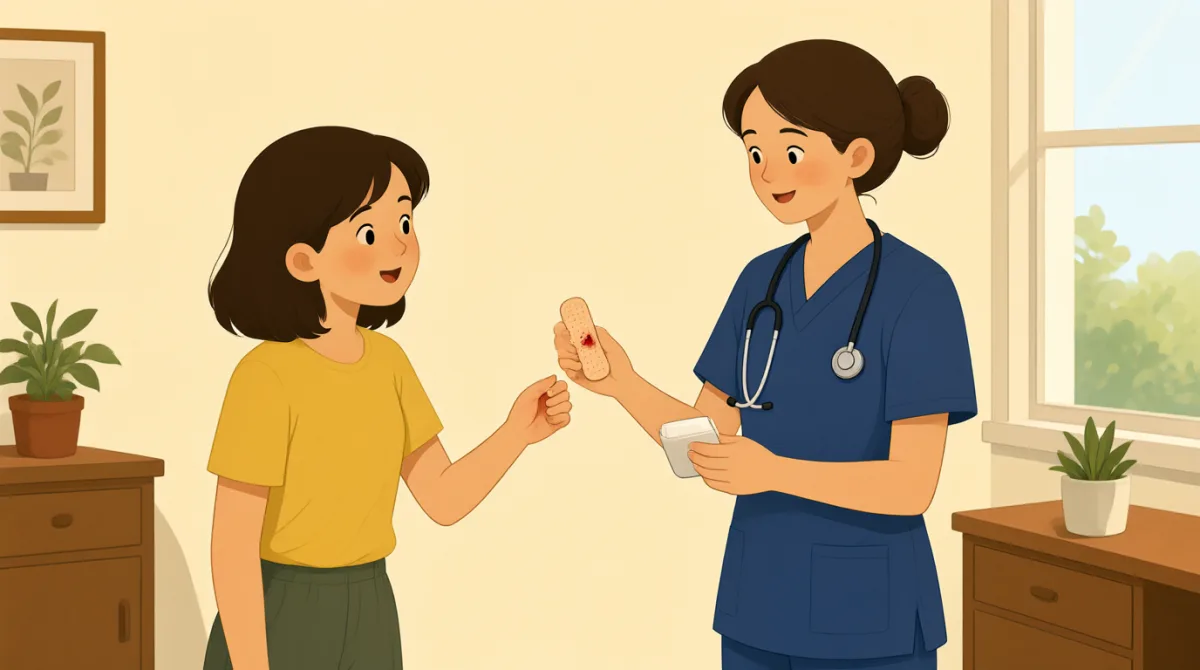

Excuse me, David? Do you happen to have a first-aid kit nearby? I just got a small cut.
ขอโทษนะ เดวิด พอจะมีชุดปฐมพยาบาลอยู่แถวนี้ไหม ฉันเพิ่งโดนบาดมานิดหน่อย

Oh, sure, Emma. Let me check. Is it bad? Here, I think we have one in this cabinet.
อ๋อ ได้เลย เอ็มมา ขอฉันดูก่อนนะ เจ็บมากไหม นี่ไง คิดว่าเรามีอยู่ในตู้ใบนี้
No, it's just a little nick, but it's bleeding a bit. I probably just need a bandage and maybe some antiseptic wipe.
ไม่หรอก แค่โดนบาดนิดเดียว แต่เลือดออกหน่อย ๆ น่าจะใช้แค่พลาสเตอร์กับแผ่นเช็ดแผลฆ่าเชื้อนิดหน่อย
Okay, here's the kit. Let's see... Yep, we have bandages of various sizes and some alcohol wipes. Do you want me to help you clean it?
โอเค นี่ชุดปฐมพยาบาล มาดูกัน... อืม มีพลาสเตอร์หลายขนาด แล้วก็แผ่นแอลกอฮอล์เช็ดแผล อยากให้ฉันช่วยทำความสะอาดแผลไหม
That's alright, I can handle it. Just hand me a couple of those small bandages and a wipe, please. Thanks so much!
ไม่เป็นไร ฉันจัดการเองได้ ขอพลาสเตอร์อันเล็ก ๆ สักสองอันกับแผ่นเช็ดแผลหน่อยนะ ขอบคุณมาก!
No problem at all. Just make sure it's clean so it doesn't get infected. Let me know if you need anything else.
ยินดีเลย แค่ทำให้แผลสะอาดไว้ จะได้ไม่ติดเชื้อ ถ้าต้องการอะไรอีกก็บอกนะ
Will do. Thanks again!
ได้เลย ขอบคุณอีกครั้งนะ!
คำศัพท์7
- first-aid kitชุดปฐมพยาบาล
A box or bag containing basic medical supplies like bandages and wipes for treating small injuries at home or work.
กล่องหรือกระเป๋าที่มีอุปกรณ์รักษาพยาบาลพื้นฐาน เช่น พลาสเตอร์และแผ่นเช็ดแผล สำหรับรักษาอาการบาดเจ็บเล็กน้อยที่บ้านหรือที่ทำงาน
- cutแผลบาด
An injury where the skin is broken open, often from something sharp like a knife; in this dialogue, it means a small wound.
บาดแผลที่เกิดจากผิวหนังถูกของมีคม เช่น มีด บาดจนเปิดออก ในบทสนทนานี้หมายถึงแผลเล็ก ๆ
- nickแผลถลอกหรือแผลบาดเล็กน้อย
A small cut or scratch, not deep; used here to describe a minor injury that is not serious.
แผลบาดหรือรอยขีดข่วนเล็ก ๆ ที่ไม่ลึก ใช้ในที่นี้เพื่อพูดถึงอาการบาดเจ็บเล็กน้อยที่ไม่ร้ายแรง
- bleedingเลือดออก
When blood comes out of a cut or wound; it's important to stop it in emergencies to prevent loss of blood.
ภาวะที่เลือดไหลออกจากแผล สิ่งสำคัญในกรณีฉุกเฉินคือการห้ามเลือดเพื่อป้องกันการเสียเลือด
- bandageพลาสเตอร์ปิดแผล
A strip of material, like a Band-Aid or adhesive plaster, used to cover and protect a cut or wound.
แถบวัสดุ เช่น พลาสเตอร์ปิดแผลแบบมีกาว ใช้ปิดและปกป้องแผลบาดหรือบาดแผล
- antiseptic wipeแผ่นเช็ดแผลฆ่าเชื้อ
A small cloth or pad soaked in a cleaning liquid to disinfect wounds and prevent infection; also called alcohol wipes.
ผ้าหรือแผ่นเล็ก ๆ ที่ชุบน้ำยาทำความสะอาด ใช้ฆ่าเชื้อแผลและป้องกันการติดเชื้อ เรียกอีกอย่างว่าแผ่นแอลกอฮอล์เช็ดแผล
- infectedติดเชื้อ
When a wound gets bacteria inside, causing swelling, pain, or fever; keeping it clean helps avoid this.
ภาวะที่แบคทีเรียเข้าสู่แผล ทำให้บวม เจ็บ หรือมีไข้ การรักษาแผลให้สะอาดช่วยป้องกันภาวะนี้ได้
ประโยคสำคัญ6
- 1
Excuse me, David? Do you happen to have a first-aid kit nearby?
ขอโทษนะ เดวิด พอจะมีชุดปฐมพยาบาลอยู่แถวนี้ไหม
This is a polite way to ask for help in an emergency. 'Do you happen to have' is a soft, indirect question to check if something is available without being demanding; useful when approaching someone for assistance.
นี่เป็นวิธีขอความช่วยเหลืออย่างสุภาพในกรณีฉุกเฉิน “Do you happen to have” เป็นคำถามอ้อม ๆ ที่ฟังดูนุ่มนวล ใช้ถามว่ามีสิ่งนั้นหรือไม่โดยไม่ฟังดูเรียกร้อง เหมาะเวลาขอความช่วยเหลือจากใครสักคน
- 2
Is it bad?
เจ็บมากไหม
A simple question to check the severity of an injury. 'It' refers to the cut; this shows concern and is common in safety situations to assess if more help is needed.
เป็นคำถามง่าย ๆ เพื่อประเมินว่าอาการบาดเจ็บรุนแรงแค่ไหน “It” หมายถึงแผลบาด ประโยคนี้แสดงความเป็นห่วง และมักใช้ในสถานการณ์เกี่ยวกับความปลอดภัยเพื่อดูว่าต้องการความช่วยเหลือเพิ่มเติมหรือไม่
- 3
No, it's just a little nick, but it's bleeding a bit.
ไม่หรอก แค่แผลบาดนิดเดียว แต่เลือดออกหน่อย ๆ
This reassures that the injury is minor while explaining the problem. 'Just a little' minimizes it, and 'but' contrasts with the bleeding; good for describing small emergencies calmly.
ประโยคนี้ช่วยให้อีกฝ่ายสบายใจว่าอาการบาดเจ็บไม่รุนแรง พร้อมทั้งบอกปัญหาที่เกิดขึ้น “Just a little” ช่วยเน้นว่าเป็นแผลเล็กน้อย ส่วน “but” ใช้บอกความแตกต่างกับการที่เลือดออก เหมาะสำหรับอธิบายเหตุฉุกเฉินเล็ก ๆ อย่างใจเย็น
- 4
Do you want me to help you clean it?
อยากให้ฉันช่วยทำความสะอาดแผลไหม
An offer of assistance using 'Do you want me to' for polite suggestions. 'It' refers to the wound; useful in helping situations to show care without assuming.
เป็นการเสนอความช่วยเหลืออย่างสุภาพโดยใช้ “Do you want me to” เพื่อถามว่าอีกฝ่ายต้องการให้ช่วยหรือไม่ “It” หมายถึงแผล เหมาะสำหรับแสดงความห่วงใยโดยไม่คิดไปเองว่าอีกฝ่ายต้องการความช่วยเหลือ
- 5
That's alright, I can handle it.
ไม่เป็นไร ฉันจัดการเองได้
A polite way to decline help. 'That's alright' means 'no thank you,' and 'handle it' means 'deal with it myself'; common when you want to manage a minor issue independently.
เป็นวิธีปฏิเสธความช่วยเหลืออย่างสุภาพ “That's alright” หมายถึง “ไม่เป็นไร ขอบคุณ” และ “handle it” หมายถึง “จัดการด้วยตัวเอง” มักใช้เมื่ออยากดูแลปัญหาเล็กน้อยด้วยตัวเอง
- 6
No problem at all. Just make sure it's clean so it doesn't get infected.
ยินดีเลย แค่ทำให้แผลสะอาดไว้ จะได้ไม่ติดเชื้อ
This gives advice after helping. 'No problem at all' is a friendly response to thanks, and 'so it doesn't get infected' explains the reason using 'so' for purpose; practical for safety reminders.
เป็นคำแนะนำหลังจากช่วยเหลือแล้ว “No problem at all” เป็นคำตอบที่เป็นมิตรเมื่อมีคนขอบคุณ ส่วน “so it doesn't get infected” อธิบายเหตุผลโดยใช้ “so” เพื่อบอกจุดประสงค์ เหมาะสำหรับเตือนเรื่องความปลอดภัยที่นำไปใช้ได้จริง