Child Running Around Supermarket
เด็กวิ่งวุ่นไปทั่วซูเปอร์มาร์เก็ต
A parent apologizes to another shopper or staff member because their child is running wildly through the aisles of a supermarket, potentially causing inconvenience or minor accidents.
ผู้ปกครองขอโทษลูกค้าหรือพนักงานคนอื่น เพราะลูกวิ่งวุ่นไปตามทางเดินในซูเปอร์มาร์เก็ต ซึ่งอาจสร้างความลำบากหรือทำให้เกิดอุบัติเหตุเล็กน้อยได้
บทสนทนา7
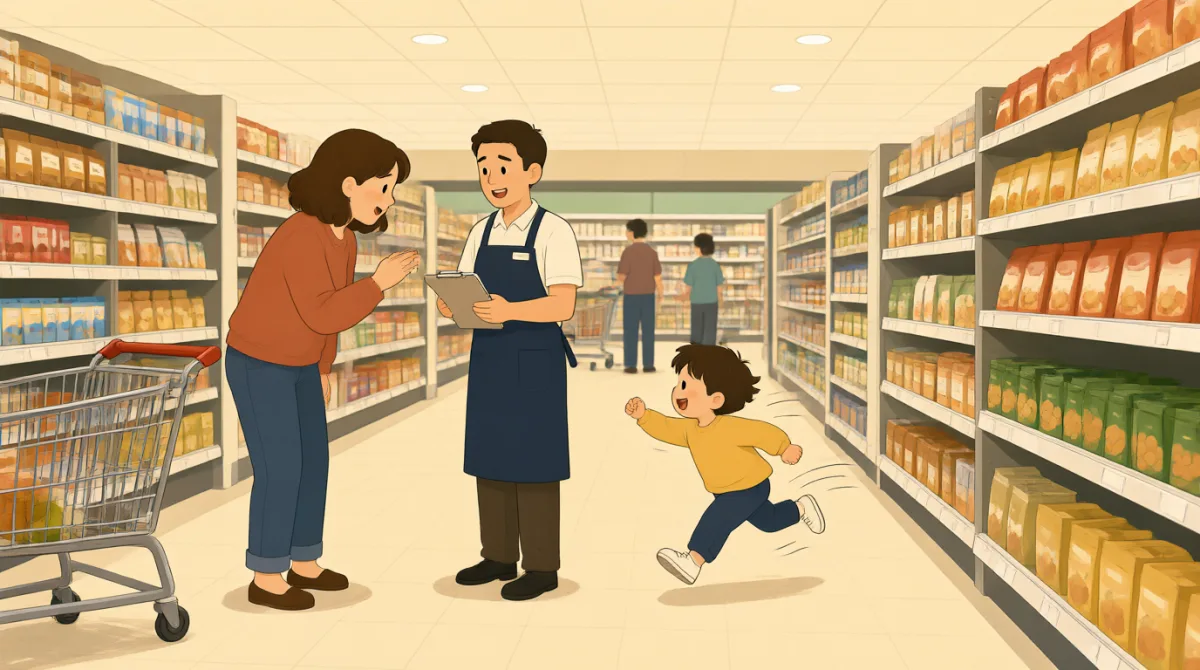

Oh, excuse me! I am so sorry about my son. He's a bit too energetic today.
เอ่อ ขอโทษนะคะ! ฉันขอโทษจริง ๆ เรื่องลูกชายค่ะ วันนี้เขาคึกคักเกินไปหน่อย

No worries at all. Kids will be kids, right?
ไม่เป็นไรเลยครับ เด็ก ๆ ก็เป็นแบบนี้แหละครับ จริงไหมครับ
Still, he could trip someone. Jonathan, please slow down!
ถึงอย่างนั้น เขาอาจทำให้ใครสะดุดล้มได้นะคะ โจนาธาน ช้าลงหน่อยจ้ะ!
It's fine, really. I remember my own kids doing the same thing. Just trying to have some fun.
ไม่เป็นไรจริง ๆ ครับ ผมจำได้ว่าลูก ๆ ของผมก็เคยทำแบบเดียวกัน แค่พยายามหาความสนุกน่ะครับ
I appreciate your understanding. He's usually not quite this wild in public.
ขอบคุณที่เข้าใจนะคะ ปกติเขาไม่ได้ซนขนาดนี้เวลาอยู่ในที่สาธารณะค่ะ
Don't worry about it. Enjoy the rest of your shopping!
ไม่ต้องกังวลหรอกครับ ขอให้ช้อปปิ้งต่ออย่างมีความสุขนะครับ!
You too. Thanks again!
เช่นกันค่ะ ขอบคุณอีกครั้งนะคะ!
คำศัพท์9
- excuse meขอโทษนะ
A polite way to get someone's attention or to apologize for a small interruption, often used before saying sorry.
คำสุภาพที่ใช้เรียกความสนใจหรือขอโทษเมื่อรบกวนอีกฝ่ายเล็กน้อย มักพูดก่อนกล่าวคำขอโทษ
- sorryขอโทษ
An expression of apology when you feel bad about something, like a child's bad behavior; it's very common in everyday English.
คำพูดเพื่อขอโทษเมื่อรู้สึกไม่ดีต่อสิ่งที่เกิดขึ้น เช่น พฤติกรรมที่ไม่เหมาะสมของเด็ก เป็นคำที่ใช้กันทั่วไปในชีวิตประจำวัน
- energeticกระฉับกระเฉง
Describes someone full of energy and activity, often used for children who are very active or hyper.
ใช้อธิบายคนที่มีพลังและชอบทำกิจกรรม มักใช้พูดถึงเด็กที่กระตือรือร้นหรือซุกซนมาก
- worriesความกังวล
Short for 'no worries,' meaning it's not a problem at all; a casual way to reassure someone.
เป็นส่วนหนึ่งของสำนวน 'no worries' ที่หมายถึงไม่เป็นปัญหาเลย ใช้พูดสบาย ๆ เพื่อให้อีกฝ่ายไม่ต้องกังวล
- kidsเด็ก ๆ
Informal word for children; used in relaxed conversations instead of the more formal 'children.'
คำไม่เป็นทางการที่หมายถึงเด็ก ใช้ในการสนทนาสบาย ๆ แทนคำที่เป็นทางการกว่าอย่าง 'children'
- tripทำให้สะดุด
To cause someone to fall by accidentally hitting their foot; here, it means the child might make someone stumble.
ทำให้ใครบางคนล้มโดยเผลอไปโดนเท้าของเขา ในที่นี้หมายถึงเด็กอาจทำให้ใครสะดุด
- wildซน
Describes uncontrolled or crazy behavior, like a child running around without listening; useful for describing naughty actions.
ใช้อธิบายพฤติกรรมที่ควบคุมไม่ได้หรือเอะอะวุ่นวาย เช่น เด็กวิ่งไปมาโดยไม่ฟัง เหมาะสำหรับพูดถึงการกระทำที่ไม่เรียบร้อย
- appreciateซาบซึ้ง
To feel grateful for something, like someone's kindness; often used in polite responses to thanks.
รู้สึกขอบคุณต่อบางสิ่ง เช่น ความใจดีของใครสักคน มักใช้ตอบอย่างสุภาพเมื่ออีกฝ่ายช่วยเหลือหรือแสดงความเข้าใจ
- understandingความเข้าใจ
Being sympathetic and not upset about a situation; shows patience, especially with parents and kids.
การเห็นอกเห็นใจและไม่โกรธกับสถานการณ์นั้น แสดงถึงความอดทน โดยเฉพาะเมื่อเข้าใจผู้ปกครองและเด็ก
ประโยคสำคัญ7
- 1
Oh, excuse me! I am so sorry about my son.
เอ่อ ขอโทษนะคะ! ฉันขอโทษจริง ๆ เรื่องลูกชายค่ะ
This is a polite way to start an apology; 'excuse me' gets attention, and 'I am so sorry about' expresses regret for a specific reason. Useful for interrupting to apologize in public.
ประโยคนี้เป็นวิธีเริ่มต้นขอโทษอย่างสุภาพ โดย 'excuse me' ใช้เรียกความสนใจ และ 'I am so sorry about' ใช้แสดงความเสียใจต่อเรื่องใดเรื่องหนึ่ง เหมาะเมื่ออยากขัดจังหวะเพื่อขอโทษในที่สาธารณะ
- 2
He's a bit too energetic today.
วันนี้เขาคึกคักเกินไปหน่อยค่ะ
Uses 'a bit too' to mean slightly more than normal; 'energetic' describes high energy. This sentence explains a child's behavior softly without blaming.
ใช้ 'a bit too' เพื่อบอกว่ามากกว่าปกติเล็กน้อย ส่วน 'energetic' หมายถึงมีพลังมาก ประโยคนี้ช่วยอธิบายพฤติกรรมของเด็กอย่างนุ่มนวลโดยไม่กล่าวโทษ
- 3
No worries at all. Kids will be kids, right?
ไม่เป็นไรเลยครับ เด็ก ๆ ก็เป็นแบบนี้แหละครับ จริงไหมครับ
A reassuring response to an apology; 'kids will be kids' is an idiom meaning children act childishly sometimes. The 'right?' seeks agreement casually. Great for showing empathy.
เป็นคำตอบที่ช่วยให้อีกฝ่ายสบายใจหลังจากขอโทษ 'kids will be kids' เป็นสำนวนที่หมายถึงบางครั้งเด็ก ๆ ก็ทำตัวสมวัย ส่วน 'right?' ใช้ถามเพื่อขอให้อีกฝ่ายเห็นด้วยอย่างเป็นกันเอง เหมาะสำหรับแสดงความเห็นอกเห็นใจ
- 4
Still, he could trip someone.
ถึงอย่างนั้น เขาก็อาจทำให้ใครสะดุดล้มได้นะคะ
'Still' means 'even so' or 'however'; 'could' shows possibility of danger. This highlights a potential problem politely, useful in apologies to explain concerns.
'Still' หมายถึง 'ถึงอย่างนั้น' หรือ 'อย่างไรก็ตาม' ส่วน 'could' แสดงความเป็นไปได้ที่จะเกิดอันตราย ประโยคนี้ชี้ให้เห็นปัญหาที่อาจเกิดขึ้นอย่างสุภาพ เหมาะสำหรับอธิบายสิ่งที่กังวลขณะขอโทษ
- 5
I appreciate your understanding.
ขอบคุณที่เข้าใจนะคะ
Expresses thanks for patience; simple present tense for general gratitude. This is a polite way to end an apology conversation and build goodwill.
ใช้แสดงความขอบคุณที่อีกฝ่ายอดทนและเข้าใจ รูปปัจจุบันอย่างง่ายสื่อถึงความรู้สึกขอบคุณโดยทั่วไป เป็นวิธีสุภาพในการปิดท้ายบทสนทนาขอโทษและสร้างความรู้สึกที่ดีต่อกัน
- 6
Don't worry about it.
ไม่ต้องกังวลหรอกครับ
A common phrase to dismiss concerns; imperative 'don't worry' is direct but friendly. Use it to comfort someone who feels bad about a minor issue.
เป็นวลีที่ใช้บ่อยเพื่อบอกให้อีกฝ่ายไม่ต้องคิดมาก คำสั่ง 'don't worry' ฟังตรงไปตรงมาแต่เป็นมิตร ใช้ปลอบใจคนที่รู้สึกไม่ดีเกี่ยวกับเรื่องเล็กน้อยได้
- 7
You too. Thanks again!
เช่นกันค่ะ ขอบคุณอีกครั้งนะคะ!
'You too' mirrors a wish back, like 'enjoy shopping'; 'thanks again' reinforces gratitude. Short and natural for ending positive interactions.
'You too' ใช้กล่าวคำอวยพรกลับไป เช่น หลังจากอีกฝ่ายบอกให้ช้อปปิ้งอย่างมีความสุข ส่วน 'thanks again' ใช้ย้ำคำขอบคุณ เป็นประโยคสั้น ๆ ที่ฟังเป็นธรรมชาติเมื่อต้องการจบบทสนทนาอย่างเป็นมิตร