Child Noisy in Restaurant
เด็กส่งเสียงดังในร้านอาหาร
A parent apologizes to nearby diners or staff because their child is being loud, shouting, or running around in a restaurant.
ผู้ปกครองขอโทษลูกค้าหรือพนักงานที่อยู่ใกล้ ๆ เพราะลูกส่งเสียงดัง ตะโกน หรือวิ่งไปมาในร้านอาหาร
บทสนทนา5
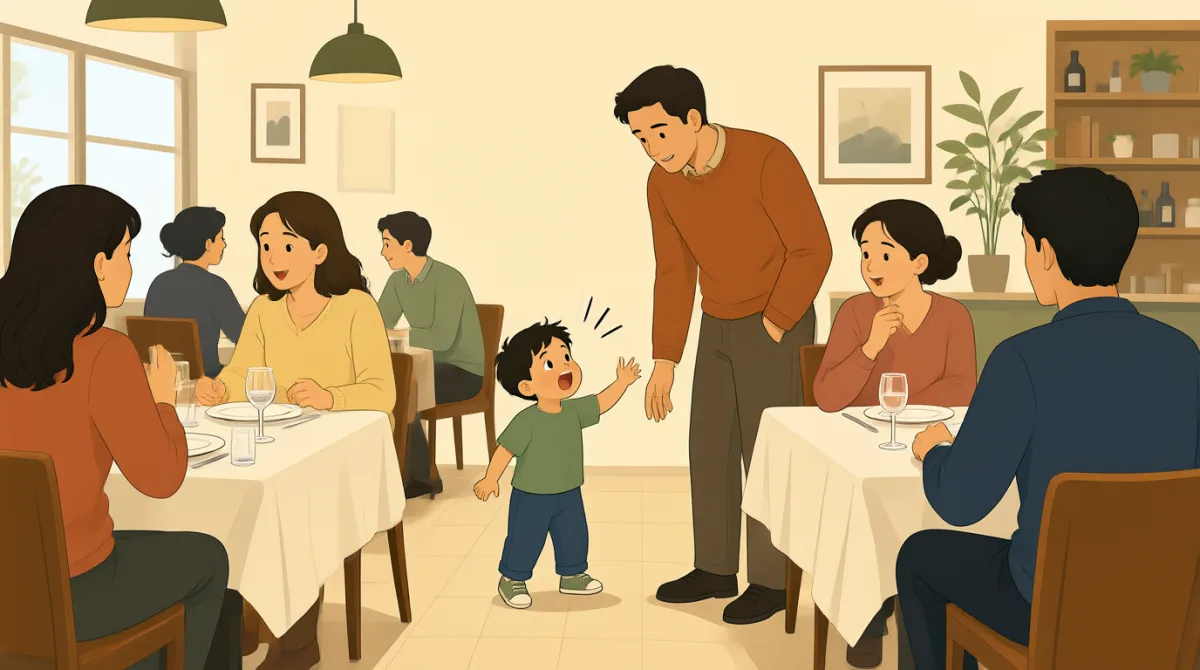

Oh, I'm so sorry about that! He's just a bit overexcited.
โอ๊ย ขอโทษจริง ๆ นะคะ! เขาตื่นเต้นเกินไปหน่อยค่ะ

No worries at all. Kids will be kids, right?
ไม่เป็นไรเลยครับ เด็ก ๆ ก็เป็นแบบนี้แหละครับ ใช่ไหมครับ
Still, I hope he's not disturbing your meal too much. I'm trying to calm him down.
ถึงอย่างนั้นก็หวังว่าเขาจะไม่รบกวนมื้ออาหารของคุณมากเกินไปนะคะ ฉันกำลังพยายามทำให้เขาสงบลงค่ะ
Honestly, it's fine. We have kids too, so we understand.
พูดจริง ๆ นะครับ ไม่เป็นไรเลย เราก็มีลูกเหมือนกัน เลยเข้าใจครับ
That's very kind of you to say. Thank you.
คุณพูดได้น่ารักมากเลยค่ะ ขอบคุณนะคะ
คำศัพท์6
- overexcitedตื่นเต้นเกินไป
This means too excited or energetic, often in a way that makes someone act wildly. Use it when describing children who are hyper, like in a fun place.
คำว่า "overexcited" หมายถึงตื่นเต้นหรือมีพลังมากเกินไป จนอาจทำตัววุ่นวาย ใช้พูดถึงเด็กที่คึกคักมาก เช่น เวลาอยู่ในสถานที่สนุก ๆ
- disturbingรบกวน
This adjective means bothering or interrupting someone. It's useful for apologizing when noise or actions affect others, such as in public places.
คำคุณศัพท์ "disturbing" หมายถึงการทำให้ใครบางคนเดือดร้อนหรือถูกรบกวน คำนี้มีประโยชน์เวลาขอโทษที่เสียงหรือการกระทำของเราส่งผลกระทบต่อคนอื่น เช่น ในที่สาธารณะ
- calm downทำให้สงบลง
This phrasal verb means to become quiet and relaxed. Parents often use it to tell or describe soothing a noisy child.
วลี "calm down" หมายถึงสงบลงหรือผ่อนคลายลง พ่อแม่มักใช้วลีนี้เพื่อบอกหรืออธิบายว่ากำลังปลอบเด็กที่ส่งเสียงดังให้สงบลง
- no worriesไม่เป็นไร
This casual phrase means 'don't worry' or 'it's okay.' It's a friendly way to reassure someone after an apology, common in everyday English.
วลีสบาย ๆ "no worries" หมายถึง “ไม่ต้องกังวล” หรือ “ไม่เป็นไร” ใช้พูดปลอบใจอย่างเป็นมิตรเมื่อมีคนขอโทษ เป็นสำนวนที่พบบ่อยในชีวิตประจำวัน
- kids will be kidsเด็ก ๆ ก็เป็นแบบนี้แหละ
This idiom means children naturally behave in playful or naughty ways, so it's normal. Use it to show understanding and forgiveness for typical kid behavior.
สำนวน "kids will be kids" หมายถึงเด็ก ๆ มักซุกซนหรือเล่นสนุกตามธรรมชาติ จึงเป็นเรื่องปกติ ใช้เพื่อแสดงความเข้าใจและให้อภัยพฤติกรรมตามวัยของเด็ก
- honestlyพูดจริง ๆ
This adverb means 'truly' or 'frankly.' It adds sincerity to statements, like when reassuring someone that something is really okay.
คำว่า "honestly" หมายถึง “พูดจริง ๆ” หรือ “พูดตามตรง” ใช้เพิ่มน้ำหนักให้ฟังดูจริงใจ เช่น เวลายืนยันกับใครสักคนว่าเรื่องนั้นไม่เป็นไรจริง ๆ
ประโยคสำคัญ5
- 1
Oh, I'm so sorry about that! He's just a bit overexcited.
โอ๊ย ขอโทษจริง ๆ นะคะ! เขาตื่นเต้นเกินไปหน่อยค่ะ
This is a polite apology for something unwanted, like noise. 'So sorry' emphasizes regret, and 'just a bit' softens the explanation. Use it immediately after an incident to show you're addressing it.
ประโยคนี้ใช้ขอโทษอย่างสุภาพเมื่อเกิดเรื่องที่ไม่พึงประสงค์ เช่น มีเสียงดัง "So sorry" ช่วยเน้นความรู้สึกเสียใจ ส่วน "just a bit" ทำให้คำอธิบายฟังดูเบาลง ใช้พูดทันทีหลังเกิดเหตุเพื่อแสดงว่าคุณใส่ใจและกำลังจัดการอยู่
- 2
No worries at all. Kids will be kids, right?
ไม่เป็นไรเลยครับ เด็ก ๆ ก็เป็นแบบนี้แหละครับ ใช่ไหมครับ
This reassures the apologizer that it's fine. 'No worries at all' is very casual and forgiving, and the idiom 'kids will be kids' plus 'right?' seeks agreement. Great for responding empathetically in social situations.
ประโยคนี้ช่วยให้คนที่ขอโทษสบายใจว่าไม่เป็นไร "No worries at all" เป็นคำพูดสบาย ๆ ที่แสดงการให้อภัย ส่วนสำนวน "kids will be kids" ตามด้วย "right?" เป็นการชวนให้อีกฝ่ายเห็นด้วย เหมาะสำหรับตอบอย่างเข้าอกเข้าใจในสถานการณ์ทางสังคม
- 3
Still, I hope he's not disturbing your meal too much. I'm trying to calm him down.
ถึงอย่างนั้นก็หวังว่าเขาจะไม่รบกวนมื้ออาหารของคุณมากเกินไปนะคะ ฉันกำลังพยายามทำให้เขาสงบลงค่ะ
This shows continued concern despite the apology. 'Still' connects to previous talk, 'disturbing' describes the issue, and the present continuous 'I'm trying' explains ongoing action. Useful for polite follow-up in apologies.
ประโยคนี้แสดงว่ายังคงเป็นห่วงแม้จะขอโทษไปแล้ว "Still" เชื่อมโยงกับสิ่งที่พูดก่อนหน้า ส่วน "disturbing" อธิบายปัญหาที่เกิดขึ้น และรูปปัจจุบันต่อเนื่องใน "I'm trying" บอกว่ากำลังลงมือทำอยู่ ใช้พูดต่ออย่างสุภาพหลังขอโทษได้
- 4
Honestly, it's fine. We have kids too, so we understand.
พูดจริง ๆ นะครับ ไม่เป็นไรเลย เราก็มีลูกเหมือนกัน เลยเข้าใจครับ
This sincerely dismisses the problem. 'Honestly' adds truthfulness, and 'so' shows cause and result (because we have kids, we understand). It's practical for building rapport when relating to others' experiences.
ประโยคนี้ช่วยยืนยันอย่างจริงใจว่าเรื่องนั้นไม่เป็นไร "Honestly" ช่วยเน้นว่าพูดจากใจ ส่วน "so" แสดงเหตุและผล คือเพราะเราก็มีลูกเหมือนกัน เราจึงเข้าใจ ประโยคนี้ช่วยสร้างความรู้สึกเป็นกันเองเมื่อพูดถึงประสบการณ์ที่คล้ายกัน
- 5
That's very kind of you to say. Thank you.
คุณพูดได้น่ารักมากเลยค่ะ ขอบคุณนะคะ
This thanks someone for their nice words. 'Kind of you' compliments their response, and it's a polite way to end the exchange. Use it to acknowledge understanding and show gratitude.
ประโยคนี้ใช้ขอบคุณอีกฝ่ายที่พูดจาดี ๆ "Kind of you" เป็นคำชมการตอบรับของเขา และเป็นวิธีสุภาพในการจบบทสนทนา ใช้แสดงว่าคุณซาบซึ้งที่อีกฝ่ายเข้าใจและขอบคุณในน้ำใจของเขา