Child Running Around Supermarket
طفل يركض في أرجاء السوبر ماركت
A parent apologizes to another shopper or staff member because their child is running wildly through the aisles of a supermarket, potentially causing inconvenience or minor accidents.
يعتذر أحد الوالدين لزبون آخر أو لأحد الموظفين لأن طفله يركض بجنون بين ممرات السوبر ماركت، وقد يسبب إزعاجًا أو حوادث بسيطة.
حوار7
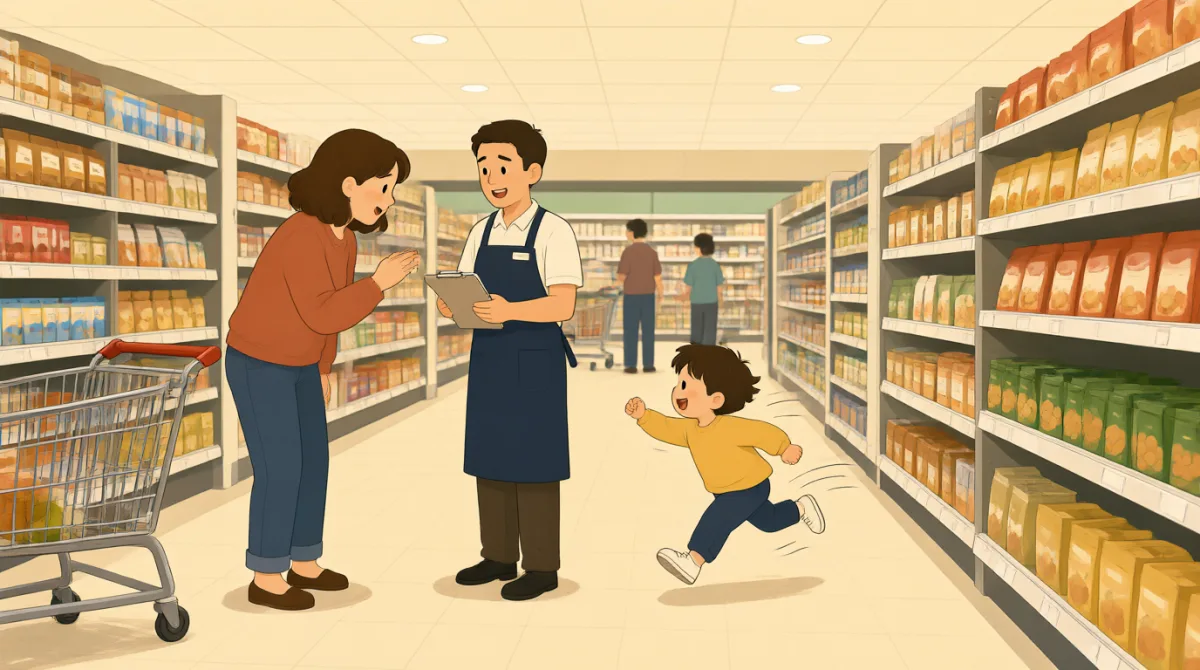

Oh, excuse me! I am so sorry about my son. He's a bit too energetic today.
عذرًا! أعتذر بشدة عن تصرف ابني. إنه مفعم بالطاقة أكثر من اللازم اليوم.

No worries at all. Kids will be kids, right?
لا بأس إطلاقًا. الأطفال أطفال، أليس كذلك؟
Still, he could trip someone. Jonathan, please slow down!
مع ذلك، قد يُسقط أحدًا أرضًا. جوناثان، أبطئ من فضلك!
It's fine, really. I remember my own kids doing the same thing. Just trying to have some fun.
لا بأس حقًا. أتذكر أن أطفالي كانوا يفعلون الشيء نفسه. إنهم يحاولون فقط الاستمتاع.
I appreciate your understanding. He's usually not quite this wild in public.
أقدّر تفهّمك. عادةً لا يكون بهذه الشقاوة في الأماكن العامة.
Don't worry about it. Enjoy the rest of your shopping!
لا تقلقي بشأن ذلك. استمتعي ببقية تسوّقك!
You too. Thanks again!
وأنت أيضًا. شكرًا مرة أخرى!
المفردات9
- excuse meعذرًا
A polite way to get someone's attention or to apologize for a small interruption, often used before saying sorry.
تعبير مهذب للفت انتباه شخص ما أو للاعتذار عن مقاطعة بسيطة، وغالبًا ما يُقال قبل الاعتذار.
- sorryآسف / أعتذر
An expression of apology when you feel bad about something, like a child's bad behavior; it's very common in everyday English.
تعبير عن الاعتذار عندما تشعر بالأسف تجاه أمر ما، مثل سوء تصرف طفل. وهو شائع جدًا في الإنجليزية اليومية.
- energeticمفعم بالطاقة
Describes someone full of energy and activity, often used for children who are very active or hyper.
تصف شخصًا لديه طاقة ونشاط كبيران، وغالبًا ما تُستخدم لوصف الأطفال كثيري الحركة أو المفرطي النشاط.
- worriesقلق / مشكلة
Short for 'no worries,' meaning it's not a problem at all; a casual way to reassure someone.
تأتي هنا ضمن التعبير 'no worries'، أي لا مشكلة إطلاقًا. وهي طريقة غير رسمية لطمأنة شخص ما.
- kidsأطفال
Informal word for children; used in relaxed conversations instead of the more formal 'children.'
كلمة غير رسمية تعني الأطفال، وتُستخدم في المحادثات الودية بدلًا من الكلمة الأكثر رسمية 'children'.
- tripيُسقط أرضًا
To cause someone to fall by accidentally hitting their foot; here, it means the child might make someone stumble.
يجعل شخصًا يقع بسبب اصطدام قدمه به عن طريق الخطأ؛ وهنا تعني أن الطفل قد يجعل أحدهم يتعثر.
- wildجامح
Describes uncontrolled or crazy behavior, like a child running around without listening; useful for describing naughty actions.
تصف سلوكًا غير منضبط أو فوضويًا، مثل طفل يركض في كل مكان ولا يستجيب. وهي مفيدة لوصف التصرفات الشقية.
- appreciateيقدّر
To feel grateful for something, like someone's kindness; often used in polite responses to thanks.
يشعر بالامتنان لشيء ما، مثل لطف شخص آخر. وغالبًا ما تُستخدم للتعبير عن الشكر بأدب.
- understandingتفهّم
Being sympathetic and not upset about a situation; shows patience, especially with parents and kids.
التعاطف مع موقف ما وعدم الانزعاج منه؛ ويُظهر الصبر، خصوصًا عند التعامل مع الوالدين والأطفال.
الجمل الأساسية7
- 1
Oh, excuse me! I am so sorry about my son.
عذرًا! أعتذر بشدة عن تصرف ابني.
This is a polite way to start an apology; 'excuse me' gets attention, and 'I am so sorry about' expresses regret for a specific reason. Useful for interrupting to apologize in public.
هذه طريقة مهذبة لبدء الاعتذار؛ فعبارة 'excuse me' تلفت الانتباه، وعبارة 'I am so sorry about' تعبّر عن الأسف لسبب محدد. وهي مفيدة للاعتذار عند مقاطعة شخص في مكان عام.
- 2
He's a bit too energetic today.
إنه مفعم بالطاقة أكثر من اللازم اليوم.
Uses 'a bit too' to mean slightly more than normal; 'energetic' describes high energy. This sentence explains a child's behavior softly without blaming.
تُستخدم 'a bit too' للدلالة على أن الشيء يتجاوز المعتاد قليلًا، وتصف 'energetic' النشاط والطاقة الكبيرين. تشرح هذه الجملة سلوك الطفل بلطف من دون لومه.
- 3
No worries at all. Kids will be kids, right?
لا بأس إطلاقًا. الأطفال أطفال، أليس كذلك؟
A reassuring response to an apology; 'kids will be kids' is an idiom meaning children act childishly sometimes. The 'right?' seeks agreement casually. Great for showing empathy.
هذا رد مطمئن على الاعتذار. وعبارة 'kids will be kids' تعبير اصطلاحي يعني أن الأطفال يتصرفون أحيانًا كالأطفال. أما 'right?' فتطلب الموافقة بطريقة ودية وغير رسمية. وهي طريقة جيدة لإظهار التعاطف.
- 4
Still, he could trip someone.
مع ذلك، قد يُسقط أحدًا أرضًا.
'Still' means 'even so' or 'however'; 'could' shows possibility of danger. This highlights a potential problem politely, useful in apologies to explain concerns.
تعني 'Still' هنا «مع ذلك» أو «لكن»، وتُظهر 'could' احتمال وقوع خطر. تذكر الجملة مشكلة محتملة بأدب، وهي مفيدة عند الاعتذار لتوضيح سبب القلق.
- 5
I appreciate your understanding.
أقدّر تفهّمك.
Expresses thanks for patience; simple present tense for general gratitude. This is a polite way to end an apology conversation and build goodwill.
تعبّر هذه الجملة عن الامتنان لصبر شخص ما. واستخدام المضارع البسيط يعبّر عن امتنان عام. وهي طريقة مهذبة لإنهاء حديث الاعتذار وتعزيز الود.
- 6
Don't worry about it.
لا تقلق بشأن ذلك.
A common phrase to dismiss concerns; imperative 'don't worry' is direct but friendly. Use it to comfort someone who feels bad about a minor issue.
عبارة شائعة لطمأنة شخص وإزالة قلقه. صيغة الأمر في 'don't worry' مباشرة لكنها ودية. استخدمها لمواساة شخص يشعر بالأسف بسبب مشكلة بسيطة.
- 7
You too. Thanks again!
وأنت أيضًا. شكرًا مرة أخرى!
'You too' mirrors a wish back, like 'enjoy shopping'; 'thanks again' reinforces gratitude. Short and natural for ending positive interactions.
تُعيد 'You too' التمنّي، مثل الرد على «استمتع بالتسوّق». أما 'thanks again' فتؤكد الامتنان. وهما عبارتان قصيرتان وطبيعيتان لإنهاء تفاعل إيجابي.