Child Running Around Supermarket
孩子在超市亂跑
A parent apologizes to another shopper or staff member because their child is running wildly through the aisles of a supermarket, potentially causing inconvenience or minor accidents.
家長因為孩子在超市過道里瘋跑,可能造成不便或小事故而向其他顧客或工作人員道歉。
對話7
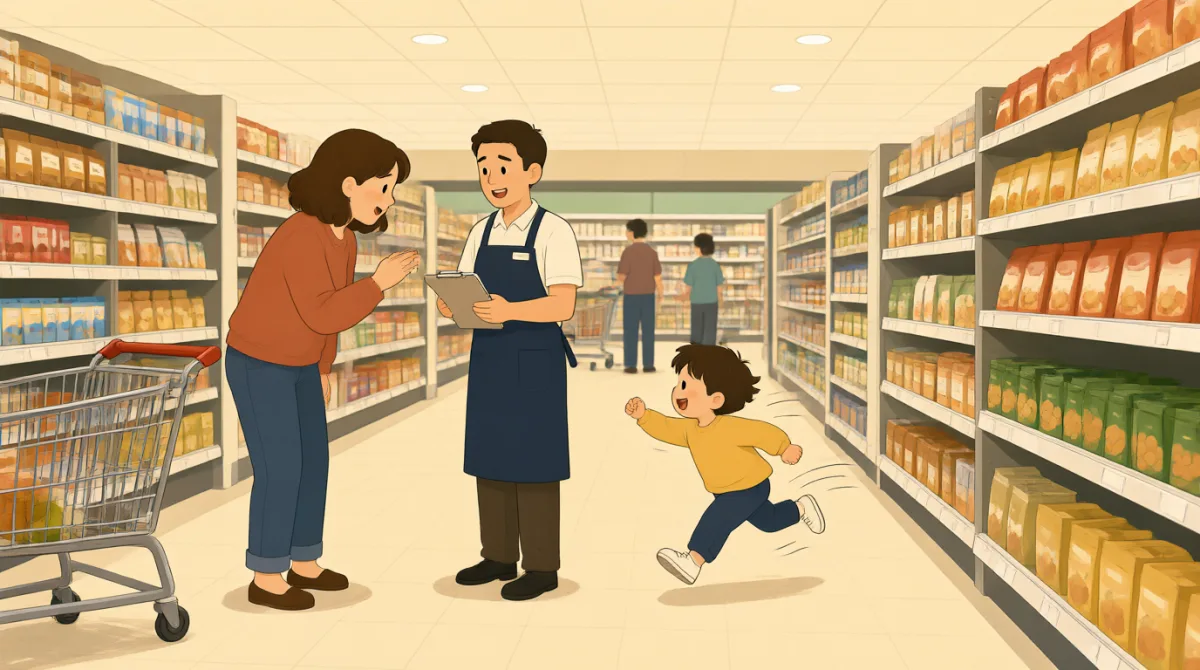

Oh, excuse me! I am so sorry about my son. He's a bit too energetic today.
哦,不好意思!我為我的兒子感到很抱歉。他今天有點太精力充沛了。

No worries at all. Kids will be kids, right?
沒關係,沒關係。孩子嘛,不都是這樣嗎?
Still, he could trip someone. Jonathan, please slow down!
即便如此,他還是可能會絆倒別人。喬納森,請慢點!
It's fine, really. I remember my own kids doing the same thing. Just trying to have some fun.
真的沒事。我記得我自己的孩子也做過同樣的事情。他們只是想玩得開心。
I appreciate your understanding. He's usually not quite this wild in public.
謝謝你的理解。他平時在公共場合不會這麼瘋的。
Don't worry about it. Enjoy the rest of your shopping!
別擔心。祝你購物愉快!
You too. Thanks again!
你也一樣。再次感謝!
詞彙9
- excuse me不好意思
A polite way to get someone's attention or to apologize for a small interruption, often used before saying sorry.
“excuse me”是一種禮貌的說法,可以用來引起別人的注意,或為輕微打擾道歉,通常會在說抱歉之前使用。
- sorry抱歉
An expression of apology when you feel bad about something, like a child's bad behavior; it's very common in everyday English.
當你為某件事感到過意不去時,可以用“sorry”來道歉,比如為孩子的不當行為道歉。這是日常英語中非常常見的表達。
- energetic精力充沛的
Describes someone full of energy and activity, often used for children who are very active or hyper.
“energetic”用來形容一個人精力旺盛、活動很多,常用於形容特別活躍或鬧騰的孩子。
- worries沒關係
Short for 'no worries,' meaning it's not a problem at all; a casual way to reassure someone.
“worries”是“no worries”的簡略說法,意思是完全沒關係,是一種輕鬆地安慰別人的表達。
- kids孩子
Informal word for children; used in relaxed conversations instead of the more formal 'children.'
“kids”是“children”的非正式說法,用於輕鬆隨意的對話中。
- trip絆倒
To cause someone to fall by accidentally hitting their foot; here, it means the child might make someone stumble.
“trip”作動詞時,指不小心碰到某人的腳,導致對方摔倒。這裡表示孩子可能會把別人絆得踉蹌。
- wild瘋跑的;不受控制的
Describes uncontrolled or crazy behavior, like a child running around without listening; useful for describing naughty actions.
“wild”用來形容不受控制或很瘋狂的行為,比如孩子不聽話地到處亂跑。它也可以用來描述調皮搗蛋的舉動。
- appreciate感激
To feel grateful for something, like someone's kindness; often used in polite responses to thanks.
“appreciate”表示因某件事而心懷感激,比如感謝別人的好意。它常用於禮貌地回應他人的感謝。
- understanding體諒;理解
Being sympathetic and not upset about a situation; shows patience, especially with parents and kids.
“understanding”表示體諒某種情況、不因此生氣,尤其可以用來稱讚別人對家長和孩子的耐心。
關鍵句7
- 1
Oh, excuse me! I am so sorry about my son.
哦,不好意思!我真的很抱歉,我兒子這樣鬧。
This is a polite way to start an apology; 'excuse me' gets attention, and 'I am so sorry about' expresses regret for a specific reason. Useful for interrupting to apologize in public.
這是一種禮貌的道歉開場方式。“excuse me”用來引起對方注意,“I am so sorry about”則表示為某件具體的事感到抱歉。在公共場合想打斷別人並道歉時很實用。
- 2
He's a bit too energetic today.
他今天有點太精力充沛了。
Uses 'a bit too' to mean slightly more than normal; 'energetic' describes high energy. This sentence explains a child's behavior softly without blaming.
“a bit too”表示比平常稍微過頭了一點,“energetic”用來形容精力旺盛。這句話委婉地解釋孩子的行為,又不會顯得在責怪他。
- 3
No worries at all. Kids will be kids, right?
完全沒關係。孩子嘛,不都是這樣嗎?
A reassuring response to an apology; 'kids will be kids' is an idiom meaning children act childishly sometimes. The 'right?' seeks agreement casually. Great for showing empathy.
這是回應道歉、安慰對方的說法。“kids will be kids”是習語,意思是孩子有時就是會表現得像個孩子。“right?”用於隨意地徵求對方認同。這句話很適合表達體諒。
- 4
Still, he could trip someone.
即便如此,他還是可能會絆倒別人。
'Still' means 'even so' or 'however'; 'could' shows possibility of danger. This highlights a potential problem politely, useful in apologies to explain concerns.
“Still”表示“即便如此”或“不過”;“could”表示可能發生的危險。這句話禮貌地指出潛在的問題,適合在道歉時說明自己的擔憂。
- 5
I appreciate your understanding.
謝謝你的體諒。
Expresses thanks for patience; simple present tense for general gratitude. This is a polite way to end an apology conversation and build goodwill.
這句話是在感謝對方的耐心。一般現在時在這裡表達通常性的感謝。這是一種禮貌的結束道歉對話的方式,也有助於增進彼此的好感。
- 6
Don't worry about it.
別放在心上。
A common phrase to dismiss concerns; imperative 'don't worry' is direct but friendly. Use it to comfort someone who feels bad about a minor issue.
這是一種常見的說法,用來讓對方不要再為小事擔心。“don't worry”是直接但友好的祈使表達,可以用來安慰覺得過意不去的人。
- 7
You too. Thanks again!
你也一樣。再次謝謝!
'You too' mirrors a wish back, like 'enjoy shopping'; 'thanks again' reinforces gratitude. Short and natural for ending positive interactions.
“You too”可以把對方的祝願回敬給對方,比如對方說“購物愉快”時回應“你也一樣”。“thanks again”再次表達感謝。這種簡短的說法很自然,適合用來愉快地結束對話。