Child Running Around Supermarket
सुपरमार्केट में इधर-उधर दौड़ता बच्चा
A parent apologizes to another shopper or staff member because their child is running wildly through the aisles of a supermarket, potentially causing inconvenience or minor accidents.
एक माता-पिता सुपरमार्केट की गलियों में तेज़ी से दौड़ रहे अपने बच्चे की वजह से हुई परेशानी या छोटी-मोटी दुर्घटना की आशंका के लिए किसी दूसरे ग्राहक या कर्मचारी से माफ़ी माँगते हैं।
संवाद7
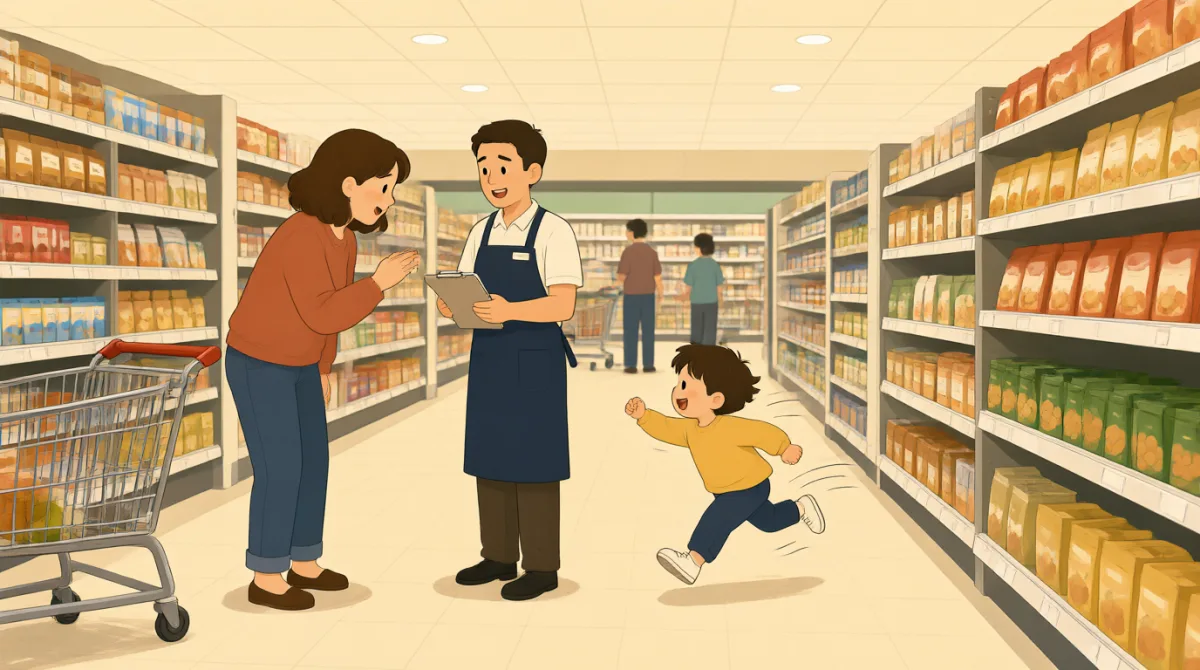

Oh, excuse me! I am so sorry about my son. He's a bit too energetic today.
ओह, माफ़ कीजिए! मेरे बेटे के लिए मुझे बहुत अफ़सोस है। आज उसमें कुछ ज़्यादा ही जोश है।

No worries at all. Kids will be kids, right?
कोई बात नहीं। बच्चे तो बच्चे ही होते हैं, है न?
Still, he could trip someone. Jonathan, please slow down!
फिर भी, उससे किसी को ठोकर लग सकती है। जोनाथन, ज़रा धीरे दौड़ो!
It's fine, really. I remember my own kids doing the same thing. Just trying to have some fun.
सच में, कोई बात नहीं। मुझे याद है, मेरे बच्चे भी ऐसा ही करते थे। बस थोड़ी मस्ती करना चाहते हैं।
I appreciate your understanding. He's usually not quite this wild in public.
आपकी समझदारी के लिए मैं आभारी हूँ। आम तौर पर वह बाहर इतना उधम नहीं मचाता।
Don't worry about it. Enjoy the rest of your shopping!
इसकी चिंता मत कीजिए। आपकी बाकी खरीदारी अच्छी रहे!
You too. Thanks again!
आपकी भी। एक बार फिर धन्यवाद!
शब्दावली9
- excuse meमाफ़ कीजिए
A polite way to get someone's attention or to apologize for a small interruption, often used before saying sorry.
किसी का ध्यान खींचने या थोड़ी-सी रुकावट के लिए माफ़ी माँगने का यह एक विनम्र तरीका है। अक्सर माफ़ी की बात कहने से पहले इसका इस्तेमाल किया जाता है।
- sorryमाफ़ करना
An expression of apology when you feel bad about something, like a child's bad behavior; it's very common in everyday English.
जब आपको किसी बात, जैसे बच्चे के बुरे व्यवहार, के लिए अफ़सोस हो, तो माफ़ी जताने के लिए यह कहते हैं। रोज़मर्रा की अंग्रेज़ी में यह बहुत आम है।
- energeticऊर्जावान; जोश से भरा
Describes someone full of energy and activity, often used for children who are very active or hyper.
यह ऐसे व्यक्ति का वर्णन करता है जिसमें बहुत ऊर्जा हो और जो बहुत सक्रिय हो। बच्चों के लिए इसका इस्तेमाल अक्सर तब होता है जब वे बहुत चंचल या हद से ज़्यादा सक्रिय हों।
- worriesचिंता
Short for 'no worries,' meaning it's not a problem at all; a casual way to reassure someone.
'No worries' का छोटा रूप यह बताता है कि कोई परेशानी नहीं है। किसी को तसल्ली देने का यह अनौपचारिक तरीका है।
- kidsबच्चे
Informal word for children; used in relaxed conversations instead of the more formal 'children.'
बच्चों के लिए यह अनौपचारिक शब्द है। सहज बातचीत में, ज़्यादा औपचारिक 'children' के बजाय इसका इस्तेमाल किया जाता है।
- tripठोकर लगवाना
To cause someone to fall by accidentally hitting their foot; here, it means the child might make someone stumble.
गलती से किसी के पैर से टकराकर उसे गिरा देना। यहाँ इसका मतलब है कि बच्चा किसी को लड़खड़ा सकता है।
- wildबेकाबू; उधमी
Describes uncontrolled or crazy behavior, like a child running around without listening; useful for describing naughty actions.
यह बेकाबू या बहुत शरारती व्यवहार का वर्णन करता है, जैसे किसी बच्चे का बात न मानते हुए इधर-उधर दौड़ना। शरारती हरकतों के बारे में बताने में यह उपयोगी है।
- appreciateआभारी होना; कद्र करना
To feel grateful for something, like someone's kindness; often used in polite responses to thanks.
किसी की मेहरबानी जैसी बात के लिए शुक्रगुज़ार महसूस करना। किसी के धन्यवाद के जवाब में विनम्रता से बोलते समय भी इसका अक्सर इस्तेमाल होता है।
- understandingसमझदारी; सहानुभूति
Being sympathetic and not upset about a situation; shows patience, especially with parents and kids.
किसी स्थिति को समझते हुए नाराज़ न होना। यह धैर्य दिखाता है, खासकर माता-पिता और बच्चों के प्रति।
मुख्य वाक्य7
- 1
Oh, excuse me! I am so sorry about my son.
ओह, माफ़ कीजिए! मेरे बेटे के लिए मुझे बहुत अफ़सोस है।
This is a polite way to start an apology; 'excuse me' gets attention, and 'I am so sorry about' expresses regret for a specific reason. Useful for interrupting to apologize in public.
माफ़ी शुरू करने का यह एक विनम्र तरीका है। 'excuse me' से सामने वाले का ध्यान खींचा जाता है और 'I am so sorry about' किसी ख़ास बात के लिए अफ़सोस जताता है। सार्वजनिक जगह पर किसी बात के लिए माफ़ी माँगने में यह उपयोगी है।
- 2
He's a bit too energetic today.
आज उसमें कुछ ज़्यादा ही जोश है।
Uses 'a bit too' to mean slightly more than normal; 'energetic' describes high energy. This sentence explains a child's behavior softly without blaming.
'a bit too' का मतलब है सामान्य से थोड़ा ज़्यादा। 'energetic' का इस्तेमाल बहुत ऊर्जा होने का वर्णन करने के लिए होता है। यह वाक्य बच्चे को दोष दिए बिना उसके व्यवहार के बारे में नरमी से बताता है।
- 3
No worries at all. Kids will be kids, right?
बिल्कुल चिंता की बात नहीं। बच्चे तो बच्चे ही होते हैं, है न?
A reassuring response to an apology; 'kids will be kids' is an idiom meaning children act childishly sometimes. The 'right?' seeks agreement casually. Great for showing empathy.
यह माफ़ी के जवाब में किसी को तसल्ली देने का तरीका है। 'kids will be kids' एक मुहावरा है, जिसका मतलब है कि बच्चे कभी-कभी बच्चों जैसी हरकतें करते हैं। 'right?' अनौपचारिक ढंग से सामने वाले की सहमति पूछता है। इससे सहानुभूति जताई जा सकती है।
- 4
Still, he could trip someone.
फिर भी, उससे किसी को ठोकर लग सकती है।
'Still' means 'even so' or 'however'; 'could' shows possibility of danger. This highlights a potential problem politely, useful in apologies to explain concerns.
'Still' का मतलब 'इसके बावजूद' या 'फिर भी' है। 'could' से किसी ख़तरे की संभावना जताई जाती है। यह विनम्रता से किसी संभावित समस्या की ओर ध्यान दिलाता है और माफ़ी माँगते हुए अपनी चिंता बताने में उपयोगी है।
- 5
I appreciate your understanding.
आपकी समझदारी के लिए मैं आभारी हूँ।
Expresses thanks for patience; simple present tense for general gratitude. This is a polite way to end an apology conversation and build goodwill.
यह किसी के धैर्य के लिए धन्यवाद जताता है। सामान्य आभार व्यक्त करने के लिए इसमें वर्तमान काल का इस्तेमाल हुआ है। माफ़ी से जुड़ी बातचीत को अच्छे ढंग से समाप्त करने और सद्भाव बनाए रखने का यह विनम्र तरीका है।
- 6
Don't worry about it.
इसकी चिंता मत कीजिए।
A common phrase to dismiss concerns; imperative 'don't worry' is direct but friendly. Use it to comfort someone who feels bad about a minor issue.
चिंता दूर करने के लिए यह एक आम वाक्यांश है। 'don't worry' आदेश के रूप में है, लेकिन इसका लहजा दोस्ताना है। किसी छोटी-सी बात के लिए बुरा महसूस कर रहे व्यक्ति को तसल्ली देने के लिए इसका इस्तेमाल करें।
- 7
You too. Thanks again!
आपकी भी। एक बार फिर धन्यवाद!
'You too' mirrors a wish back, like 'enjoy shopping'; 'thanks again' reinforces gratitude. Short and natural for ending positive interactions.
'You too' किसी शुभकामना को लौटाने के लिए कहा जाता है, जैसे खरीदारी का आनंद लेने की शुभकामना। 'thanks again' से दोबारा आभार जताया जाता है। बातचीत को अच्छे ढंग से समाप्त करने के लिए यह छोटा और स्वाभाविक वाक्य है।