Child Noisy in Restaurant
रेस्तराँ में शोर मचाता बच्चा
A parent apologizes to nearby diners or staff because their child is being loud, shouting, or running around in a restaurant.
रेस्तराँ में बच्चा ज़ोर से बोल रहा हो, चिल्ला रहा हो या इधर-उधर दौड़ रहा हो, तो माता-पिता पास बैठे लोगों या कर्मचारियों से माफ़ी माँगते हैं।
संवाद5
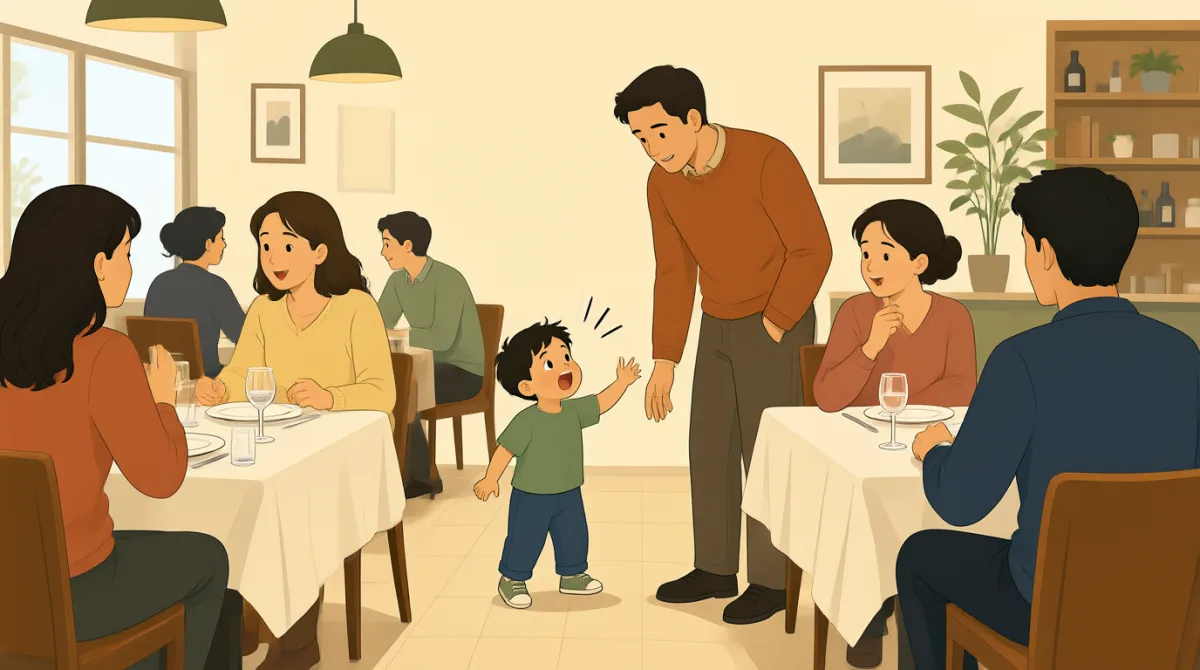

Oh, I'm so sorry about that! He's just a bit overexcited.
ओह, इसके लिए मुझे बहुत माफ़ कीजिए! यह बस कुछ ज़्यादा ही उत्साहित हो गया है।

No worries at all. Kids will be kids, right?
कोई बात नहीं, बिल्कुल। बच्चे तो बच्चे ही होते हैं, है न?
Still, I hope he's not disturbing your meal too much. I'm trying to calm him down.
फिर भी, उम्मीद है कि इससे आपके खाने में ज़्यादा खलल नहीं पड़ रहा होगा। मैं इसे शांत करने की कोशिश कर रही हूँ।
Honestly, it's fine. We have kids too, so we understand.
सच कहूँ तो, कोई बात नहीं। हमारे भी बच्चे हैं, इसलिए हम समझते हैं।
That's very kind of you to say. Thank you.
आपका ऐसा कहना बहुत अच्छा लगा। धन्यवाद।
शब्दावली6
- overexcitedज़रूरत से ज़्यादा उत्साहित
This means too excited or energetic, often in a way that makes someone act wildly. Use it when describing children who are hyper, like in a fun place.
"overexcited" का मतलब है ज़रूरत से ज़्यादा उत्साहित या ऊर्जावान होना, जिससे कोई बेकाबू होकर हरकतें करने लगे। किसी ऐसी मज़ेदार जगह पर बहुत उछल-कूद कर रहे बच्चे के बारे में बताते समय इसका इस्तेमाल करें।
- disturbingपरेशान करना
This adjective means bothering or interrupting someone. It's useful for apologizing when noise or actions affect others, such as in public places.
"disturbing" का मतलब है किसी को परेशान करना या उसके काम में बाधा डालना। सार्वजनिक जगहों पर शोर या किसी की हरकतों से दूसरों को परेशानी होने पर माफ़ी माँगते हुए यह शब्द काम आता है।
- calm downशांत होना / शांत करना
This phrasal verb means to become quiet and relaxed. Parents often use it to tell or describe soothing a noisy child.
"calm down" का मतलब है शांत और सहज हो जाना। माता-पिता शोर मचाते बच्चे को शांत करने की बात बताते या उससे ऐसा करने को कहते समय अक्सर इस वाक्यांश का इस्तेमाल करते हैं।
- no worriesकोई बात नहीं
This casual phrase means 'don't worry' or 'it's okay.' It's a friendly way to reassure someone after an apology, common in everyday English.
"no worries" एक अनौपचारिक वाक्यांश है, जिसका मतलब है 'चिंता मत कीजिए' या 'कोई बात नहीं।' किसी की माफ़ी के बाद उसे दिलासा देने का यह दोस्ताना तरीका रोज़मर्रा की अंग्रेज़ी में आम है।
- kids will be kidsबच्चे तो बच्चे ही होते हैं
This idiom means children naturally behave in playful or naughty ways, so it's normal. Use it to show understanding and forgiveness for typical kid behavior.
"kids will be kids" एक मुहावरा है। इसका मतलब है कि बच्चों का खेल-कूद करना या शरारत करना स्वाभाविक है, इसलिए यह सामान्य बात है। बच्चों के आम व्यवहार को समझने और माफ़ करने का भाव जताने के लिए इसका इस्तेमाल करें।
- honestlyसच कहूँ तो
This adverb means 'truly' or 'frankly.' It adds sincerity to statements, like when reassuring someone that something is really okay.
"honestly" का मतलब है 'सचमुच' या 'सच कहूँ तो।' यह बात में ईमानदारी और सच्चाई का भाव जोड़ता है, जैसे किसी को यकीन दिलाते समय कि वाकई कोई परेशानी नहीं है।
मुख्य वाक्य5
- 1
Oh, I'm so sorry about that! He's just a bit overexcited.
ओह, इसके लिए मुझे बहुत माफ़ कीजिए! यह बस कुछ ज़्यादा ही उत्साहित हो गया है।
This is a polite apology for something unwanted, like noise. 'So sorry' emphasizes regret, and 'just a bit' softens the explanation. Use it immediately after an incident to show you're addressing it.
यह शोर जैसी अनचाही बात के लिए विनम्रता से माफ़ी माँगने का तरीका है। "So sorry" कहने से अफ़सोस का भाव ज़ोरदार होता है, जबकि "just a bit" बात को नरम बनाता है। कोई घटना होते ही इसका इस्तेमाल करके दिखाएँ कि आप उस पर ध्यान दे रहे हैं।
- 2
No worries at all. Kids will be kids, right?
कोई बात नहीं, बिल्कुल। बच्चे तो बच्चे ही होते हैं, है न?
This reassures the apologizer that it's fine. 'No worries at all' is very casual and forgiving, and the idiom 'kids will be kids' plus 'right?' seeks agreement. Great for responding empathetically in social situations.
इससे माफ़ी माँगने वाले को भरोसा दिलाया जाता है कि सब ठीक है। "No worries at all" बहुत अनौपचारिक और माफ़ करने वाला वाक्यांश है। मुहावरा "kids will be kids" और उसके बाद आया "right?" सामने वाले की सहमति जताने का अंदाज़ है। सामाजिक बातचीत में सहानुभूति के साथ जवाब देने के लिए यह बढ़िया है।
- 3
Still, I hope he's not disturbing your meal too much. I'm trying to calm him down.
फिर भी, उम्मीद है कि इससे आपके खाने में ज़्यादा खलल नहीं पड़ रहा होगा। मैं इसे शांत करने की कोशिश कर रही हूँ।
This shows continued concern despite the apology. 'Still' connects to previous talk, 'disturbing' describes the issue, and the present continuous 'I'm trying' explains ongoing action. Useful for polite follow-up in apologies.
माफ़ी माँगने के बाद भी यह वाक्य चिंता जताता रहता है। "Still" पिछली बात से जोड़ता है, "disturbing" समस्या बताता है, और वर्तमान जारी क्रिया वाला "I'm trying" बताता है कि कोशिश अभी चल रही है। माफ़ी के बाद विनम्रता से बात आगे बढ़ाने के लिए यह उपयोगी है।
- 4
Honestly, it's fine. We have kids too, so we understand.
सच कहूँ तो, कोई बात नहीं। हमारे भी बच्चे हैं, इसलिए हम समझते हैं।
This sincerely dismisses the problem. 'Honestly' adds truthfulness, and 'so' shows cause and result (because we have kids, we understand). It's practical for building rapport when relating to others' experiences.
इससे सच्चे दिल से बताया जाता है कि कोई समस्या नहीं है। "Honestly" बात में सच्चाई का भाव जोड़ता है, और "so" कारण और नतीजे को जोड़ता है—हमारे बच्चे हैं, इसलिए हम समझते हैं। दूसरों के अनुभव से जुड़कर अपनापन बढ़ाने के लिए यह वाक्य काम आता है।
- 5
That's very kind of you to say. Thank you.
आपका ऐसा कहना बहुत अच्छा लगा। धन्यवाद।
This thanks someone for their nice words. 'Kind of you' compliments their response, and it's a polite way to end the exchange. Use it to acknowledge understanding and show gratitude.
इस वाक्य से किसी की अच्छी बात के लिए धन्यवाद दिया जाता है। "Kind of you" सामने वाले के जवाब की तारीफ़ करता है, और यह बातचीत खत्म करने का एक विनम्र तरीका है। उनकी समझदारी को स्वीकार करने और आभार जताने के लिए इसका इस्तेमाल करें।