Child Noisy in Restaurant
রেস্তোরাঁয় শিশুর হৈচৈ
A parent apologizes to nearby diners or staff because their child is being loud, shouting, or running around in a restaurant.
রেস্তোরাঁয় নিজের সন্তান জোরে কথা বলছে, চিৎকার করছে বা দৌড়াদৌড়ি করছে বলে একজন অভিভাবক কাছাকাছি বসা অতিথি বা কর্মীদের কাছে ক্ষমা চান।
সংলাপ5
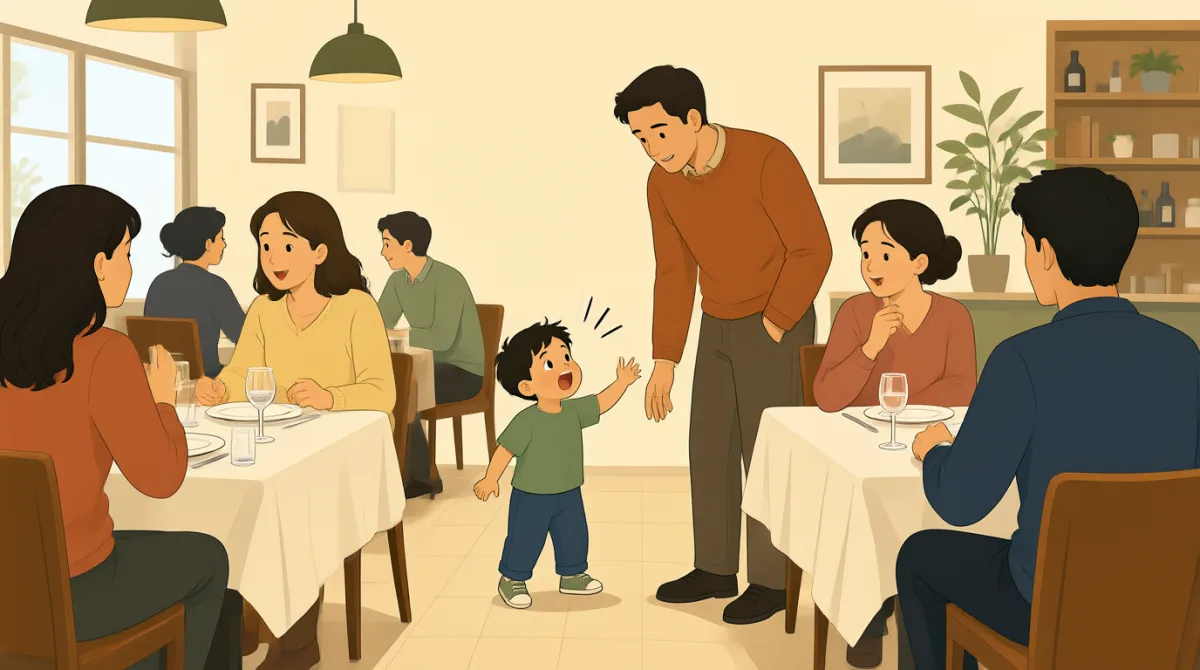

Oh, I'm so sorry about that! He's just a bit overexcited.
ওহ, এর জন্য আমি সত্যিই দুঃখিত! ও একটু বেশিই উত্তেজিত হয়ে পড়েছে।

No worries at all. Kids will be kids, right?
একদম চিন্তা করবেন না। বাচ্চারা তো এমন করেই, তাই না?
Still, I hope he's not disturbing your meal too much. I'm trying to calm him down.
তবু আশা করি ও আপনাদের খাওয়ায় খুব বেশি ব্যাঘাত ঘটাচ্ছে না। আমি ওকে শান্ত করার চেষ্টা করছি।
Honestly, it's fine. We have kids too, so we understand.
সত্যি বলছি, কোনো অসুবিধা নেই। আমাদেরও বাচ্চা আছে, তাই আমরা বুঝি।
That's very kind of you to say. Thank you.
আপনি এ কথা বলছেন, এটা খুবই ভালো লাগল। ধন্যবাদ।
শব্দভান্ডার6
- overexcitedঅতিমাত্রায় উত্তেজিত
This means too excited or energetic, often in a way that makes someone act wildly. Use it when describing children who are hyper, like in a fun place.
"overexcited" মানে অতিরিক্ত উত্তেজিত বা চঞ্চল, যার ফলে কেউ বেপরোয়া আচরণ করতে পারে। মজার কোনো জায়গায় অতিরিক্ত চঞ্চল হয়ে পড়া শিশুর কথা বলতে এটি ব্যবহার করুন।
- disturbingবিরক্ত করা
This adjective means bothering or interrupting someone. It's useful for apologizing when noise or actions affect others, such as in public places.
"disturbing" বিশেষণটির অর্থ কাউকে বিরক্ত করা বা কাজে ব্যাঘাত ঘটানো। জনসমাগমের জায়গায় শব্দ বা আচরণে অন্যদের অসুবিধা হলে ক্ষমা চাইতে এটি কাজে লাগে।
- calm downশান্ত হওয়া; শান্ত করা
This phrasal verb means to become quiet and relaxed. Parents often use it to tell or describe soothing a noisy child.
"calm down" কথাটির অর্থ শান্ত ও স্থির হওয়া। চঞ্চল শিশুকে শান্ত হতে বলা বা তাকে শান্ত করার কথা বোঝাতে অভিভাবকেরা প্রায়ই এটি ব্যবহার করেন।
- no worriesচিন্তার কিছু নেই
This casual phrase means 'don't worry' or 'it's okay.' It's a friendly way to reassure someone after an apology, common in everyday English.
"no worries" একটি অনানুষ্ঠানিক বাক্যাংশ; এর অর্থ 'চিন্তা করবেন না' বা 'কোনো অসুবিধা নেই'। কেউ ক্ষমা চাইলে তাকে আশ্বস্ত করার এটি একটি বন্ধুত্বপূর্ণ উপায়, যা দৈনন্দিন ইংরেজিতে প্রচলিত।
- kids will be kidsবাচ্চারা তো এমন করেই
This idiom means children naturally behave in playful or naughty ways, so it's normal. Use it to show understanding and forgiveness for typical kid behavior.
"kids will be kids" বাগ্ধারাটির অর্থ, শিশুরা স্বাভাবিকভাবেই খেলাচ্ছলে বা দুষ্টুমি করে—এটাই স্বাভাবিক। শিশুদের স্বাভাবিক আচরণ বুঝতে পারছেন এবং ক্ষমা করে দিচ্ছেন, তা বোঝাতে এটি ব্যবহার করুন।
- honestlyসত্যি বলতে
This adverb means 'truly' or 'frankly.' It adds sincerity to statements, like when reassuring someone that something is really okay.
"honestly" ক্রিয়াবিশেষণটির অর্থ 'সত্যি বলতে' বা 'খোলাখুলি বললে'। কাউকে আশ্বস্ত করার সময়, যেমন কোনো ব্যাপার সত্যিই ঠিক আছে বোঝাতে, এটি কথায় আন্তরিকতা যোগ করে।
গুরুত্বপূর্ণ বাক্য5
- 1
Oh, I'm so sorry about that! He's just a bit overexcited.
ওহ, এর জন্য আমি সত্যিই দুঃখিত! ও একটু বেশিই উত্তেজিত হয়ে পড়েছে।
This is a polite apology for something unwanted, like noise. 'So sorry' emphasizes regret, and 'just a bit' softens the explanation. Use it immediately after an incident to show you're addressing it.
শব্দের মতো অনাকাঙ্ক্ষিত কিছুর জন্য এটি ভদ্রভাবে ক্ষমা চাওয়ার বাক্য। 'So sorry' অনুশোচনার অনুভূতিকে জোরালো করে, আর 'just a bit' ব্যাখ্যাটিকে একটু নরম করে। কোনো ঘটনা ঘটার পরপরই বিষয়টি সামলাচ্ছেন বোঝাতে এটি ব্যবহার করুন।
- 2
No worries at all. Kids will be kids, right?
একদম চিন্তা করবেন না। বাচ্চারা তো এমন করেই, তাই না?
This reassures the apologizer that it's fine. 'No worries at all' is very casual and forgiving, and the idiom 'kids will be kids' plus 'right?' seeks agreement. Great for responding empathetically in social situations.
এভাবে ক্ষমা চাওয়া ব্যক্তিকে আশ্বস্ত করা হয় যে কোনো অসুবিধা নেই। 'No worries at all' খুবই অনানুষ্ঠানিক ও ক্ষমাশীল ভঙ্গির, আর 'kids will be kids' বাগ্ধারাটির সঙ্গে 'right?' যোগ করে সম্মতি চাওয়া হয়। সামাজিক পরিস্থিতিতে সহানুভূতি দেখিয়ে উত্তর দিতে এটি দারুণ কাজে লাগে।
- 3
Still, I hope he's not disturbing your meal too much. I'm trying to calm him down.
তবু আশা করি ও আপনাদের খাওয়ায় খুব বেশি ব্যাঘাত ঘটাচ্ছে না। আমি ওকে শান্ত করার চেষ্টা করছি।
This shows continued concern despite the apology. 'Still' connects to previous talk, 'disturbing' describes the issue, and the present continuous 'I'm trying' explains ongoing action. Useful for polite follow-up in apologies.
ক্ষমা চাওয়ার পরও এতে উদ্বেগ প্রকাশ পায়। 'Still' আগের কথার সঙ্গে যোগসূত্র তৈরি করে, 'disturbing' সমস্যাটি বোঝায়, আর বর্তমান চলমান কালের 'I'm trying' চলতে থাকা প্রচেষ্টার কথা জানায়। ক্ষমা চাওয়ার পর ভদ্রভাবে খোঁজ নিতে এটি কাজে লাগে।
- 4
Honestly, it's fine. We have kids too, so we understand.
সত্যি বলছি, কোনো অসুবিধা নেই। আমাদেরও বাচ্চা আছে, তাই আমরা বুঝি।
This sincerely dismisses the problem. 'Honestly' adds truthfulness, and 'so' shows cause and result (because we have kids, we understand). It's practical for building rapport when relating to others' experiences.
এভাবে আন্তরিকভাবে বোঝানো হয় যে ব্যাপারটি কোনো সমস্যা নয়। 'Honestly' কথাটিতে আন্তরিকতা যোগ করে, আর 'so' কারণ ও ফলাফল বোঝায়—আমাদের বাচ্চা আছে বলেই আমরা বুঝি। অন্যের অভিজ্ঞতার সঙ্গে নিজের অভিজ্ঞতার মিল দেখিয়ে সুসম্পর্ক গড়তে এটি কাজে লাগে।
- 5
That's very kind of you to say. Thank you.
আপনি এ কথা বলছেন, এটা খুবই ভালো লাগল। ধন্যবাদ।
This thanks someone for their nice words. 'Kind of you' compliments their response, and it's a polite way to end the exchange. Use it to acknowledge understanding and show gratitude.
সুন্দর কথা বলার জন্য কাউকে ধন্যবাদ জানানোর বাক্য এটি। 'Kind of you' বলে তাঁর প্রতিক্রিয়ার প্রশংসা করা হয়, আর কথোপকথন ভদ্রভাবে শেষ করার এটি একটি উপায়। অন্যের বোঝাপড়ার স্বীকৃতি দিয়ে কৃতজ্ঞতা জানাতে এটি ব্যবহার করুন।