Child Noisy in Restaurant
孩子在餐廳喧譁
A parent apologizes to nearby diners or staff because their child is being loud, shouting, or running around in a restaurant.
家長因為孩子在餐廳裡大聲喧譁、喊叫或跑來跑去而向附近的食客或工作人員道歉。
對話5
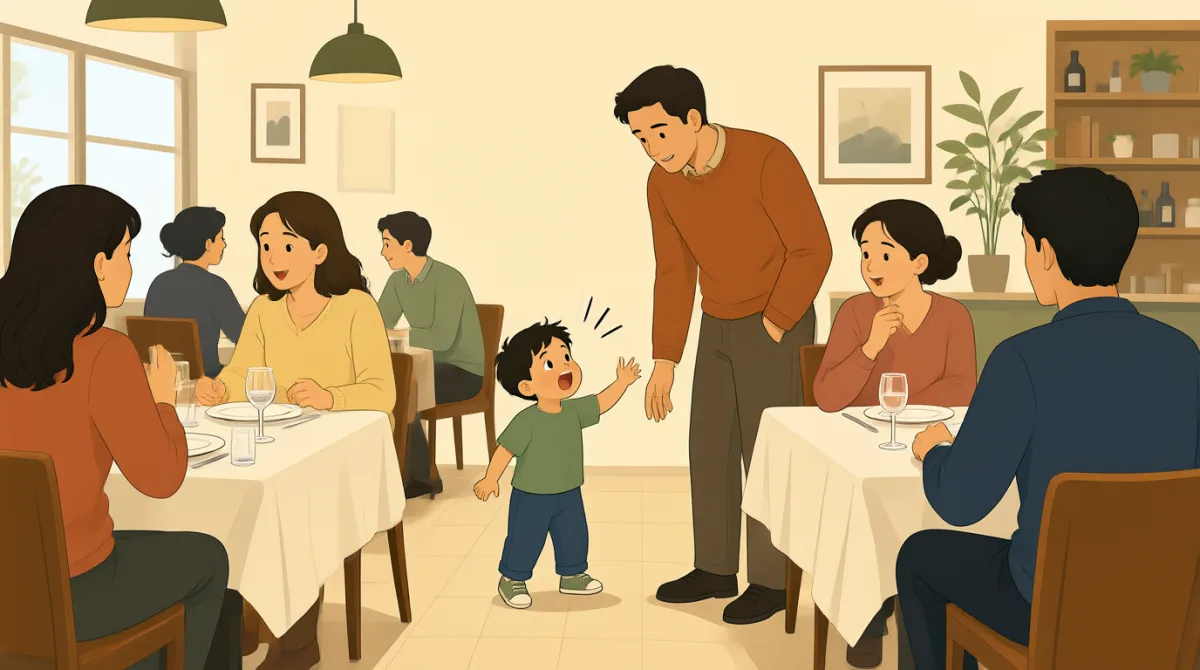

Oh, I'm so sorry about that! He's just a bit overexcited.
哦,對此我感到非常抱歉!他只是有點太興奮了。

No worries at all. Kids will be kids, right?
沒關係,孩子嘛,都這樣,對吧?
Still, I hope he's not disturbing your meal too much. I'm trying to calm him down.
不過,我還是希望他沒有太打擾到您用餐。我正在努力讓他安靜下來。
Honestly, it's fine. We have kids too, so we understand.
說實話,沒事的。我們也有孩子,所以我們理解。
That's very kind of you to say. Thank you.
您真是太好了。謝謝您。
詞彙6
- overexcited興奮過頭的
This means too excited or energetic, often in a way that makes someone act wildly. Use it when describing children who are hyper, like in a fun place.
指過於興奮或精力過剩,常常會讓人舉止有些失控。比如在好玩的地方,可以用來形容特別亢奮的孩子。
- disturbing打擾人的
This adjective means bothering or interrupting someone. It's useful for apologizing when noise or actions affect others, such as in public places.
這個形容詞表示給別人添麻煩或打斷別人。噪音或行為影響到他人時,比如在公共場所道歉,就可以用這個詞。
- calm down冷靜下來
This phrasal verb means to become quiet and relaxed. Parents often use it to tell or describe soothing a noisy child.
這個短語動詞指安靜下來、放鬆下來。家長常用它來要求吵鬧的孩子安靜下來,也可以用來描述安撫孩子。
- no worries沒關係
This casual phrase means 'don't worry' or 'it's okay.' It's a friendly way to reassure someone after an apology, common in everyday English.
這個隨意的說法表示“別擔心”或“沒事”。日常英語中,別人道歉後可以用它友好地表示安慰。
- kids will be kids孩子嘛,都這樣
This idiom means children naturally behave in playful or naughty ways, so it's normal. Use it to show understanding and forgiveness for typical kid behavior.
這個習語表示孩子天生就會調皮或愛玩,這是很正常的。可以用它來表示理解,也表示不介意孩子常見的行為。
- honestly說實話
This adverb means 'truly' or 'frankly.' It adds sincerity to statements, like when reassuring someone that something is really okay.
這個副詞表示“確實”或“坦白說”,能讓說的話聽起來更真誠,比如用來安慰別人,表示真的沒關係。
關鍵句5
- 1
Oh, I'm so sorry about that! He's just a bit overexcited.
哦,對此我感到非常抱歉!他只是有點太興奮了。
This is a polite apology for something unwanted, like noise. 'So sorry' emphasizes regret, and 'just a bit' softens the explanation. Use it immediately after an incident to show you're addressing it.
這是一種禮貌的道歉方式,適用於噪音等令人困擾的情況。“So sorry”強調歉意,“just a bit”則讓解釋聽起來委婉一些。事情發生後,可以馬上這樣說,表示你正在處理問題。
- 2
No worries at all. Kids will be kids, right?
完全沒關係。孩子嘛,都這樣,對吧?
This reassures the apologizer that it's fine. 'No worries at all' is very casual and forgiving, and the idiom 'kids will be kids' plus 'right?' seeks agreement. Great for responding empathetically in social situations.
這句話是在安慰道歉的人,告訴對方沒關係。“No worries at all”非常隨意,也很寬容;習語“kids will be kids”加上“right?”則是在尋求對方認同。在日常社交中,這樣回應能表達體諒。
- 3
Still, I hope he's not disturbing your meal too much. I'm trying to calm him down.
不過,我還是希望他沒有太打擾到您用餐。我正在努力讓他安靜下來。
This shows continued concern despite the apology. 'Still' connects to previous talk, 'disturbing' describes the issue, and the present continuous 'I'm trying' explains ongoing action. Useful for polite follow-up in apologies.
這句話表示雖然已經道過歉,還是很在意對方的感受。“Still”承接前面的話,“disturbing”描述造成的影響,而現在進行時“I'm trying”則說明你正在採取行動。禮貌地繼續為自己的行為道歉時,可以用這種說法。
- 4
Honestly, it's fine. We have kids too, so we understand.
說實話,沒事的。我們也有孩子,所以我們理解。
This sincerely dismisses the problem. 'Honestly' adds truthfulness, and 'so' shows cause and result (because we have kids, we understand). It's practical for building rapport when relating to others' experiences.
這句話真誠地表示不介意。“Honestly”讓語氣更顯真誠,“so”則表示因果關係:因為我們也有孩子,所以我們理解。談到彼此相似的經歷時,這樣說有助於拉近距離。
- 5
That's very kind of you to say. Thank you.
您這麼說真是太好了。謝謝您。
This thanks someone for their nice words. 'Kind of you' compliments their response, and it's a polite way to end the exchange. Use it to acknowledge understanding and show gratitude.
這句話是感謝別人說了體貼的話。“Kind of you”是在稱讚對方的回應,也是一種禮貌地結束對話的方式。可以用它來表示你感受到對方的理解,並表達感謝。