First Meeting with a Host Family
พบครอบครัวอุปถัมภ์ครั้งแรก
An exchange student or traveler introduces themselves to their new host family, sharing their name, where they're from, and expressing thanks or excitement.
นักเรียนแลกเปลี่ยนหรือนักเดินทางแนะนำตัวกับครอบครัวอุปถัมภ์ใหม่ บอกชื่อและบ้านเกิด พร้อมแสดงความขอบคุณหรือตื่นเต้น
บทสนทนา8
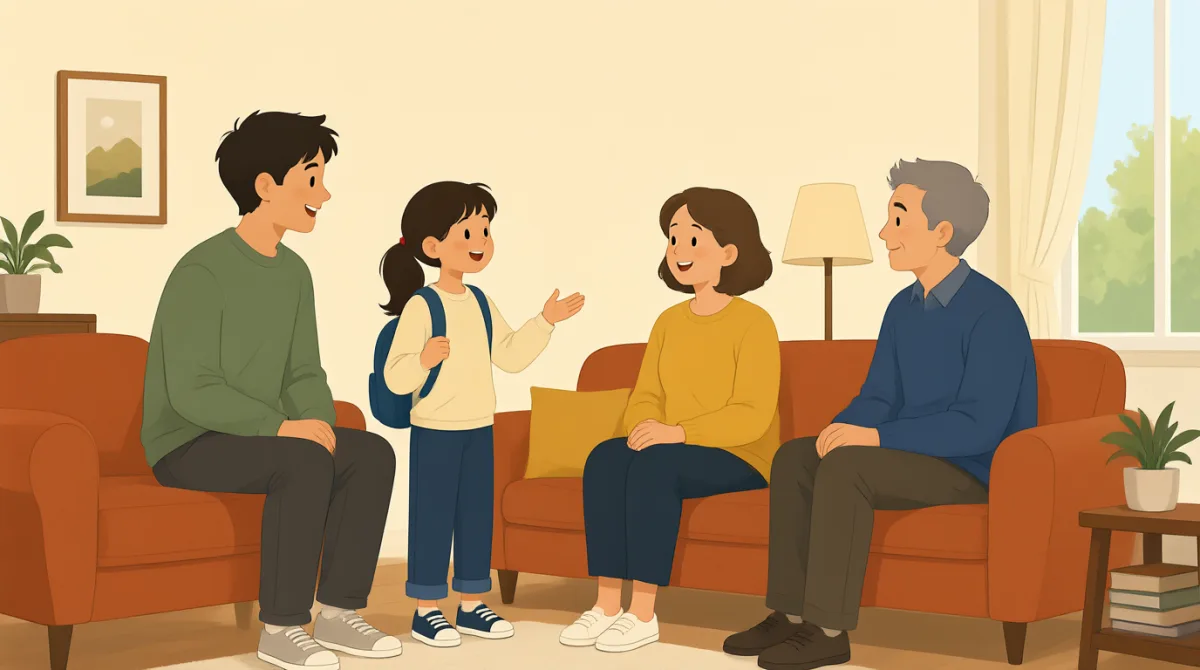

Hi Leo! Welcome, come on in. It's so nice to finally meet you.
สวัสดี ลีโอ! ยินดีต้อนรับ เข้ามาเลย ดีใจจังที่ในที่สุดก็ได้เจอกัน

Thank you so much! It's great to be here. My name is Leo, and I'm from Seoul, South Korea.
ขอบคุณมากครับ ดีใจที่ได้มาที่นี่ครับ ผมชื่อลีโอ มาจากกรุงโซล ประเทศเกาหลีใต้ครับ

Leo, nice to meet you! I'm David, and this is my wife, Grace. We're really excited to have you stay with us.
ลีโอ ยินดีที่ได้รู้จักนะ ฉันเดวิด นี่เกรซ ภรรยาของฉัน พวกเราตื่นเต้นมากที่จะได้ต้อนรับเธอมาอยู่ด้วยกัน
It's a pleasure to meet both of you, David and Grace. I'm really looking forward to my time here and learning more about American culture.
ยินดีที่ได้พบทั้งสองคนนะครับ เดวิดกับเกรซ ผมตั้งตารอที่จะได้ใช้เวลาที่นี่และเรียนรู้เกี่ยวกับวัฒนธรรมอเมริกันมากเลยครับ
We're happy to share! Did you have a good trip from Seoul?
พวกเรายินดีแบ่งปันนะ เดินทางจากโซลมาเหนื่อยไหม?
Yes, it was long, but smooth. Thanks for asking! Your house is lovely.
ครับ เดินทางนาน แต่ราบรื่นดี ขอบคุณที่ถามนะครับ บ้านคุณน่ารักมากเลยครับ
Thanks! Well, let's get you settled in. We can show you around later and answer any questions you have.
ขอบคุณนะ เอาละ เดี๋ยวเราช่วยจัดข้าวของให้เข้าที่ก่อนนะ ไว้ทีหลังเราพาเธอชมรอบ ๆ บ้าน แล้วตอบทุกคำถามที่มีได้เลย
That sounds great. I really appreciate your hospitality.
ฟังดูดีมากครับ ผมซาบซึ้งในน้ำใจที่ต้อนรับผมอย่างดีจริง ๆ ครับ
คำศัพท์7
- welcomeยินดีต้อนรับ
A friendly word used to greet someone arriving at a place, like a home or event, to make them feel comfortable and accepted.
คำทักทายอย่างเป็นมิตรที่ใช้ต้อนรับคนที่มาถึงสถานที่หนึ่ง เช่น บ้านหรืองานกิจกรรม เพื่อให้เขารู้สึกสบายใจและเป็นที่ต้อนรับ
- hospitalityน้ำใจในการต้อนรับ
The friendly and generous way of treating guests, often involving offering food, a place to stay, or help; common in cultural exchanges like host families.
การดูแลแขกอย่างเป็นมิตรและเอื้อเฟื้อ เช่น เสนออาหาร ที่พัก หรือความช่วยเหลือ มักพบในการแลกเปลี่ยนวัฒนธรรม เช่น การพักกับครอบครัวอุปถัมภ์
- excitedตื่นเต้น
Feeling very happy and enthusiastic about something upcoming, like a new experience; used to express positive emotions in introductions.
รู้สึกมีความสุขและกระตือรือร้นกับสิ่งที่กำลังจะเกิดขึ้น เช่น ประสบการณ์ใหม่ ใช้แสดงความรู้สึกในแง่ดีตอนแนะนำตัว
- pleasureความยินดี
A formal way to say you are happy or enjoy meeting someone; often used in 'It's a pleasure to meet you' during polite introductions.
คำสุภาพที่ใช้บอกว่าดีใจหรือยินดีที่ได้พบใครสักคน มักใช้ในประโยค 'It's a pleasure to meet you' ตอนแนะนำตัวอย่างสุภาพ
- settled inจัดตัวให้เข้าที่
To get comfortable and organized in a new place, like unpacking and feeling at home; useful when arriving at a host family's house.
ทำตัวให้คุ้นเคยและจัดข้าวของในสถานที่ใหม่ เช่น แกะกระเป๋าและทำตัวให้รู้สึกเหมือนอยู่บ้าน ใช้ได้เมื่อมาถึงบ้านของครอบครัวอุปถัมภ์
- smoothราบรื่น
Describing a journey or process that goes without problems; opposite of bumpy or difficult, often used for travel experiences.
ใช้บรรยายการเดินทางหรือกระบวนการที่ผ่านไปโดยไม่มีปัญหา ตรงข้ามกับการเดินทางที่ขรุขระหรือลำบาก มักใช้เล่าประสบการณ์การเดินทาง
- lovelyน่ารัก; สวยงาม
A polite word meaning beautiful or very nice, used to compliment something like a house or person's appearance.
คำสุภาพที่หมายถึงสวยหรือน่าชื่นชมมาก ใช้ชมสิ่งต่าง ๆ เช่น บ้าน หรือรูปลักษณ์ของคน
ประโยคสำคัญ8
- 1
Hi Leo! Welcome, come on in.
สวัสดี ลีโอ! ยินดีต้อนรับ เข้ามาเลย
A casual greeting to invite someone inside; 'come on in' is an informal way to encourage entry, useful for welcoming guests at home. Simple present tense for immediate actions.
คำทักทายกันเองที่ใช้เชื้อเชิญให้ใครสักคนเข้ามาข้างใน 'come on in' เป็นวิธีพูดไม่เป็นทางการเพื่อชวนให้เข้ามา เหมาะสำหรับต้อนรับแขกที่บ้าน รูปประโยคปัจจุบันอย่างง่ายใช้กล่าวถึงการกระทำที่เกิดขึ้นทันที
- 2
Thank you so much! It's great to be here.
ขอบคุณมากครับ ดีใจที่ได้มาที่นี่ครับ
Expresses strong gratitude and happiness upon arrival; 'so much' intensifies thanks, and 'it's great to' shows positive feelings. Use this in first meetings to show politeness.
ใช้แสดงความขอบคุณอย่างมากและความดีใจเมื่อมาถึง 'so much' ช่วยเน้นความขอบคุณ ส่วน 'it's great to' ใช้แสดงความรู้สึกในแง่ดี ใช้ประโยคนี้ตอนพบกันครั้งแรกเพื่อแสดงความสุภาพ
- 3
My name is Leo, and I'm from Seoul, South Korea.
ผมชื่อลีโอ มาจากกรุงโซล ประเทศเกาหลีใต้ครับ
A basic self-introduction pattern: state name with 'My name is' and origin with 'I'm from'; essential for sharing personal info in new situations like meeting a host family.
รูปแบบพื้นฐานสำหรับแนะนำตัว: บอกชื่อด้วย 'My name is' และบอกว่ามาจากที่ไหนด้วย 'I'm from' เป็นวิธีสำคัญในการบอกข้อมูลส่วนตัวในสถานการณ์ใหม่ ๆ เช่น การพบครอบครัวอุปถัมภ์
- 4
Nice to meet you! I'm David, and this is my wife, Grace.
ยินดีที่ได้รู้จักนะ ฉันเดวิด นี่เกรซ ภรรยาของฉัน
Standard polite response in introductions; introduces self and others using 'this is' for family members. Use when reciprocating a greeting to build rapport.
คำตอบสุภาพมาตรฐานที่ใช้ตอนแนะนำตัว โดยแนะนำตัวเองและคนอื่นด้วย 'this is' เพื่อแนะนำสมาชิกในครอบครัว ใช้ตอบรับคำทักทายเพื่อสร้างความสนิทสนม
- 5
It's a pleasure to meet both of you.
ยินดีที่ได้พบทั้งสองคนนะครับ
A more formal way to say you're happy to meet people; 'both of you' specifies two people. Good for showing respect in cultural or family settings.
วิธีพูดที่เป็นทางการขึ้นเพื่อบอกว่าดีใจที่ได้พบใครสักคน 'both of you' ระบุว่ามีสองคน เหมาะสำหรับแสดงความเคารพในบริบททางวัฒนธรรมหรือครอบครัว
- 6
I'm really looking forward to my time here.
ผมตั้งตารอที่จะได้ใช้เวลาที่นี่มากเลยครับ
'Looking forward to' expresses anticipation for future experiences; 'really' adds emphasis. Useful for showing excitement about staying somewhere new, like with a host family.
'Looking forward to' ใช้พูดถึงความคาดหวังต่อประสบการณ์ในอนาคต ส่วน 'really' ช่วยเน้นความรู้สึก ใช้แสดงความตื่นเต้นกับการไปพักในสถานที่ใหม่ เช่น บ้านของครอบครัวอุปถัมภ์
- 7
Yes, it was long, but smooth.
ครับ เดินทางนาน แต่ราบรื่นดี
Describes a past travel experience using past tense 'was'; 'but' contrasts length with ease. Practice this to talk about trips when asked 'Did you have a good trip?'
ใช้กาลอดีต 'was' เล่าประสบการณ์การเดินทางที่ผ่านมา ส่วน 'but' ใช้แสดงความขัดแย้งระหว่างการเดินทางที่ใช้เวลานานกับความราบรื่น ลองฝึกพูดประโยคนี้เมื่อตอบคำถาม 'Did you have a good trip?'
- 8
I really appreciate your hospitality.
ผมซาบซึ้งในน้ำใจที่ต้อนรับผมอย่างดีจริง ๆ ครับ
'Appreciate' means to be grateful for; used with 'your' to thank specific kindness. This sentence is polite for ending introductions and acknowledging hosts' warmth.
'Appreciate' หมายถึงรู้สึกขอบคุณ ใช้คู่กับ 'your' เพื่อขอบคุณน้ำใจของอีกฝ่ายโดยเฉพาะ ประโยคนี้สุภาพ เหมาะสำหรับปิดท้ายการแนะนำตัวและแสดงความขอบคุณต่อความอบอุ่นของเจ้าบ้าน