First Meeting with a Host Family
اللقاء الأول مع عائلة مضيفة
An exchange student or traveler introduces themselves to their new host family, sharing their name, where they're from, and expressing thanks or excitement.
يعرّف طالب تبادل أو مسافر بنفسه لعائلته المضيفة الجديدة، ويذكر اسمه وبلده ويعبّر عن شكره أو حماسه.
حوار8
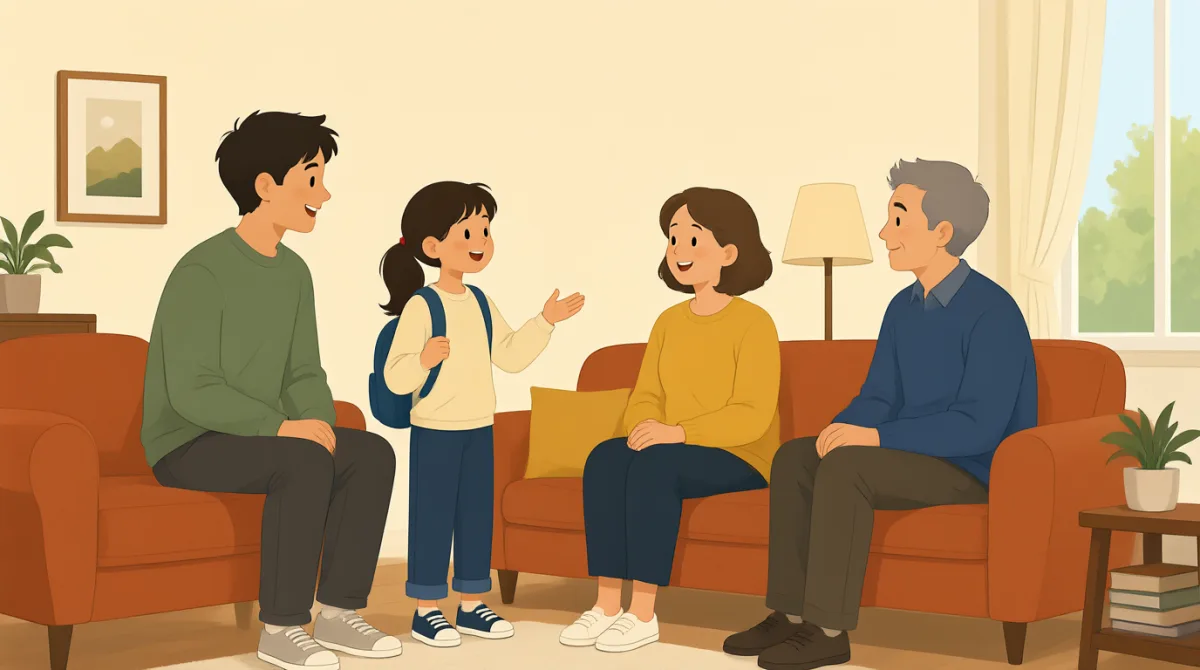

Hi Leo! Welcome, come on in. It's so nice to finally meet you.
مرحبًا يا ليو! أهلًا بك، تفضّل بالدخول. يسعدني جدًا أن ألتقي بك أخيرًا.

Thank you so much! It's great to be here. My name is Leo, and I'm from Seoul, South Korea.
شكرًا جزيلًا! يسعدني أن أكون هنا. اسمي ليو، وأنا من سيول، كوريا الجنوبية.

Leo, nice to meet you! I'm David, and this is my wife, Grace. We're really excited to have you stay with us.
ليو، سررت بلقائك! أنا ديفيد، وهذه زوجتي غريس. نحن متحمسان جدًا لاستضافتك.
It's a pleasure to meet both of you, David and Grace. I'm really looking forward to my time here and learning more about American culture.
يسعدني لقاؤكما يا ديفيد وغريس. أتطلع كثيرًا إلى قضاء وقتي هنا والتعرّف أكثر على الثقافة الأمريكية.
We're happy to share! Did you have a good trip from Seoul?
يسعدنا أن نشاركك ذلك! هل كانت رحلتك من سيول جيدة؟
Yes, it was long, but smooth. Thanks for asking! Your house is lovely.
نعم، كانت طويلة لكنها ميسّرة. شكرًا لسؤالك! منزلكما جميل.
Thanks! Well, let's get you settled in. We can show you around later and answer any questions you have.
شكرًا! حسنًا، دعنا نساعدك على الاستقرار. يمكننا أن نريك أرجاء المنزل لاحقًا ونجيب عن أي أسئلة لديك.
That sounds great. I really appreciate your hospitality.
هذا رائع. أقدّر حقًا كرم ضيافتكما.
المفردات7
- welcomeترحيب
A friendly word used to greet someone arriving at a place, like a home or event, to make them feel comfortable and accepted.
كلمة ودّية تُقال لتحية شخص يصل إلى مكان، مثل منزل أو مناسبة، ولإشعاره بالراحة والقبول.
- hospitalityكرم الضيافة
The friendly and generous way of treating guests, often involving offering food, a place to stay, or help; common in cultural exchanges like host families.
طريقة ودّية وكريمة في معاملة الضيوف، وقد تشمل تقديم الطعام أو مكان للإقامة أو المساعدة. ويشيع هذا التعبير في التبادل الثقافي، مثل الإقامة مع عائلة مضيفة.
- excitedمتحمّس
Feeling very happy and enthusiastic about something upcoming, like a new experience; used to express positive emotions in introductions.
أن تشعر بسعادة وحماس كبيرين تجاه أمر قادم، مثل تجربة جديدة. تُستخدم للتعبير عن مشاعر إيجابية عند التعارف.
- pleasureسرور
A formal way to say you are happy or enjoy meeting someone; often used in 'It's a pleasure to meet you' during polite introductions.
تعبير مهذّب عن سعادتك أو سرورك بلقاء شخص ما. ويُستخدم غالبًا في عبارة 'It's a pleasure to meet you' عند التعارف بأدب.
- settled inيستقرّ
To get comfortable and organized in a new place, like unpacking and feeling at home; useful when arriving at a host family's house.
أن تشعر بالراحة وتُنظّم أمورك في مكان جديد، مثل تفريغ حقائبك والشعور بأنك في بيتك. يفيد هذا التعبير عند الوصول إلى منزل عائلة مضيفة.
- smoothميسّر
Describing a journey or process that goes without problems; opposite of bumpy or difficult, often used for travel experiences.
وصف لرحلة أو عملية تسير دون مشكلات؛ وهو عكس الوعر أو الصعب، ويُستخدم كثيرًا لوصف تجارب السفر.
- lovelyجميل
A polite word meaning beautiful or very nice, used to compliment something like a house or person's appearance.
كلمة مهذّبة تعني جميل أو لطيف جدًا، وتُستخدم للإطراء على شيء مثل منزل أو مظهر شخص.
الجمل الأساسية8
- 1
Hi Leo! Welcome, come on in.
مرحبًا يا ليو! أهلًا بك، تفضّل بالدخول.
A casual greeting to invite someone inside; 'come on in' is an informal way to encourage entry, useful for welcoming guests at home. Simple present tense for immediate actions.
تحية غير رسمية لدعوة شخص إلى الدخول؛ وعبارة 'come on in' طريقة ودّية وغير رسمية لتشجيعه على الدخول، وتفيد في الترحيب بالضيوف في المنزل. تُستخدم صيغة المضارع البسيط للتعبير عن فعل يحدث الآن.
- 2
Thank you so much! It's great to be here.
شكرًا جزيلًا! يسعدني أن أكون هنا.
Expresses strong gratitude and happiness upon arrival; 'so much' intensifies thanks, and 'it's great to' shows positive feelings. Use this in first meetings to show politeness.
تعبّر هذه العبارة عن الامتنان الكبير والسعادة عند الوصول؛ فكلمة 'so much' تزيد من قوة الشكر، وعبارة 'it's great to' تعبّر عن مشاعر إيجابية. استخدمها عند اللقاء الأول لإظهار الأدب.
- 3
My name is Leo, and I'm from Seoul, South Korea.
اسمي ليو، وأنا من سيول، كوريا الجنوبية.
A basic self-introduction pattern: state name with 'My name is' and origin with 'I'm from'; essential for sharing personal info in new situations like meeting a host family.
نمط أساسي للتعريف بالنفس: اذكر اسمك باستخدام 'My name is' وبلدك باستخدام 'I'm from'. من المهم معرفة هذا النمط لمشاركة معلوماتك الشخصية في مواقف جديدة، مثل لقاء عائلة مضيفة.
- 4
Nice to meet you! I'm David, and this is my wife, Grace.
سررت بلقائك! أنا ديفيد، وهذه زوجتي غريس.
Standard polite response in introductions; introduces self and others using 'this is' for family members. Use when reciprocating a greeting to build rapport.
ردّ مهذّب شائع عند التعارف؛ تعرّف بنفسك وبأشخاص آخرين باستخدام 'this is' عند تقديم أفراد العائلة. استخدمه للرد على التحية وبناء الألفة.
- 5
It's a pleasure to meet both of you.
يسعدني لقاؤكما.
A more formal way to say you're happy to meet people; 'both of you' specifies two people. Good for showing respect in cultural or family settings.
طريقة أكثر رسمية للتعبير عن سعادتك بلقاء أشخاص؛ وعبارة 'both of you' تحدد أن الحديث موجّه إلى شخصين. استخدمها لإظهار الاحترام في المواقف العائلية أو الثقافية.
- 6
I'm really looking forward to my time here.
أتطلع كثيرًا إلى قضاء وقتي هنا.
'Looking forward to' expresses anticipation for future experiences; 'really' adds emphasis. Useful for showing excitement about staying somewhere new, like with a host family.
تعبّر عبارة 'looking forward to' عن التطلع إلى تجارب مستقبلية، وتضيف كلمة 'really' تأكيدًا. تفيد في إظهار الحماس للإقامة في مكان جديد، مثل منزل عائلة مضيفة.
- 7
Yes, it was long, but smooth.
نعم، كانت طويلة لكنها ميسّرة.
Describes a past travel experience using past tense 'was'; 'but' contrasts length with ease. Practice this to talk about trips when asked 'Did you have a good trip?'
تصف هذه العبارة تجربة سفر سابقة باستخدام الفعل الماضي 'was'؛ وتقابل كلمة 'but' بين طول الرحلة وسهولتها. تدرّب عليها للحديث عن الرحلات عندما يسألك أحدهم 'Did you have a good trip?'
- 8
I really appreciate your hospitality.
أقدّر حقًا كرم ضيافتكما.
'Appreciate' means to be grateful for; used with 'your' to thank specific kindness. This sentence is polite for ending introductions and acknowledging hosts' warmth.
تعني كلمة 'appreciate' أن تكون ممتنًا لشيء ما؛ وتُستخدم مع 'your' لشكر شخص على لطفه تحديدًا. هذه عبارة مهذّبة لإنهاء التعارف والإقرار بكرم المضيفين.