Getting Lost on the Road
Perdidos na estrada
After taking a wrong turn, Emma and Jack pull over to check the map and figure out where they are. They stay calm, compare their options, and decide how to get back on track.
Depois de fazerem uma conversão errada, Emma e Jack encostam para consultar o mapa e descobrir onde estão. Eles mantêm a calma, comparam as opções e decidem como voltar ao caminho certo.
Diálogo9
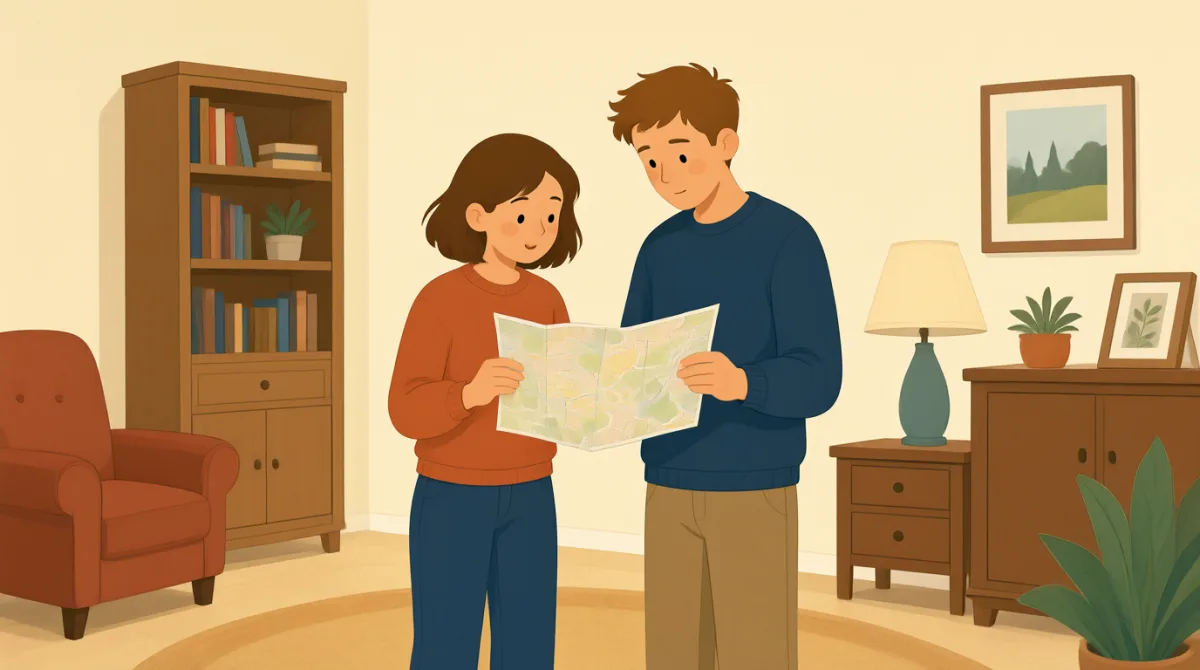

Jack, I think we missed the turn for Route 8. The map says we should’ve crossed that bridge a few minutes ago.
Jack, acho que perdemos a entrada da Route 8. O mapa diz que já deveríamos ter passado por aquela ponte há alguns minutos.

You’re right. Let’s pull over somewhere safe and check the map. No point making a guess while we’re moving.
Tem razão. Vamos encostar em algum lugar seguro e olhar o mapa. Não adianta tentar adivinhar enquanto estamos em movimento.
There’s a wide spot just ahead. I’ll look at the paper map while you check the GPS, and we can compare them.
Tem um espaço mais largo logo à frente. Vou olhar o mapa de papel enquanto você confere o GPS, e aí podemos comparar.
Okay, the GPS shows we’re on County Road 14. We can turn around here, or continue to the next road and loop back.
Certo, o GPS mostra que estamos na County Road 14. Podemos fazer o retorno aqui ou seguir até a próxima estrada e dar a volta.
The next road looks like the better option. This shoulder is narrow, and turning around here could be risky.
Acho melhor pegar a próxima estrada. O acostamento é estreito, e fazer o retorno aqui pode ser arriscado.
Agreed. It’ll add about ten minutes, but that’s better than taking a chance. We’re not in a hurry.
Concordo. Vai acrescentar uns dez minutos, mas é melhor do que arriscar. Não estamos com pressa.
I’ll keep an eye on the signs. Once we reach the next junction, we should see the road back to Route 8.
Vou ficar de olho nas placas. Quando chegarmos ao próximo cruzamento, devemos encontrar a estrada que leva de volta à Route 8.
Good plan. And let’s trust the signs as well as the GPS this time. It looks like the signal’s a little slow.
Boa ideia. E desta vez vamos confiar nas placas também, não só no GPS. Parece que o sinal está um pouco lento.
There’s the junction! The sign says Route 8 is on the left. We’re back on track, and we didn’t have to panic.
Olha, o cruzamento! A placa diz que a Route 8 fica à esquerda. Estamos de volta ao caminho certo e nem precisamos entrar em pânico.
Vocabulário6
- missed the turnperder a entrada
You passed the road where you should have turned. Use this phrase when you realize you have gone past the correct exit or junction.
Você passou da estrada em que deveria ter entrado. Use essa expressão quando perceber que passou da saída ou do cruzamento certo.
- pull overencostar
To move a vehicle to the side of the road and stop. You can pull over to check directions or deal with a problem safely.
Levar o veículo para o lado da estrada e parar. Você pode encostar para conferir as direções ou resolver um problema com segurança.
- wide spottrecho mais largo
A wider area beside the road where a vehicle can stop. It may be safer to stop there than on a narrow shoulder.
Uma área mais larga ao lado da estrada onde um veículo pode parar. Pode ser mais seguro parar ali do que em um acostamento estreito.
- loop backdar a volta
To take another route that brings you back to a road or place you passed. It is useful when turning around immediately is difficult or unsafe.
Seguir por outro caminho que leva você de volta a uma estrada ou a um lugar por onde já passou. Isso é útil quando fazer o retorno logo ali é difícil ou inseguro.
- keep an eye onficar de olho em
To watch or pay attention to something. You can keep an eye on road signs, the time, or a changing situation.
Observar ou prestar atenção em algo. Você pode ficar de olho nas placas, no horário ou em uma situação que está mudando.
- back on trackde volta ao caminho certo
Back on the correct route or moving toward the original plan again. It can also describe returning to progress after a delay or mistake.
De volta à rota correta ou avançando novamente conforme o plano original. A expressão também pode descrever a retomada do progresso depois de um atraso ou erro.
Frases-chave8
- 1
Let’s pull over somewhere safe and check the map.
Vamos encostar em algum lugar seguro e olhar o mapa.
This is a practical way to suggest stopping before making a decision. Reuse “Let’s pull over somewhere safe and…” when you need to handle something without driving.
Essa é uma forma prática de sugerir que vocês parem antes de tomar uma decisão. Reaproveite “Let’s pull over somewhere safe and…” (“Vamos encostar em algum lugar seguro e…”) quando precisar resolver algo sem estar dirigindo.
- 2
No point making a guess while we’re moving.
Não adianta tentar adivinhar enquanto estamos em movimento.
This explains why it is better to stop before deciding. “No point + -ing” is a natural way to say an action is not useful.
Essa frase explica por que é melhor parar antes de decidir. “No point + -ing” é uma forma natural de dizer que uma ação não adianta.
- 3
I’ll look at the paper map while you check the GPS, and we can compare them.
Vou olhar o mapa de papel enquanto você confere o GPS, e aí podemos comparar.
This sentence divides a task between two people and suggests checking information together. Reuse “I’ll…, while you…, and we can…” to make a simple plan.
Essa frase divide uma tarefa entre duas pessoas e sugere que elas confiram as informações juntas. Reaproveite “I’ll…, while you…, and we can…” (“Eu vou…, enquanto você…, e podemos…”) para fazer um plano simples.
- 4
This shoulder is narrow, and turning around here could be risky.
O acostamento é estreito, e fazer o retorno aqui pode ser arriscado.
This gives a clear reason for avoiding an unsafe option. Use “could be risky” to express a possible danger without sounding too certain.
Essa frase dá um motivo claro para evitar uma opção insegura. Use “could be risky” (“pode ser arriscado”) para falar de um perigo possível sem parecer muito categórico.
- 5
It’ll add about ten minutes, but that’s better than taking a chance.
Vai acrescentar uns dez minutos, mas é melhor do que arriscar.
This weighs a small inconvenience against a possible risk. Reuse “That’s better than…” to explain why you prefer one option.
Essa frase compara um pequeno inconveniente com um possível risco. Reaproveite “That’s better than…” (“Isso é melhor do que…”) para explicar por que você prefere uma opção.
- 6
I’ll keep an eye on the signs.
Vou ficar de olho nas placas.
This is a concise way to say you will watch for useful information. You can also say “I’ll keep an eye on the traffic” or “the time.”
Essa é uma forma concisa de dizer que você vai prestar atenção para encontrar informações úteis. Você também pode dizer “I’ll keep an eye on the traffic” (“Vou ficar de olho no trânsito”) ou “the time” (“no horário”).
- 7
And let’s trust the signs as well as the GPS this time.
E desta vez vamos confiar nas placas também, não só no GPS.
This suggests using two sources of information instead of relying on just one. “As well as” means “in addition to.”
Essa frase sugere usar duas fontes de informação, em vez de depender de apenas uma. “As well as” significa “além de”.
- 8
We’re back on track, and we didn’t have to panic.
Estamos de volta ao caminho certo e nem precisamos entrar em pânico.
This reports that the problem is solved and that everyone stayed calm. “Back on track” also works for plans or projects that have started going well again.
Essa frase conta que o problema foi resolvido e que todos mantiveram a calma. “Back on track” também pode ser usado para falar de planos ou projetos que voltaram a avançar bem.