Getting Lost on the Road
After taking a wrong turn, Emma and Jack pull over to check the map and figure out where they are. They stay calm, compare their options, and decide how to get back on track.
Dialogue9
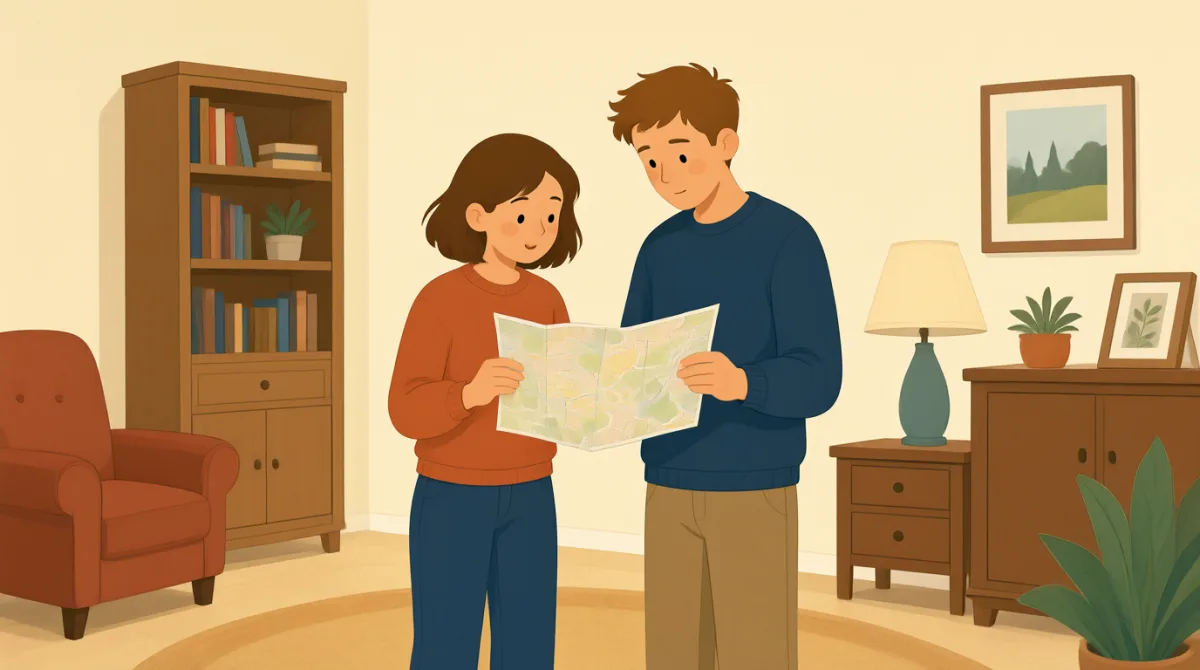

Jack, I think we missed the turn for Route 8. The map says we should’ve crossed that bridge a few minutes ago.

You’re right. Let’s pull over somewhere safe and check the map. No point making a guess while we’re moving.
There’s a wide spot just ahead. I’ll look at the paper map while you check the GPS, and we can compare them.
Okay, the GPS shows we’re on County Road 14. We can turn around here, or continue to the next road and loop back.
The next road looks like the better option. This shoulder is narrow, and turning around here could be risky.
Agreed. It’ll add about ten minutes, but that’s better than taking a chance. We’re not in a hurry.
I’ll keep an eye on the signs. Once we reach the next junction, we should see the road back to Route 8.
Good plan. And let’s trust the signs as well as the GPS this time. It looks like the signal’s a little slow.
There’s the junction! The sign says Route 8 is on the left. We’re back on track, and we didn’t have to panic.
Vocabulary6
- missed the turn
You passed the road where you should have turned. Use this phrase when you realize you have gone past the correct exit or junction.
- pull over
To move a vehicle to the side of the road and stop. You can pull over to check directions or deal with a problem safely.
- wide spot
A wider area beside the road where a vehicle can stop. It may be safer to stop there than on a narrow shoulder.
- loop back
To take another route that brings you back to a road or place you passed. It is useful when turning around immediately is difficult or unsafe.
- keep an eye on
To watch or pay attention to something. You can keep an eye on road signs, the time, or a changing situation.
- back on track
Back on the correct route or moving toward the original plan again. It can also describe returning to progress after a delay or mistake.
Key Sentences8
- 1
Let’s pull over somewhere safe and check the map.
This is a practical way to suggest stopping before making a decision. Reuse “Let’s pull over somewhere safe and…” when you need to handle something without driving.
- 2
No point making a guess while we’re moving.
This explains why it is better to stop before deciding. “No point + -ing” is a natural way to say an action is not useful.
- 3
I’ll look at the paper map while you check the GPS, and we can compare them.
This sentence divides a task between two people and suggests checking information together. Reuse “I’ll…, while you…, and we can…” to make a simple plan.
- 4
This shoulder is narrow, and turning around here could be risky.
This gives a clear reason for avoiding an unsafe option. Use “could be risky” to express a possible danger without sounding too certain.
- 5
It’ll add about ten minutes, but that’s better than taking a chance.
This weighs a small inconvenience against a possible risk. Reuse “That’s better than…” to explain why you prefer one option.
- 6
I’ll keep an eye on the signs.
This is a concise way to say you will watch for useful information. You can also say “I’ll keep an eye on the traffic” or “the time.”
- 7
And let’s trust the signs as well as the GPS this time.
This suggests using two sources of information instead of relying on just one. “As well as” means “in addition to.”
- 8
We’re back on track, and we didn’t have to panic.
This reports that the problem is solved and that everyone stayed calm. “Back on track” also works for plans or projects that have started going well again.