Getting Lost on the Road
रास्ते में रास्ता भटक जाना
After taking a wrong turn, Emma and Jack pull over to check the map and figure out where they are. They stay calm, compare their options, and decide how to get back on track.
गलत मोड़ लेने के बाद, एम्मा और जैक नक्शा देखने और यह पता लगाने के लिए गाड़ी सड़क किनारे रोकते हैं कि वे कहाँ हैं। वे शांत रहते हैं, अपने विकल्पों पर विचार करते हैं और तय करते हैं कि सही रास्ते पर वापस कैसे लौटना है।
संवाद9
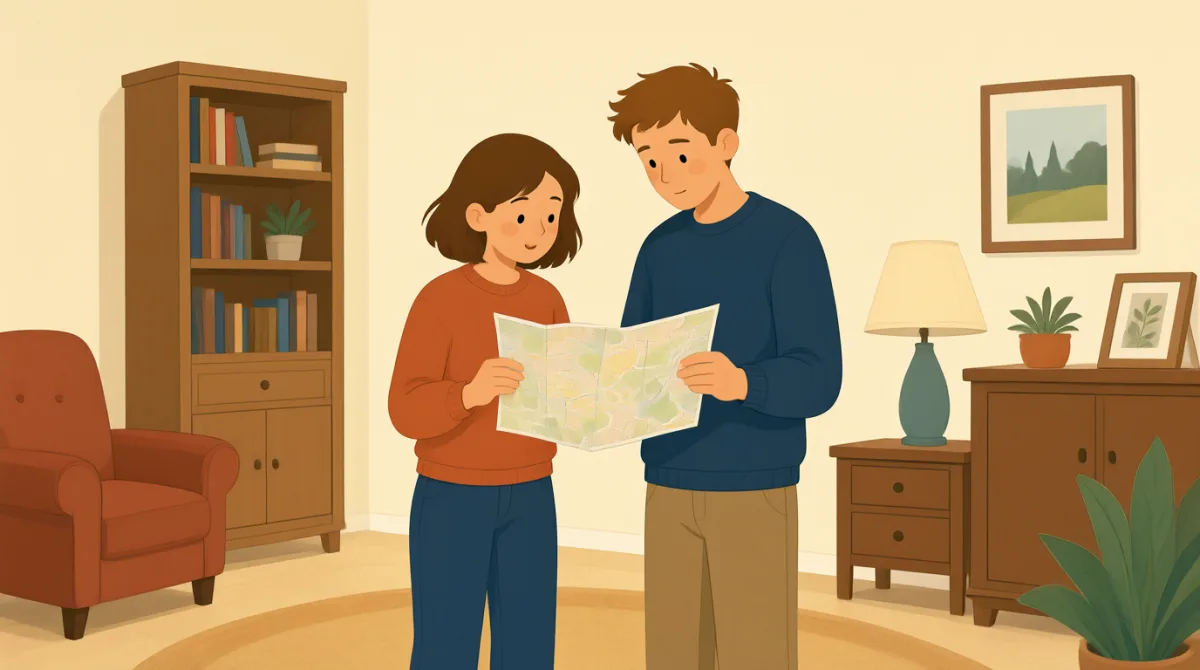

Jack, I think we missed the turn for Route 8. The map says we should’ve crossed that bridge a few minutes ago.
जैक, मुझे लगता है कि हम रूट 8 का मोड़ चूक गए। नक्शे के मुताबिक हमें कुछ मिनट पहले उस पुल को पार कर लेना चाहिए था।

You’re right. Let’s pull over somewhere safe and check the map. No point making a guess while we’re moving.
तुम सही कह रही हो। चलो कहीं सुरक्षित जगह पर गाड़ी रोककर नक्शा देखते हैं। चलते-चलते अंदाज़ा लगाने का कोई फ़ायदा नहीं।
There’s a wide spot just ahead. I’ll look at the paper map while you check the GPS, and we can compare them.
थोड़ा आगे एक चौड़ी जगह है। तुम GPS देखो, मैं कागज़ वाला नक्शा देखती हूँ, फिर हम दोनों का मिलान कर लेंगे।
Okay, the GPS shows we’re on County Road 14. We can turn around here, or continue to the next road and loop back.
ठीक है, GPS बता रहा है कि हम काउंटी रोड 14 पर हैं। हम यहीं से वापस मुड़ सकते हैं या अगली सड़क तक जाकर घूमकर वापस आ सकते हैं।
The next road looks like the better option. This shoulder is narrow, and turning around here could be risky.
अगली सड़क वाला रास्ता बेहतर लग रहा है। सड़क किनारे की यह जगह संकरी है, और यहाँ से वापस मुड़ना जोखिम भरा हो सकता है।
Agreed. It’ll add about ten minutes, but that’s better than taking a chance. We’re not in a hurry.
सही कहा। इससे करीब दस मिनट ज़्यादा लगेंगे, लेकिन जोखिम लेने से तो बेहतर है। हमें कोई जल्दी नहीं है।
I’ll keep an eye on the signs. Once we reach the next junction, we should see the road back to Route 8.
मैं सड़क के संकेतों पर नज़र रखूँगी। अगला चौराहा आते ही हमें रूट 8 की तरफ़ जाने वाली सड़क दिख जानी चाहिए।
Good plan. And let’s trust the signs as well as the GPS this time. It looks like the signal’s a little slow.
अच्छी योजना है। इस बार GPS के साथ-साथ संकेतों पर भी भरोसा करते हैं। लगता है सिग्नल थोड़ा धीमा है।
There’s the junction! The sign says Route 8 is on the left. We’re back on track, and we didn’t have to panic.
लो, चौराहा आ गया! संकेत कह रहा है कि रूट 8 बाईं ओर है। हम फिर से सही रास्ते पर हैं, और हमें घबराने की ज़रूरत भी नहीं पड़ी।
शब्दावली6
- missed the turnमोड़ चूक जाना
You passed the road where you should have turned. Use this phrase when you realize you have gone past the correct exit or junction.
जब आप उस सड़क को पार कर जाते हैं जहाँ से आपको मुड़ना था, तो आपने मोड़ चूक दिया है। सही निकास या चौराहा पार कर जाने का एहसास होने पर इस वाक्यांश का इस्तेमाल करें।
- pull overगाड़ी सड़क किनारे रोकना
To move a vehicle to the side of the road and stop. You can pull over to check directions or deal with a problem safely.
गाड़ी को सड़क के किनारे ले जाकर रोकना। दिशा देखने या किसी समस्या से सुरक्षित ढंग से निपटने के लिए आप गाड़ी सड़क किनारे रोक सकते हैं।
- wide spotचौड़ी जगह
A wider area beside the road where a vehicle can stop. It may be safer to stop there than on a narrow shoulder.
सड़क के किनारे की ऐसी चौड़ी जगह जहाँ गाड़ी रोकी जा सके। वहाँ रुकना संकरी पटरी पर रुकने से ज़्यादा सुरक्षित हो सकता है।
- loop backघूमकर वापस आना
To take another route that brings you back to a road or place you passed. It is useful when turning around immediately is difficult or unsafe.
ऐसा दूसरा रास्ता लेना जो आपको वापस उस सड़क या जगह तक ले आए जिसे आप पार कर चुके हैं। जब तुरंत वापस मुड़ना मुश्किल या असुरक्षित हो, तब यह रास्ता काम आता है।
- keep an eye onनज़र रखना
To watch or pay attention to something. You can keep an eye on road signs, the time, or a changing situation.
किसी चीज़ को देखते रहना या उस पर ध्यान देना। आप सड़क के संकेतों, समय या बदलती स्थिति पर नज़र रख सकते हैं।
- back on trackफिर से सही रास्ते पर होना
Back on the correct route or moving toward the original plan again. It can also describe returning to progress after a delay or mistake.
सही रास्ते पर लौट आना या फिर से अपनी मूल योजना की दिशा में आगे बढ़ना। किसी देरी या गलती के बाद काम में दोबारा प्रगति होने के लिए भी इसका इस्तेमाल किया जा सकता है।
मुख्य वाक्य8
- 1
Let’s pull over somewhere safe and check the map.
चलो कहीं सुरक्षित जगह पर गाड़ी रोककर नक्शा देखते हैं।
This is a practical way to suggest stopping before making a decision. Reuse “Let’s pull over somewhere safe and…” when you need to handle something without driving.
फ़ैसला करने से पहले रुकने का सुझाव देने का यह एक व्यावहारिक तरीका है। जब आपको गाड़ी चलाए बिना कोई काम करना हो, तो “Let’s pull over somewhere safe and…” का फिर से इस्तेमाल करें।
- 2
No point making a guess while we’re moving.
चलते-चलते अंदाज़ा लगाने का कोई फ़ायदा नहीं।
This explains why it is better to stop before deciding. “No point + -ing” is a natural way to say an action is not useful.
इससे पता चलता है कि फ़ैसला करने से पहले रुकना बेहतर क्यों है। “No point + -ing” यह कहने का स्वाभाविक तरीका है कि किसी काम का कोई फ़ायदा नहीं है।
- 3
I’ll look at the paper map while you check the GPS, and we can compare them.
तुम GPS देखो, मैं कागज़ वाला नक्शा देखती हूँ, फिर हम दोनों का मिलान कर लेंगे।
This sentence divides a task between two people and suggests checking information together. Reuse “I’ll…, while you…, and we can…” to make a simple plan.
इस वाक्य में दो लोगों के बीच काम बाँटा गया है और साथ मिलकर जानकारी जाँचने का सुझाव दिया गया है। एक आसान योजना बताने के लिए “I’ll…, while you…, and we can…” का फिर से इस्तेमाल करें।
- 4
This shoulder is narrow, and turning around here could be risky.
सड़क किनारे की यह जगह संकरी है, और यहाँ से वापस मुड़ना जोखिम भरा हो सकता है।
This gives a clear reason for avoiding an unsafe option. Use “could be risky” to express a possible danger without sounding too certain.
इससे असुरक्षित विकल्प से बचने की स्पष्ट वजह मिलती है। किसी संभावित ख़तरे के बारे में बहुत पक्का दावा किए बिना बताने के लिए “could be risky” का इस्तेमाल करें।
- 5
It’ll add about ten minutes, but that’s better than taking a chance.
इससे करीब दस मिनट ज़्यादा लगेंगे, लेकिन जोखिम लेने से तो बेहतर है।
This weighs a small inconvenience against a possible risk. Reuse “That’s better than…” to explain why you prefer one option.
इस वाक्य में थोड़ी-सी असुविधा की तुलना संभावित जोखिम से की गई है। यह बताने के लिए कि आप एक विकल्प को क्यों पसंद करते हैं, “That’s better than…” का फिर से इस्तेमाल करें।
- 6
I’ll keep an eye on the signs.
मैं सड़क के संकेतों पर नज़र रखूँगी।
This is a concise way to say you will watch for useful information. You can also say “I’ll keep an eye on the traffic” or “the time.”
यह कहने का संक्षिप्त तरीका है कि आप काम की जानकारी पर नज़र रखेंगी। आप “I’ll keep an eye on the traffic” या “the time.” भी कह सकती हैं।
- 7
And let’s trust the signs as well as the GPS this time.
और इस बार GPS के साथ-साथ संकेतों पर भी भरोसा करते हैं।
This suggests using two sources of information instead of relying on just one. “As well as” means “in addition to.”
इसमें सिर्फ़ एक के बजाय जानकारी के दो स्रोतों का इस्तेमाल करने का सुझाव है। “As well as” का मतलब “के साथ-साथ” होता है।
- 8
We’re back on track, and we didn’t have to panic.
हम फिर से सही रास्ते पर हैं, और हमें घबराने की ज़रूरत भी नहीं पड़ी।
This reports that the problem is solved and that everyone stayed calm. “Back on track” also works for plans or projects that have started going well again.
यह बताता है कि समस्या सुलझ गई और सभी शांत रहे। “Back on track” का इस्तेमाल तब भी किया जा सकता है जब किसी योजना या परियोजना में फिर से अच्छी प्रगति होने लगे।