Getting Lost on the Road
길을 잘못 들었을 때
After taking a wrong turn, Emma and Jack pull over to check the map and figure out where they are. They stay calm, compare their options, and decide how to get back on track.
잘못된 길로 들어선 에마와 잭은 차를 안전한 곳에 세우고 지도를 확인하며 현재 위치를 파악해요. 두 사람은 침착하게 선택지를 비교하고 다시 원래 경로로 돌아갈 방법을 정해요.
대화9
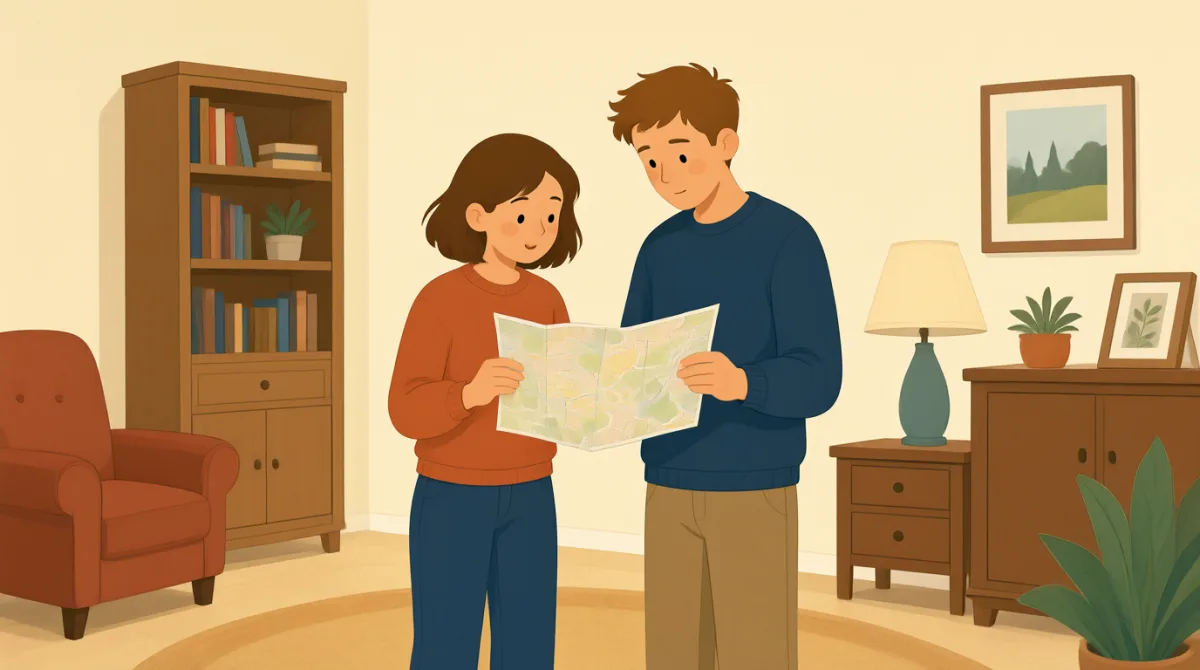

Jack, I think we missed the turn for Route 8. The map says we should’ve crossed that bridge a few minutes ago.
잭, 8번 도로로 가는 길을 놓친 것 같아. 지도에는 몇 분 전에 저 다리를 건넜어야 한다고 나와 있어.

You’re right. Let’s pull over somewhere safe and check the map. No point making a guess while we’re moving.
맞아. 안전한 곳에 차를 세우고 지도를 확인하자. 움직이면서 짐작만 하는 건 소용없어.
There’s a wide spot just ahead. I’ll look at the paper map while you check the GPS, and we can compare them.
바로 앞에 차를 세울 만한 넓은 공간이 있어. 네가 GPS를 확인하는 동안 내가 종이 지도를 볼게. 둘을 비교해 보자.
Okay, the GPS shows we’re on County Road 14. We can turn around here, or continue to the next road and loop back.
좋아. GPS에는 우리가 카운티 도로 14번에 있다고 나와. 여기서 돌아가거나 다음 도로까지 가서 돌아올 수 있어.
The next road looks like the better option. This shoulder is narrow, and turning around here could be risky.
다음 도로까지 가는 게 더 나아 보여. 갓길이 좁아서 여기서 돌리면 위험할 수도 있어.
Agreed. It’ll add about ten minutes, but that’s better than taking a chance. We’re not in a hurry.
동의해. 10분쯤 더 걸리겠지만, 위험을 감수하는 것보단 낫지. 우리 급한 것도 아니잖아.
I’ll keep an eye on the signs. Once we reach the next junction, we should see the road back to Route 8.
내가 표지판을 잘 살펴볼게. 다음 교차로에 도착하면 8번 도로로 돌아가는 길이 보일 거야.
Good plan. And let’s trust the signs as well as the GPS this time. It looks like the signal’s a little slow.
좋은 생각이야. 이번엔 GPS뿐 아니라 표지판도 믿자. 신호가 좀 느린 것 같아.
There’s the junction! The sign says Route 8 is on the left. We’re back on track, and we didn’t have to panic.
저기 교차로가 있어! 표지판에 8번 도로는 왼쪽이라고 나와. 다시 원래 길로 들어왔네. 당황할 필요도 없었어.
어휘6
- missed the turn길을 놓치다
You passed the road where you should have turned. Use this phrase when you realize you have gone past the correct exit or junction.
돌아가야 할 도로를 지나쳤다는 뜻이에요. 올바른 출구나 교차로를 이미 지나쳤다는 걸 깨달았을 때 쓰는 표현이에요.
- pull over차를 길가에 세우다
To move a vehicle to the side of the road and stop. You can pull over to check directions or deal with a problem safely.
차량을 도로 옆으로 이동시켜 세운다는 뜻이에요. 길을 확인하거나 문제가 생겼을 때 안전하게 차를 세울 수 있어요.
- wide spot넓은 공간
A wider area beside the road where a vehicle can stop. It may be safer to stop there than on a narrow shoulder.
차량을 세울 수 있는 도로 옆의 넓은 공간이에요. 좁은 갓길에 세우는 것보다 그곳에 세우는 게 더 안전할 수 있어요.
- loop back돌아서 되돌아가다
To take another route that brings you back to a road or place you passed. It is useful when turning around immediately is difficult or unsafe.
다른 길로 가서 지나온 도로나 장소로 돌아온다는 뜻이에요. 바로 유턴하기 어렵거나 위험할 때 유용한 표현이에요.
- keep an eye on주의 깊게 살피다
To watch or pay attention to something. You can keep an eye on road signs, the time, or a changing situation.
무언가를 지켜보거나 주의를 기울인다는 뜻이에요. 도로 표지판이나 시간, 변하는 상황을 주의 깊게 살핀다고 할 수 있어요.
- back on track다시 원래 경로로 돌아오다
Back on the correct route or moving toward the original plan again. It can also describe returning to progress after a delay or mistake.
올바른 경로로 돌아오거나 다시 원래 계획대로 진행한다는 뜻이에요. 지연이나 실수가 있은 뒤 다시 순조롭게 진행되는 상황에도 쓸 수 있어요.
핵심 문장8
- 1
Let’s pull over somewhere safe and check the map.
안전한 곳에 차를 세우고 지도를 확인하자.
This is a practical way to suggest stopping before making a decision. Reuse “Let’s pull over somewhere safe and…” when you need to handle something without driving.
결정을 내리기 전에 일단 멈추자고 제안할 때 쓰기 좋은 표현이에요. 운전하지 않고 뭔가를 처리해야 할 때 “Let’s pull over somewhere safe and…”를 활용해 보세요.
- 2
No point making a guess while we’re moving.
움직이면서 짐작만 하는 건 소용없어.
This explains why it is better to stop before deciding. “No point + -ing” is a natural way to say an action is not useful.
결정을 내리기 전에 멈추는 편이 나은 이유를 설명하는 문장이에요. “No point + -ing”는 어떤 행동이 소용없다고 자연스럽게 말하는 표현이에요.
- 3
I’ll look at the paper map while you check the GPS, and we can compare them.
네가 GPS를 확인하는 동안 내가 종이 지도를 볼게. 둘을 비교해 보자.
This sentence divides a task between two people and suggests checking information together. Reuse “I’ll…, while you…, and we can…” to make a simple plan.
두 사람이 일을 나눠 맡고 함께 정보를 확인하자고 제안하는 문장이에요. 간단한 계획을 세울 때 “I’ll…, while you…, and we can…”을 활용해 보세요.
- 4
This shoulder is narrow, and turning around here could be risky.
갓길이 좁아서 여기서 돌리면 위험할 수도 있어.
This gives a clear reason for avoiding an unsafe option. Use “could be risky” to express a possible danger without sounding too certain.
안전하지 않은 선택을 피해야 하는 이유를 분명하게 말하는 문장이에요. “could be risky”는 위험이 확실하다고 단정하지 않고 가능성을 나타내요.
- 5
It’ll add about ten minutes, but that’s better than taking a chance.
10분쯤 더 걸리겠지만, 위험을 감수하는 것보단 나아.
This weighs a small inconvenience against a possible risk. Reuse “That’s better than…” to explain why you prefer one option.
작은 불편과 잠재적인 위험을 비교하는 문장이에요. 한 가지 선택을 더 선호하는 이유를 설명할 때 “That’s better than…”을 활용해 보세요.
- 6
I’ll keep an eye on the signs.
내가 표지판을 잘 살펴볼게.
This is a concise way to say you will watch for useful information. You can also say “I’ll keep an eye on the traffic” or “the time.”
유용한 정보를 놓치지 않도록 살펴보겠다고 간결하게 말하는 표현이에요. “I’ll keep an eye on the traffic” 또는 “the time”이라고도 할 수 있어요.
- 7
And let’s trust the signs as well as the GPS this time.
이번엔 GPS뿐 아니라 표지판도 믿자.
This suggests using two sources of information instead of relying on just one. “As well as” means “in addition to.”
정보를 한 가지에만 의존하지 말고 두 가지 자료를 함께 활용하자는 뜻이에요. “As well as”는 “~뿐 아니라”라는 의미예요.
- 8
We’re back on track, and we didn’t have to panic.
다시 원래 길로 들어왔고, 당황할 필요도 없었어.
This reports that the problem is solved and that everyone stayed calm. “Back on track” also works for plans or projects that have started going well again.
문제가 해결됐고 모두 침착함을 유지했다는 걸 전하는 문장이에요. “Back on track”은 계획이나 프로젝트가 다시 순조롭게 진행될 때도 쓸 수 있어요.