Getting Lost on the Road
道に迷って
After taking a wrong turn, Emma and Jack pull over to check the map and figure out where they are. They stay calm, compare their options, and decide how to get back on track.
曲がる道を間違えたエマとジャックは、車を安全な場所に停めて地図を確認し、今どこにいるのかを確かめる。落ち着いて選択肢を比べ、正しいルートに戻る方法を決める。
会話9
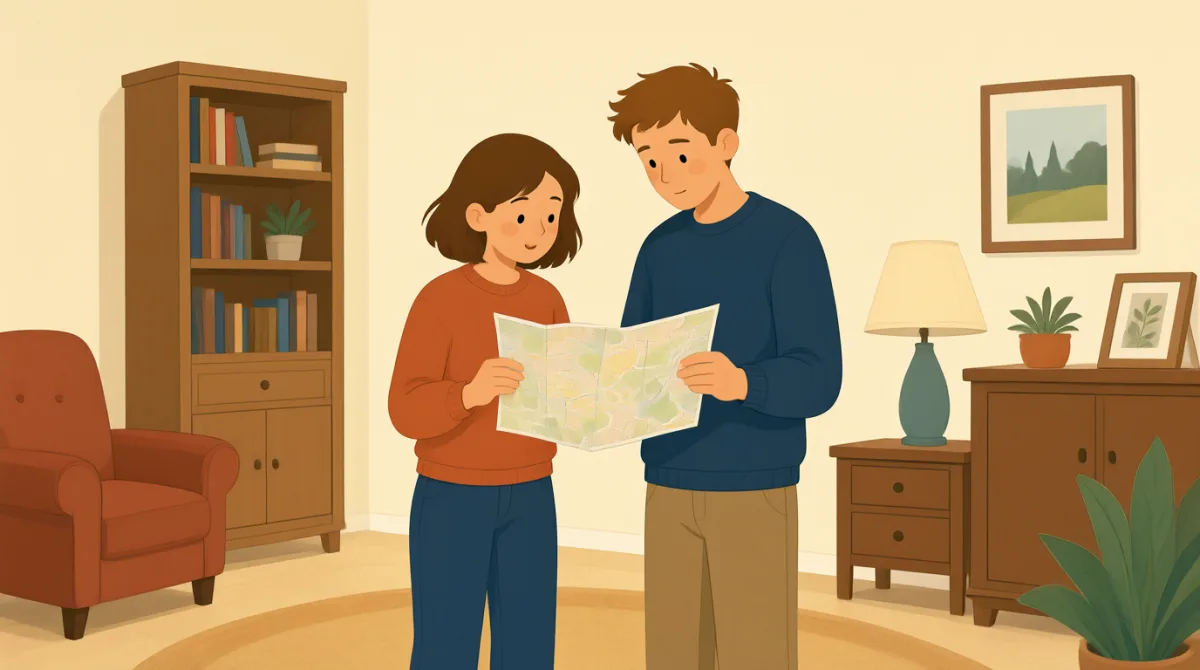

Jack, I think we missed the turn for Route 8. The map says we should’ve crossed that bridge a few minutes ago.
ジャック、ルート8に曲がるところを通り過ぎちゃったと思う。地図だと、数分前にあの橋を渡ってるはずなんだけど。

You’re right. Let’s pull over somewhere safe and check the map. No point making a guess while we’re moving.
そうだね。安全な場所に車を停めて、地図を確認しよう。走りながら当てずっぽうで決めても仕方ないよ。
There’s a wide spot just ahead. I’ll look at the paper map while you check the GPS, and we can compare them.
少し先に道幅が広くなってるところがあるよ。私が紙の地図を見てる間にGPSを確認して。それを見比べよう。
Okay, the GPS shows we’re on County Road 14. We can turn around here, or continue to the next road and loop back.
わかった。GPSだと、今いるのは郡道14号線だね。ここで引き返すか、次の道まで進んで戻ってくるかだな。
The next road looks like the better option. This shoulder is narrow, and turning around here could be risky.
次の道まで行くほうがよさそう。ここの路肩は狭いし、ここで引き返すのは危ないかもしれない。
Agreed. It’ll add about ten minutes, but that’s better than taking a chance. We’re not in a hurry.
そうだね。10分くらい余計にかかるけど、危険を冒すよりいいよ。急いでないしね。
I’ll keep an eye on the signs. Once we reach the next junction, we should see the road back to Route 8.
私が標識を見ておくね。次の交差点に着けば、ルート8に戻る道が見えるはず。
Good plan. And let’s trust the signs as well as the GPS this time. It looks like the signal’s a little slow.
いい考えだね。今度はGPSだけじゃなくて、標識も頼りにしよう。電波がちょっと遅れてるみたいだし。
There’s the junction! The sign says Route 8 is on the left. We’re back on track, and we didn’t have to panic.
交差点が見えた!標識によると、ルート8は左だよ。正しいルートに戻れたね。慌てずに済んだよ。
語彙6
- missed the turn曲がるところを通り過ぎる
You passed the road where you should have turned. Use this phrase when you realize you have gone past the correct exit or junction.
曲がるべき道を通り過ぎてしまった、という意味です。正しい出口や交差点を過ぎてしまったと気づいたときに使います。
- pull over車を道路脇に寄せて停める
To move a vehicle to the side of the road and stop. You can pull over to check directions or deal with a problem safely.
車を道路の脇に寄せて停めることです。道順を確認したり、問題に対処したりするとき、安全のために車を停めることを表します。
- wide spot道幅が広くなっている場所
A wider area beside the road where a vehicle can stop. It may be safer to stop there than on a narrow shoulder.
車を停められる、道路脇の広めの場所です。狭い路肩よりも、そこに停めたほうが安全な場合があります。
- loop back遠回りして戻る
To take another route that brings you back to a road or place you passed. It is useful when turning around immediately is difficult or unsafe.
別の道を通って、さっき通った道や場所に戻ることです。すぐに引き返すのが難しかったり危なかったりするときに便利な表現です。
- keep an eye on〜に注意して見る
To watch or pay attention to something. You can keep an eye on road signs, the time, or a changing situation.
何かを見張ったり、注意を払ったりすることです。道路標識や時間、変化する状況などをよく見ておくときに使えます。
- back on track正しいルートに戻る
Back on the correct route or moving toward the original plan again. It can also describe returning to progress after a delay or mistake.
正しいルートに戻ること、または当初の計画どおりに進み始めることです。遅れや間違いのあと、計画や作業が再び順調に進むようになった場合にも使えます。
重要な文8
- 1
Let’s pull over somewhere safe and check the map.
安全な場所に車を停めて、地図を確認しよう。
This is a practical way to suggest stopping before making a decision. Reuse “Let’s pull over somewhere safe and…” when you need to handle something without driving.
何かを決める前に、まず車を停めようと提案する実用的な表現です。運転せずに何かに対応したいときは、“Let’s pull over somewhere safe and…”(安全な場所に車を停めて、〜しよう)を応用できます。
- 2
No point making a guess while we’re moving.
走りながら当てずっぽうで決めても仕方ないよ。
This explains why it is better to stop before deciding. “No point + -ing” is a natural way to say an action is not useful.
決める前に停車したほうがいい理由を説明しています。“No point + -ing”は、ある行動をしても意味がない、役に立たないと言う自然な表現です。
- 3
I’ll look at the paper map while you check the GPS, and we can compare them.
私が紙の地図を見てる間にGPSを確認して。それを見比べよう。
This sentence divides a task between two people and suggests checking information together. Reuse “I’ll…, while you…, and we can…” to make a simple plan.
二人で作業を分担し、情報を一緒に確認しようと提案する文です。“I’ll…, while you…, and we can…”(私が〜するから、その間にあなたは〜して、一緒に〜できるね)を使うと、簡単な計画を立てられます。
- 4
This shoulder is narrow, and turning around here could be risky.
ここの路肩は狭いし、ここで引き返すのは危ないかもしれない。
This gives a clear reason for avoiding an unsafe option. Use “could be risky” to express a possible danger without sounding too certain.
危険な選択肢を避ける理由をはっきり伝える表現です。“could be risky”は、危険だと断定せずに、危険かもしれないと伝えたいときに使えます。
- 5
It’ll add about ten minutes, but that’s better than taking a chance.
10分くらい余計にかかるけど、危険を冒すよりいいよ。
This weighs a small inconvenience against a possible risk. Reuse “That’s better than…” to explain why you prefer one option.
少しの不便さと、起こりうる危険を比べています。“That’s better than…”(それより〜のほうがいい)を使うと、ある選択肢を好む理由を説明できます。
- 6
I’ll keep an eye on the signs.
私が標識を見ておくね。
This is a concise way to say you will watch for useful information. You can also say “I’ll keep an eye on the traffic” or “the time.”
役立つ情報に注意しておくことを簡潔に伝える表現です。“I’ll keep an eye on the traffic”(交通状況を見ておくね)や“I’ll keep an eye on the time”(時間を気にしておくね)とも言えます。
- 7
And let’s trust the signs as well as the GPS this time.
今度はGPSだけじゃなくて、標識も頼りにしよう。
This suggests using two sources of information instead of relying on just one. “As well as” means “in addition to.”
一つだけに頼らず、二つの情報源を使おうと提案しています。“as well as”は「〜に加えて」「〜だけでなく」という意味です。
- 8
We’re back on track, and we didn’t have to panic.
正しいルートに戻れたね。慌てずに済んだよ。
This reports that the problem is solved and that everyone stayed calm. “Back on track” also works for plans or projects that have started going well again.
問題が解決し、みんなが落ち着いて対応できたことを伝えています。“Back on track”は、計画やプロジェクトが再び順調に進み始めたときにも使えます。