Getting Lost on the Road
หลงทางระหว่างขับรถ
After taking a wrong turn, Emma and Jack pull over to check the map and figure out where they are. They stay calm, compare their options, and decide how to get back on track.
หลังจากเลี้ยวผิด เอมมากับแจ็กจอดรถข้างทางเพื่อตรวจดูแผนที่และหาว่าตอนนี้อยู่ที่ไหน ทั้งคู่ตั้งสติ เปรียบเทียบทางเลือก แล้วตัดสินใจว่าจะกลับไปเส้นทางเดิมอย่างไร
บทสนทนา9
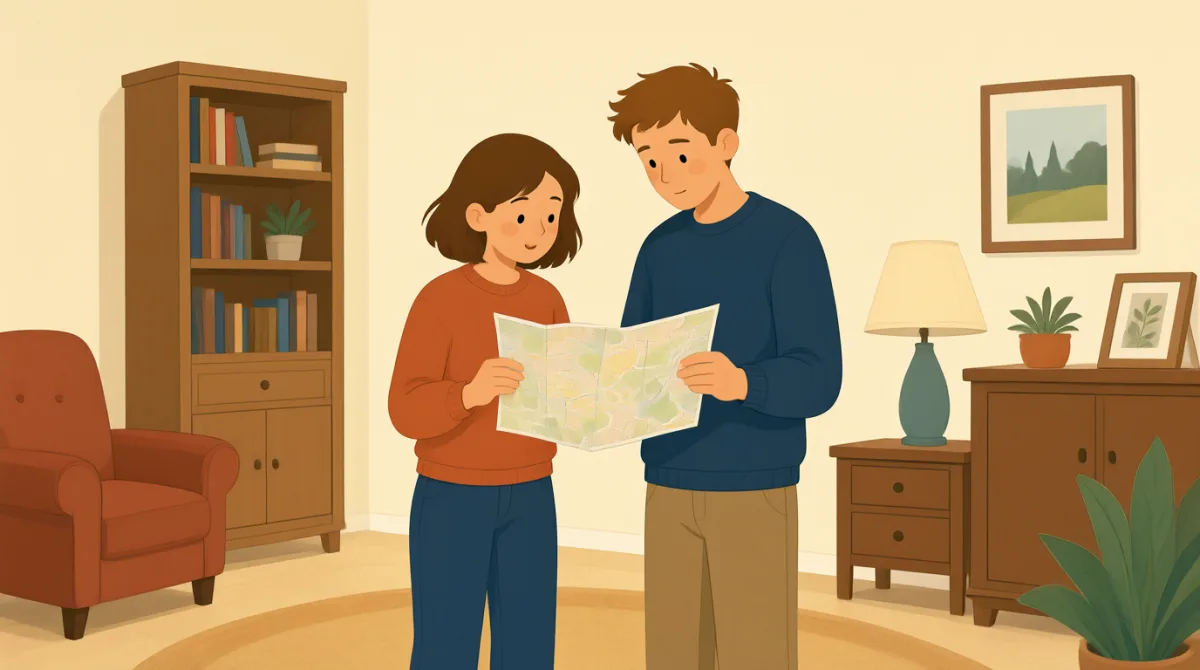

Jack, I think we missed the turn for Route 8. The map says we should’ve crossed that bridge a few minutes ago.
แจ็ก ฉันว่าเราพลาดทางเลี้ยวไปถนนหมายเลข 8 แล้วนะ ในแผนที่บอกว่าเราน่าจะข้ามสะพานนั้นไปเมื่อไม่กี่นาทีก่อน

You’re right. Let’s pull over somewhere safe and check the map. No point making a guess while we’re moving.
เธอพูดถูก จอดตรงที่ปลอดภัยแล้วดูแผนที่กันเถอะ เดาสุ่มตอนรถยังวิ่งอยู่ไม่มีประโยชน์หรอก
There’s a wide spot just ahead. I’ll look at the paper map while you check the GPS, and we can compare them.
ข้างหน้ามีที่กว้างอยู่ เดี๋ยวฉันดูแผนที่กระดาษ ส่วนเธอเช็ก GPS แล้วเราค่อยเอามาเทียบกัน
Okay, the GPS shows we’re on County Road 14. We can turn around here, or continue to the next road and loop back.
โอเค GPS บอกว่าเราอยู่บนถนนเคาน์ตีหมายเลข 14 เราจะกลับรถตรงนี้ก็ได้ หรือขับต่อไปถึงถนนถัดไปแล้ววนกลับมา
The next road looks like the better option. This shoulder is narrow, and turning around here could be risky.
ไปถนนถัดไปน่าจะดีกว่า ไหล่ทางตรงนี้แคบ กลับรถตรงนี้อาจเสี่ยงนะ
Agreed. It’ll add about ten minutes, but that’s better than taking a chance. We’re not in a hurry.
เห็นด้วย ถึงจะใช้เวลาเพิ่มประมาณสิบนาที แต่ก็ดีกว่าเสี่ยง เราไม่ได้รีบอะไร
I’ll keep an eye on the signs. Once we reach the next junction, we should see the road back to Route 8.
ฉันจะคอยดูป้ายไว้ พอถึงทางแยกถัดไป เราน่าจะเห็นถนนที่กลับไปถนนหมายเลข 8 ได้
Good plan. And let’s trust the signs as well as the GPS this time. It looks like the signal’s a little slow.
ดีเลย คราวนี้เชื่อป้ายบอกทางควบคู่ไปกับ GPS ด้วยนะ ดูเหมือนสัญญาณจะช้านิดหน่อย
There’s the junction! The sign says Route 8 is on the left. We’re back on track, and we didn’t have to panic.
ทางแยกอยู่นั่นไง! ป้ายบอกว่าถนนหมายเลข 8 อยู่ทางซ้าย เรากลับมาอยู่บนเส้นทางแล้ว แถมไม่ต้องตื่นตระหนกด้วย
คำศัพท์6
- missed the turnพลาดทางเลี้ยว
You passed the road where you should have turned. Use this phrase when you realize you have gone past the correct exit or junction.
หมายถึงขับเลยถนนที่ควรเลี้ยวไป ใช้สำนวนนี้เมื่อรู้ตัวว่าขับเลยทางออกหรือทางแยกที่ถูกต้องไปแล้ว
- pull overจอดรถข้างทาง
To move a vehicle to the side of the road and stop. You can pull over to check directions or deal with a problem safely.
ขับรถออกไปจอดหยุดอยู่ข้างถนน คุณอาจจอดข้างทางเพื่อตรวจดูเส้นทางหรือจัดการปัญหาอย่างปลอดภัย
- wide spotบริเวณกว้างข้างทาง
A wider area beside the road where a vehicle can stop. It may be safer to stop there than on a narrow shoulder.
พื้นที่ข้างถนนที่กว้างพอให้รถจอดได้ การจอดตรงนั้นอาจปลอดภัยกว่าจอดบนไหล่ทางแคบ ๆ
- loop backวนกลับ
To take another route that brings you back to a road or place you passed. It is useful when turning around immediately is difficult or unsafe.
ใช้เส้นทางอื่นเพื่อกลับไปยังถนนหรือสถานที่ที่ขับผ่านไปแล้ว สำนวนนี้มีประโยชน์เมื่อกลับรถทันทีได้ยากหรือไม่ปลอดภัย
- keep an eye onคอยดู
To watch or pay attention to something. You can keep an eye on road signs, the time, or a changing situation.
เฝ้าสังเกตหรือใส่ใจบางสิ่ง คุณสามารถคอยดูป้ายถนน เวลา หรือสถานการณ์ที่เปลี่ยนแปลงได้
- back on trackกลับมาอยู่บนเส้นทาง
Back on the correct route or moving toward the original plan again. It can also describe returning to progress after a delay or mistake.
กลับมาใช้เส้นทางที่ถูกต้องหรือกลับไปทำตามแผนเดิมอีกครั้ง นอกจากนี้ยังใช้พูดถึงการกลับมาคืบหน้าต่อหลังจากล่าช้าหรือทำพลาดได้ด้วย
ประโยคสำคัญ8
- 1
Let’s pull over somewhere safe and check the map.
จอดตรงที่ปลอดภัยแล้วดูแผนที่กันเถอะ
This is a practical way to suggest stopping before making a decision. Reuse “Let’s pull over somewhere safe and…” when you need to handle something without driving.
ประโยคนี้ใช้ชวนให้หยุดรถก่อนตัดสินใจ ลองนำ “Let’s pull over somewhere safe and…” กลับไปใช้เมื่อคุณต้องจัดการอะไรบางอย่างโดยไม่ขับรถไปด้วย
- 2
No point making a guess while we’re moving.
เดาสุ่มตอนรถยังวิ่งอยู่ไม่มีประโยชน์หรอก
This explains why it is better to stop before deciding. “No point + -ing” is a natural way to say an action is not useful.
ประโยคนี้อธิบายว่าทำไมจึงควรหยุดรถก่อนตัดสินใจ รูปแบบ “No point + -ing” ใช้พูดอย่างเป็นธรรมชาติว่าการทำสิ่งนั้นไม่มีประโยชน์
- 3
I’ll look at the paper map while you check the GPS, and we can compare them.
เดี๋ยวฉันดูแผนที่กระดาษ ส่วนเธอเช็ก GPS แล้วเราค่อยเอามาเทียบกัน
This sentence divides a task between two people and suggests checking information together. Reuse “I’ll…, while you…, and we can…” to make a simple plan.
ประโยคนี้แบ่งงานให้คนสองคนและชวนกันตรวจสอบข้อมูล ลองใช้รูปแบบ “I’ll…, while you…, and we can…” เพื่อวางแผนง่าย ๆ
- 4
This shoulder is narrow, and turning around here could be risky.
ไหล่ทางตรงนี้แคบ แล้วการกลับรถตรงนี้ก็อาจเสี่ยง
This gives a clear reason for avoiding an unsafe option. Use “could be risky” to express a possible danger without sounding too certain.
ประโยคนี้บอกเหตุผลชัดเจนว่าทำไมจึงควรหลีกเลี่ยงทางเลือกที่ไม่ปลอดภัย ใช้ “could be risky” เพื่อพูดถึงอันตรายที่อาจเกิดขึ้นโดยไม่ฟังดูมั่นใจเกินไป
- 5
It’ll add about ten minutes, but that’s better than taking a chance.
ถึงจะใช้เวลาเพิ่มประมาณสิบนาที แต่ก็ดีกว่าเสี่ยง
This weighs a small inconvenience against a possible risk. Reuse “That’s better than…” to explain why you prefer one option.
ประโยคนี้เปรียบเทียบความไม่สะดวกเล็กน้อยกับความเสี่ยงที่อาจเกิดขึ้น ลองใช้ “That’s better than…” เพื่ออธิบายว่าทำไมคุณถึงชอบทางเลือกหนึ่งมากกว่า
- 6
I’ll keep an eye on the signs.
ฉันจะคอยดูป้ายไว้
This is a concise way to say you will watch for useful information. You can also say “I’ll keep an eye on the traffic” or “the time.”
เป็นวิธีพูดสั้น ๆ ว่าคุณจะคอยสังเกตข้อมูลที่เป็นประโยชน์ นอกจากนี้ยังพูดได้ว่า “I’ll keep an eye on the traffic” หรือ “the time.”
- 7
And let’s trust the signs as well as the GPS this time.
คราวนี้เชื่อป้ายบอกทางควบคู่ไปกับ GPS กันเถอะ
This suggests using two sources of information instead of relying on just one. “As well as” means “in addition to.”
ประโยคนี้เสนอให้ใช้แหล่งข้อมูลสองอย่าง แทนที่จะพึ่งเพียงอย่างเดียว “As well as” หมายถึง “นอกจาก...แล้ว ยัง...”
- 8
We’re back on track, and we didn’t have to panic.
เรากลับมาอยู่บนเส้นทางแล้ว แถมไม่ต้องตื่นตระหนกด้วย
This reports that the problem is solved and that everyone stayed calm. “Back on track” also works for plans or projects that have started going well again.
ประโยคนี้บอกว่าปัญหาได้รับการแก้ไขแล้ว และทุกคนยังตั้งสติได้ “Back on track” ยังใช้พูดถึงแผนหรือโครงการที่กลับมาดำเนินไปได้ด้วยดีอีกครั้งได้ด้วย