Getting Lost on the Road
الضياع على الطريق
After taking a wrong turn, Emma and Jack pull over to check the map and figure out where they are. They stay calm, compare their options, and decide how to get back on track.
بعد أن انعطفت إيما وجاك في الاتجاه الخطأ، توقفا إلى جانب الطريق ليتحققا من الخريطة ويعرفا مكانهما. حافظا على هدوئهما، وقارنا الخيارات المتاحة، وقررا كيف يعودان إلى المسار الصحيح.
حوار9
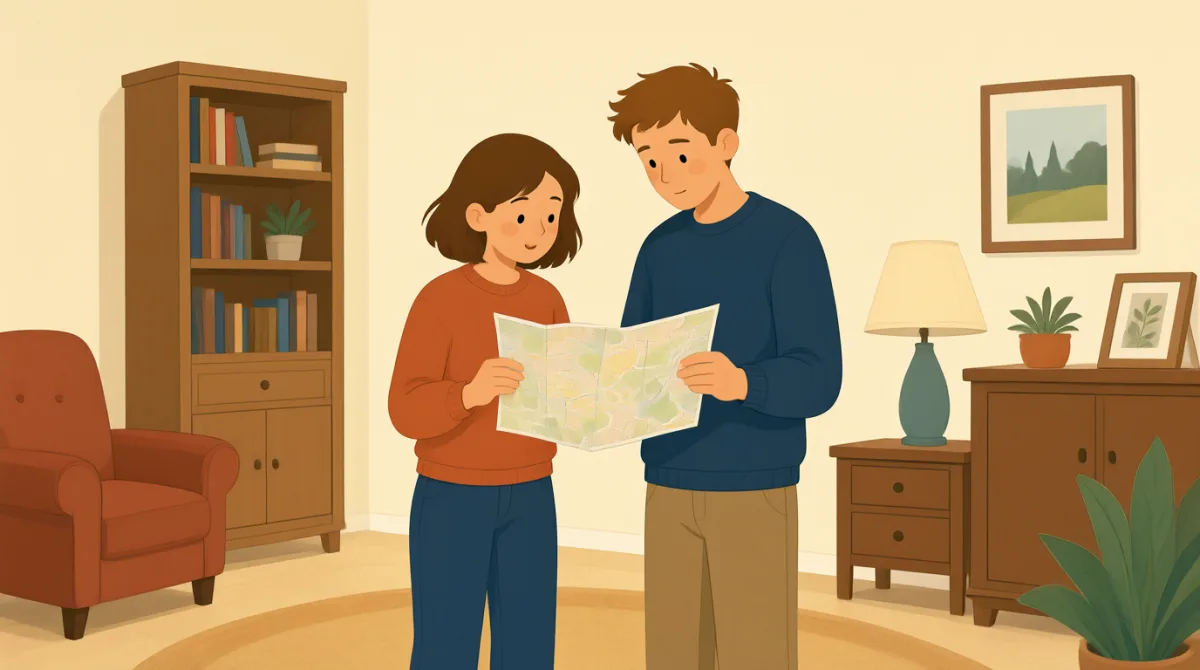

Jack, I think we missed the turn for Route 8. The map says we should’ve crossed that bridge a few minutes ago.
جاك، أظن أننا تجاوزنا المنعطف المؤدي إلى الطريق 8. تقول الخريطة إننا كان ينبغي أن نعبر ذلك الجسر قبل بضع دقائق.

You’re right. Let’s pull over somewhere safe and check the map. No point making a guess while we’re moving.
معك حق. لنتوقف في مكان آمن ونتحقق من الخريطة. لا فائدة من التخمين ونحن نتحرك.
There’s a wide spot just ahead. I’ll look at the paper map while you check the GPS, and we can compare them.
هناك فسحة واسعة أمامنا بقليل. سأنظر إلى الخريطة الورقية بينما تتحقق أنت من نظام تحديد المواقع، ويمكننا أن نقارن بينهما.
Okay, the GPS shows we’re on County Road 14. We can turn around here, or continue to the next road and loop back.
حسنًا، يُظهر نظام تحديد المواقع أننا على طريق المقاطعة 14. يمكننا أن نعود من هنا، أو نواصل السير حتى الطريق التالي ثم نلتف لنعود.
The next road looks like the better option. This shoulder is narrow, and turning around here could be risky.
يبدو أن الطريق التالي خيار أفضل. جانب الطريق هنا ضيق، وقد تكون العودة من هنا خطرة.
Agreed. It’ll add about ten minutes, but that’s better than taking a chance. We’re not in a hurry.
أتفق معك. سيضيف ذلك نحو عشر دقائق، لكن هذا أفضل من المجازفة. لسنا على عجلة.
I’ll keep an eye on the signs. Once we reach the next junction, we should see the road back to Route 8.
سأراقب اللافتات. عندما نصل إلى التقاطع التالي، يفترض أن نرى الطريق المؤدي إلى الطريق 8.
Good plan. And let’s trust the signs as well as the GPS this time. It looks like the signal’s a little slow.
خطة جيدة. ولنثق باللافتات إلى جانب نظام تحديد المواقع هذه المرة. يبدو أن الإشارة بطيئة قليلًا.
There’s the junction! The sign says Route 8 is on the left. We’re back on track, and we didn’t have to panic.
ها هو التقاطع! تقول اللافتة إن الطريق 8 يقع إلى اليسار. عدنا إلى المسار الصحيح، ولم نضطر إلى الذعر.
المفردات6
- missed the turnتجاوز المنعطف
You passed the road where you should have turned. Use this phrase when you realize you have gone past the correct exit or junction.
أي أنك مررت بالطريق الذي كان ينبغي أن تنعطف إليه. تُستخدم هذه العبارة عندما تدرك أنك تجاوزت المخرج أو التقاطع الصحيح.
- pull overيتوقف إلى جانب الطريق
To move a vehicle to the side of the road and stop. You can pull over to check directions or deal with a problem safely.
أن تحرّك المركبة إلى جانب الطريق وتتوقف. يمكنك التوقف إلى جانب الطريق للتحقق من الاتجاهات أو لمعالجة مشكلة بأمان.
- wide spotفسحة واسعة
A wider area beside the road where a vehicle can stop. It may be safer to stop there than on a narrow shoulder.
مساحة أوسع بجانب الطريق يمكن للمركبة أن تتوقف فيها. وقد يكون التوقف هناك أكثر أمانًا من التوقف على جانب ضيق من الطريق.
- loop backيلتف ليعود
To take another route that brings you back to a road or place you passed. It is useful when turning around immediately is difficult or unsafe.
أن تسلك طريقًا آخر يعيدك إلى طريق أو مكان مررت به. يفيد ذلك عندما تكون العودة فورًا صعبة أو غير آمنة.
- keep an eye onيراقب
To watch or pay attention to something. You can keep an eye on road signs, the time, or a changing situation.
أن تتابع شيئًا أو تنتبه إليه. يمكنك مراقبة لافتات الطريق أو الوقت أو أي وضع يتغير.
- back on trackيعود إلى المسار الصحيح
Back on the correct route or moving toward the original plan again. It can also describe returning to progress after a delay or mistake.
العودة إلى الطريق الصحيح أو استئناف التقدم نحو الخطة الأصلية. ويمكن أن تُستخدم أيضًا لوصف استعادة التقدم بعد تأخير أو خطأ.
الجمل الأساسية8
- 1
Let’s pull over somewhere safe and check the map.
لنتوقف في مكان آمن ونتحقق من الخريطة.
This is a practical way to suggest stopping before making a decision. Reuse “Let’s pull over somewhere safe and…” when you need to handle something without driving.
هذه طريقة عملية لاقتراح التوقف قبل اتخاذ قرار. يمكنك استخدام “Let’s pull over somewhere safe and…” عندما تحتاج إلى إنجاز شيء من دون قيادة.
- 2
No point making a guess while we’re moving.
لا فائدة من التخمين ونحن نتحرك.
This explains why it is better to stop before deciding. “No point + -ing” is a natural way to say an action is not useful.
توضح هذه الجملة لماذا من الأفضل التوقف قبل اتخاذ القرار. تُستخدم “No point + -ing” بطريقة طبيعية للقول إن فعلًا ما لا فائدة منه.
- 3
I’ll look at the paper map while you check the GPS, and we can compare them.
سأنظر إلى الخريطة الورقية بينما تتحقق أنت من نظام تحديد المواقع، ويمكننا أن نقارن بينهما.
This sentence divides a task between two people and suggests checking information together. Reuse “I’ll…, while you…, and we can…” to make a simple plan.
تقسّم هذه الجملة مهمة بين شخصين وتقترح التحقق من المعلومات معًا. أعد استخدام “I’ll…, while you…, and we can…” لوضع خطة بسيطة.
- 4
This shoulder is narrow, and turning around here could be risky.
جانب الطريق هنا ضيق، وقد تكون العودة من هنا خطرة.
This gives a clear reason for avoiding an unsafe option. Use “could be risky” to express a possible danger without sounding too certain.
تقدم هذه الجملة سببًا واضحًا لتجنب خيار غير آمن. استخدم “could be risky” للتعبير عن احتمال وجود خطر من دون الجزم بذلك.
- 5
It’ll add about ten minutes, but that’s better than taking a chance.
سيضيف ذلك نحو عشر دقائق، لكن هذا أفضل من المجازفة.
This weighs a small inconvenience against a possible risk. Reuse “That’s better than…” to explain why you prefer one option.
توازن هذه الجملة بين إزعاج بسيط وخطر محتمل. أعد استخدام “That’s better than…” لتوضيح سبب تفضيلك خيارًا على آخر.
- 6
I’ll keep an eye on the signs.
سأراقب اللافتات.
This is a concise way to say you will watch for useful information. You can also say “I’ll keep an eye on the traffic” or “the time.”
هذه طريقة موجزة للقول إنك ستنتبه إلى المعلومات المفيدة. ويمكنك أيضًا أن تقول “I’ll keep an eye on the traffic” أو “the time.”
- 7
And let’s trust the signs as well as the GPS this time.
ولنثق باللافتات إلى جانب نظام تحديد المواقع هذه المرة.
This suggests using two sources of information instead of relying on just one. “As well as” means “in addition to.”
تقترح هذه الجملة استخدام مصدرين للمعلومات بدلًا من الاعتماد على مصدر واحد فقط. تعني “As well as” «بالإضافة إلى».
- 8
We’re back on track, and we didn’t have to panic.
عدنا إلى المسار الصحيح، ولم نضطر إلى الذعر.
This reports that the problem is solved and that everyone stayed calm. “Back on track” also works for plans or projects that have started going well again.
تفيد هذه الجملة بأن المشكلة حُلّت وأن الجميع حافظوا على هدوئهم. ويمكن استخدام “Back on track” أيضًا للحديث عن خطط أو مشاريع عادت تسير على نحو جيد.