Checking Other Medicines
Verificando outros medicamentos
Emma mentions the vitamins and pain reliever she sometimes takes and asks whether they are safe to use with her new medicine. Jack checks for possible interactions and advises her what to avoid.
Emma menciona as vitaminas e o analgésico que toma às vezes e pergunta se pode usá-los com segurança junto com o novo medicamento. Jack verifica possíveis interações e orienta sobre o que ela deve evitar.
Diálogo10
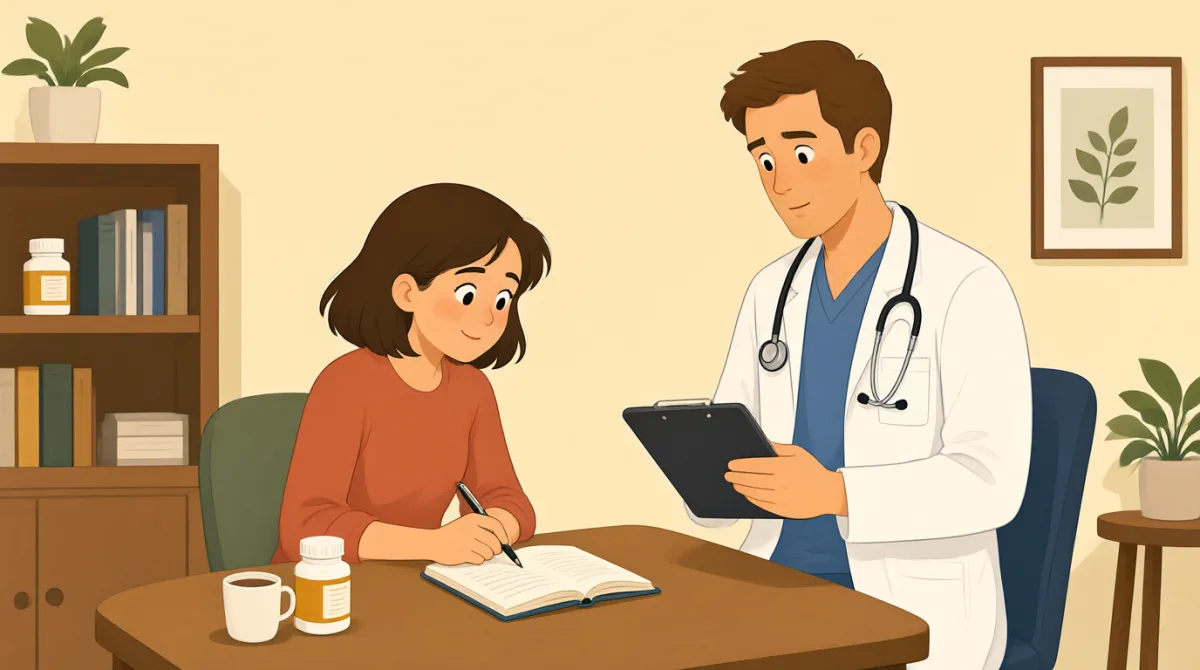

I take a daily multivitamin and sometimes use ibuprofen for headaches. Are those okay with my new medicine?
Tomo um multivitamínico todos os dias e às vezes uso ibuprofeno para dor de cabeça. Posso tomar essas coisas junto com meu novo medicamento?

Let me check the medication list and the label. Do you know the name and strength of the pain reliever?
Vou conferir a lista de medicamentos e a bula. Você sabe o nome e a dosagem do analgésico?
It’s regular ibuprofen, 200 milligrams. I only take one or two when I really need it.
É ibuprofeno comum, de 200 miligramas. Só tomo um ou dois comprimidos quando realmente preciso.
Thanks. This new medicine can interact with ibuprofen, so it’s best to avoid taking them together unless your doctor says otherwise.
Obrigado. Este novo medicamento pode interagir com o ibuprofeno, então é melhor evitar tomar os dois juntos, a menos que seu médico diga o contrário.
Got it. What about the multivitamin? I usually take it with breakfast, so I’d rather not stop if I don’t have to.
Entendi. E o multivitamínico? Costumo tomá-lo no café da manhã, então preferia não parar se não for necessário.
That should be fine, but check the vitamin label for minerals like calcium or iron. They may affect how your medicine is absorbed.
Não deve ter problema, mas confira no rótulo se há minerais como cálcio ou ferro. Eles podem afetar a absorção do medicamento.
There’s some calcium in it. Should I take the medicine at a different time, just to be on the safe side?
Ele tem um pouco de cálcio. Devo tomar o medicamento em outro horário, só por precaução?
Yes, leave at least two hours between them. And if you need something for a headache, call your doctor or ask us about a safer option.
Sim, espere pelo menos duas horas entre um e outro. E, se precisar de algo para dor de cabeça, ligue para seu médico ou pergunte à gente sobre uma opção mais segura.
Thanks, I’ll keep them apart and avoid the ibuprofen for now. I’m glad I checked before mixing anything.
Obrigada, vou tomar um longe do outro e evitar o ibuprofeno por enquanto. Ainda bem que perguntei antes de misturar qualquer coisa.
You’re welcome. Bring in the vitamin bottle next time, and we can double-check the ingredients together.
Por nada. Traga o frasco das vitaminas da próxima vez, e podemos conferir os ingredientes juntos.
Vocabulário8
- interact withinteragir com
To affect each other when used together. Here, the new medicine may have an unwanted effect when taken with ibuprofen.
Afetar uma à outra quando usadas juntas. Neste caso, o novo medicamento pode causar um efeito indesejado quando tomado com ibuprofeno.
- unless your doctor says otherwisea menos que seu médico diga o contrário
This means you should follow the advice given, except when your doctor gives different instructions. Use it to explain when an exception is allowed.
Isso quer dizer que você deve seguir a orientação dada, exceto se seu médico der instruções diferentes. Use essa expressão para explicar quando uma exceção é permitida.
- What about the multivitamin?E o multivitamínico?
A natural way to ask about another item or topic. You can use “What about…?” to check whether something else is okay.
Uma forma natural de perguntar sobre outro item ou assunto. Você pode usar “What about…?” (E quanto a…?) para verificar se outra coisa também pode ser usada.
- on the safe sidepor precaução
This means doing something extra to avoid possible problems. For example, you might leave more time between medicines just to be on the safe side.
Isso significa tomar uma medida extra para evitar possíveis problemas. Por exemplo, você pode esperar mais tempo entre os medicamentos só por precaução.
- leave at least two hours between themesperar pelo menos duas horas entre um e outro
This means to wait two or more hours before taking the second item. You can use this structure to describe a time gap between activities or medicines.
Isso significa esperar duas horas ou mais antes de tomar o segundo item. Você pode usar essa estrutura para descrever o intervalo entre atividades ou medicamentos.
- a safer optionuma opção mais segura
A choice that is less likely to cause a problem. You can ask about a safer option when you are unsure what to use.
Uma escolha com menor probabilidade de causar um problema. Você pode perguntar sobre uma opção mais segura quando não tiver certeza do que usar.
- keep them aparttomá-los em horários diferentes
Here, this means not taking the medicines or supplements at the same time. The phrase can also mean keeping two things separate.
Aqui, significa não tomar os medicamentos ou suplementos ao mesmo tempo. A expressão também pode significar manter duas coisas separadas.
- double-checkconferir novamente
To check something again to make sure it is correct. You can use it when you want someone to confirm details or information.
Verificar algo mais uma vez para ter certeza de que está correto. Você pode usar essa expressão quando quiser que alguém confirme detalhes ou informações.
Frases-chave8
- 1
Are those okay with my new medicine?
Posso tomar essas coisas junto com meu novo medicamento?
A useful way to ask whether two or more things can be used together. Replace “those” with the items you want to ask about.
Uma forma útil de perguntar se duas ou mais coisas podem ser usadas juntas. Substitua “those” pelos itens sobre os quais você quer perguntar.
- 2
Do you know the name and strength of the pain reliever?
Você sabe o nome e a dosagem do analgésico?
This politely asks for specific details about a medicine. You can use “Do you know the name and strength of…?” when checking a product.
Essa pergunta pede educadamente informações específicas sobre um medicamento. Você pode usar “Do you know the name and strength of…?” (Você sabe o nome e a dosagem de…?) ao verificar um produto.
- 3
This new medicine can interact with ibuprofen, so it’s best to avoid taking them together unless your doctor says otherwise.
Este novo medicamento pode interagir com o ibuprofeno, então é melhor evitar tomar os dois juntos, a menos que seu médico diga o contrário.
This explains a possible risk and gives clear advice with an exception. The pattern “it’s best to avoid… unless…” is useful for cautious recommendations.
Essa frase explica um possível risco e dá uma orientação clara, com uma exceção. O padrão “it’s best to avoid… unless…” (é melhor evitar… a menos que…) é útil para dar recomendações cautelosas.
- 4
I usually take it with breakfast, so I’d rather not stop if I don’t have to.
Costumo tomá-lo no café da manhã, então preferia não parar se não for necessário.
This gives a reason and politely explains a preference. Use “I’d rather not…” to say what you prefer to avoid doing.
Essa frase apresenta um motivo e explica uma preferência com educação. Use “I’d rather not…” (Eu preferia não…) para dizer o que você prefere evitar fazer.
- 5
Should I take the medicine at a different time, just to be on the safe side?
Devo tomar o medicamento em outro horário, só por precaução?
This is a natural way to ask whether an extra precaution is advisable. You can replace “take the medicine at a different time” with another possible precaution.
Uma forma natural de perguntar se é recomendável tomar uma precaução extra. Você pode substituir “take the medicine at a different time” por outra precaução possível.
- 6
And if you need something for a headache, call your doctor or ask us about a safer option.
E, se precisar de algo para dor de cabeça, ligue para seu médico ou pergunte à gente sobre uma opção mais segura.
This gives two practical next steps and offers a safer alternative. The structure “if you need…, call… or ask…” is useful for giving advice.
Essa frase apresenta duas medidas práticas e oferece uma alternativa mais segura. A estrutura “if you need…, call… or ask…” (se precisar de…, ligue… ou pergunte…) é útil para dar orientações.
- 7
I’m glad I checked before mixing anything.
Ainda bem que perguntei antes de misturar qualquer coisa.
This expresses relief about checking something in advance. Use “I’m glad I checked before…” to describe a helpful precaution.
Essa frase expressa alívio por ter verificado algo com antecedência. Use “I’m glad I checked before…” (Ainda bem que verifiquei antes de…) para descrever uma precaução útil.
- 8
Bring in the vitamin bottle next time, and we can double-check the ingredients together.
Traga o frasco das vitaminas da próxima vez, e podemos conferir os ingredientes juntos.
This makes a friendly request and explains what will happen next. “Bring in… next time” is useful when asking someone to bring an item for review.
Essa frase faz um pedido amigável e explica o que acontecerá em seguida. “Bring in… next time” (Traga… da próxima vez) é útil quando você pede que alguém leve um item para ser examinado.