Checking Other Medicines
Emma mentions the vitamins and pain reliever she sometimes takes and asks whether they are safe to use with her new medicine. Jack checks for possible interactions and advises her what to avoid.
Dialogue10
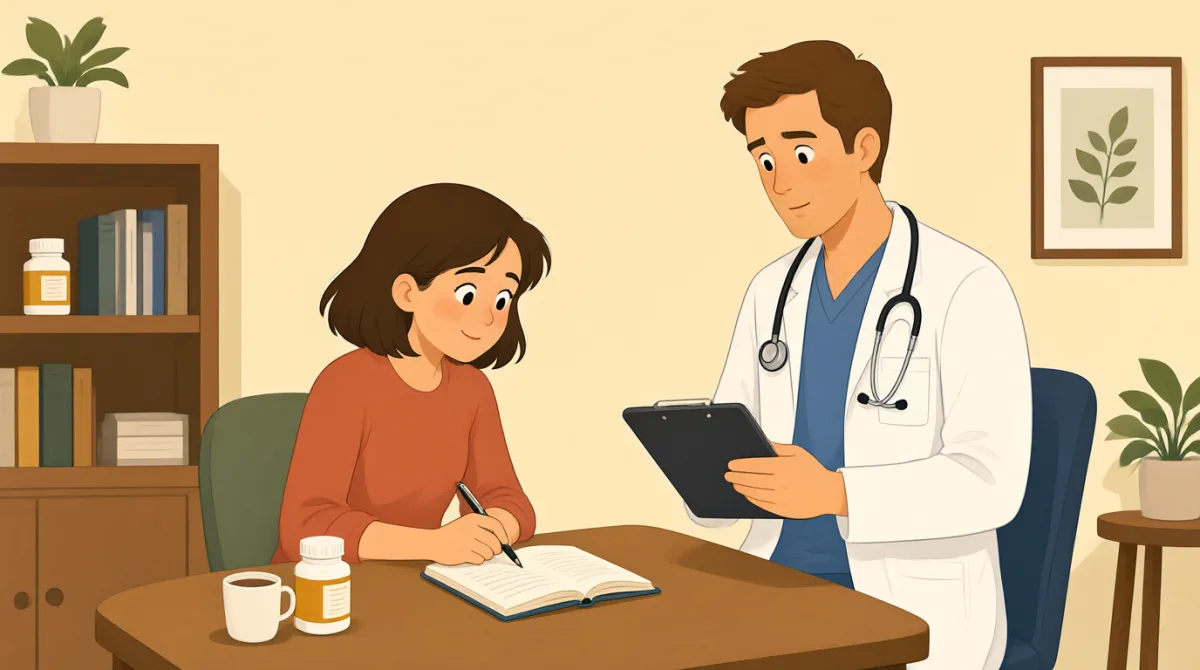

I take a daily multivitamin and sometimes use ibuprofen for headaches. Are those okay with my new medicine?

Let me check the medication list and the label. Do you know the name and strength of the pain reliever?
It’s regular ibuprofen, 200 milligrams. I only take one or two when I really need it.
Thanks. This new medicine can interact with ibuprofen, so it’s best to avoid taking them together unless your doctor says otherwise.
Got it. What about the multivitamin? I usually take it with breakfast, so I’d rather not stop if I don’t have to.
That should be fine, but check the vitamin label for minerals like calcium or iron. They may affect how your medicine is absorbed.
There’s some calcium in it. Should I take the medicine at a different time, just to be on the safe side?
Yes, leave at least two hours between them. And if you need something for a headache, call your doctor or ask us about a safer option.
Thanks, I’ll keep them apart and avoid the ibuprofen for now. I’m glad I checked before mixing anything.
You’re welcome. Bring in the vitamin bottle next time, and we can double-check the ingredients together.
Vocabulary8
- interact with
To affect each other when used together. Here, the new medicine may have an unwanted effect when taken with ibuprofen.
- unless your doctor says otherwise
This means you should follow the advice given, except when your doctor gives different instructions. Use it to explain when an exception is allowed.
- What about the multivitamin?
A natural way to ask about another item or topic. You can use “What about…?” to check whether something else is okay.
- on the safe side
This means doing something extra to avoid possible problems. For example, you might leave more time between medicines just to be on the safe side.
- leave at least two hours between them
This means to wait two or more hours before taking the second item. You can use this structure to describe a time gap between activities or medicines.
- a safer option
A choice that is less likely to cause a problem. You can ask about a safer option when you are unsure what to use.
- keep them apart
Here, this means not taking the medicines or supplements at the same time. The phrase can also mean keeping two things separate.
- double-check
To check something again to make sure it is correct. You can use it when you want someone to confirm details or information.
Key Sentences8
- 1
Are those okay with my new medicine?
A useful way to ask whether two or more things can be used together. Replace “those” with the items you want to ask about.
- 2
Do you know the name and strength of the pain reliever?
This politely asks for specific details about a medicine. You can use “Do you know the name and strength of…?” when checking a product.
- 3
This new medicine can interact with ibuprofen, so it’s best to avoid taking them together unless your doctor says otherwise.
This explains a possible risk and gives clear advice with an exception. The pattern “it’s best to avoid… unless…” is useful for cautious recommendations.
- 4
I usually take it with breakfast, so I’d rather not stop if I don’t have to.
This gives a reason and politely explains a preference. Use “I’d rather not…” to say what you prefer to avoid doing.
- 5
Should I take the medicine at a different time, just to be on the safe side?
This is a natural way to ask whether an extra precaution is advisable. You can replace “take the medicine at a different time” with another possible precaution.
- 6
And if you need something for a headache, call your doctor or ask us about a safer option.
This gives two practical next steps and offers a safer alternative. The structure “if you need…, call… or ask…” is useful for giving advice.
- 7
I’m glad I checked before mixing anything.
This expresses relief about checking something in advance. Use “I’m glad I checked before…” to describe a helpful precaution.
- 8
Bring in the vitamin bottle next time, and we can double-check the ingredients together.
This makes a friendly request and explains what will happen next. “Bring in… next time” is useful when asking someone to bring an item for review.