Checking Other Medicines
بررسی داروهای دیگر
Emma mentions the vitamins and pain reliever she sometimes takes and asks whether they are safe to use with her new medicine. Jack checks for possible interactions and advises her what to avoid.
اما دربارهٔ ویتامینها و مسکنی که گاهی مصرف میکند میگوید و میپرسد آیا مصرف آنها همراه با داروی جدیدش بیخطر است. جک تداخلهای احتمالی را بررسی میکند و به او میگوید از چه چیزهایی پرهیز کند.
گفتوگو10
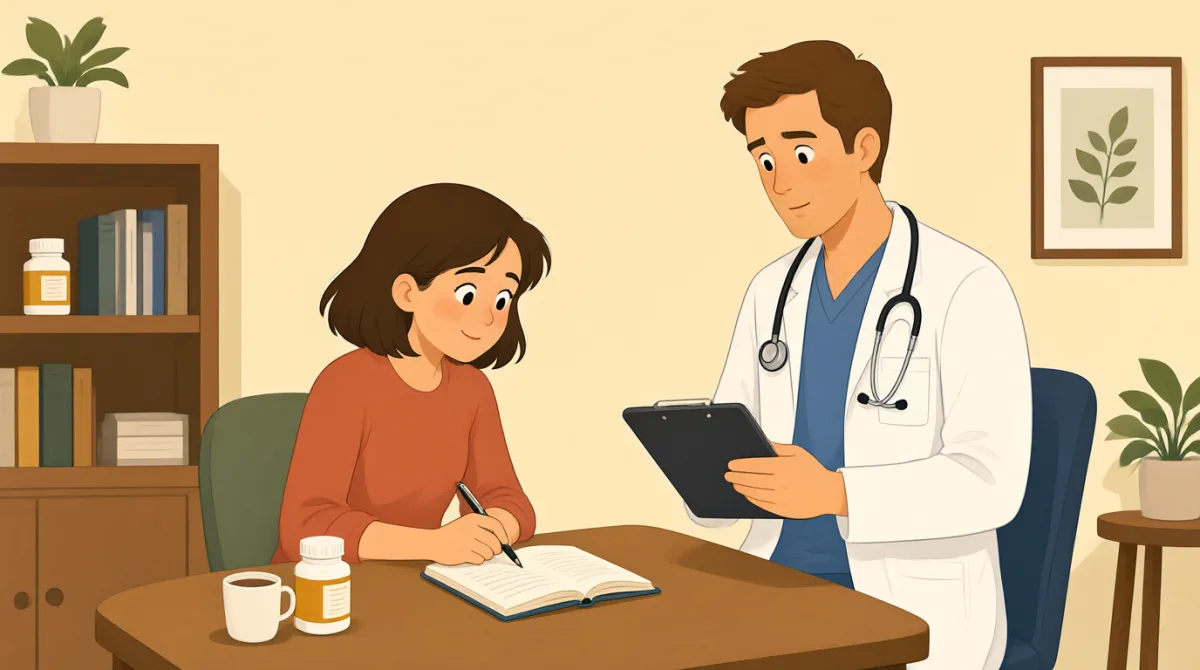

I take a daily multivitamin and sometimes use ibuprofen for headaches. Are those okay with my new medicine?
هر روز یک مولتیویتامین مصرف میکنم و گاهی برای سردرد ایبوپروفن میخورم. مصرف اینها همراه با داروی جدیدم اشکالی ندارد؟

Let me check the medication list and the label. Do you know the name and strength of the pain reliever?
اجازه بده فهرست داروها و برچسبش را بررسی کنم. اسم و دوز مسکن را میدانی؟
It’s regular ibuprofen, 200 milligrams. I only take one or two when I really need it.
ایبوپروفن معمولی است، ۲۰۰ میلیگرم. فقط وقتی واقعاً لازم باشد یکی دو تا میخورم.
Thanks. This new medicine can interact with ibuprofen, so it’s best to avoid taking them together unless your doctor says otherwise.
ممنون. این داروی جدید ممکن است با ایبوپروفن تداخل داشته باشد، پس بهتر است با هم مصرفشان نکنی، مگر اینکه پزشکت دستور دیگری بدهد.
Got it. What about the multivitamin? I usually take it with breakfast, so I’d rather not stop if I don’t have to.
متوجه شدم. مولتیویتامین چطور؟ معمولاً آن را با صبحانه میخورم و ترجیح میدهم اگر لازم نیست، مصرفش را قطع نکنم.
That should be fine, but check the vitamin label for minerals like calcium or iron. They may affect how your medicine is absorbed.
احتمالاً اشکالی ندارد، اما برچسب ویتامین را برای موادی معدنی مثل کلسیم یا آهن بررسی کن. ممکن است روی جذب دارویت تأثیر بگذارند.
There’s some calcium in it. Should I take the medicine at a different time, just to be on the safe side?
کمی کلسیم دارد. برای اطمینان، دارو را در زمان دیگری بخورم؟
Yes, leave at least two hours between them. And if you need something for a headache, call your doctor or ask us about a safer option.
بله، بین مصرفشان دستکم دو ساعت فاصله بگذار. و اگر برای سردرد چیزی لازم داشتی، با پزشکت تماس بگیر یا دربارهٔ گزینهای کمخطرتر از ما بپرس.
Thanks, I’ll keep them apart and avoid the ibuprofen for now. I’m glad I checked before mixing anything.
ممنون، بینشان فاصله میگذارم و فعلاً ایبوپروفن نمیخورم. خوشحالم که قبل از مصرف همزمانشان پرسیدم.
You’re welcome. Bring in the vitamin bottle next time, and we can double-check the ingredients together.
خواهش میکنم. دفعهٔ بعد شیشهٔ ویتامین را هم بیاور تا با هم مواد تشکیلدهندهاش را دوباره بررسی کنیم.
واژگان8
- interact withتداخل داشتن با
To affect each other when used together. Here, the new medicine may have an unwanted effect when taken with ibuprofen.
یعنی دو چیز وقتی با هم مصرف میشوند روی هم اثر بگذارند. اینجا ممکن است داروی جدید در صورت مصرف همزمان با ایبوپروفن اثر نامطلوبی داشته باشد.
- unless your doctor says otherwiseمگر اینکه پزشکت دستور دیگری بدهد
This means you should follow the advice given, except when your doctor gives different instructions. Use it to explain when an exception is allowed.
یعنی باید توصیهٔ دادهشده را رعایت کنی، مگر اینکه پزشکت دستور متفاوتی بدهد. از این عبارت برای توضیح شرایطی استفاده کن که در آن استثنا مجاز است.
- What about the multivitamin?مولتیویتامین چطور؟
A natural way to ask about another item or topic. You can use “What about…?” to check whether something else is okay.
راهی طبیعی برای پرسیدن دربارهٔ مورد یا موضوع دیگری است. میتوانی از “What about…?” برای پرسیدن اینکه چیز دیگری هم اشکالی ندارد یا نه استفاده کنی.
- on the safe sideبرای اطمینان
This means doing something extra to avoid possible problems. For example, you might leave more time between medicines just to be on the safe side.
یعنی برای جلوگیری از مشکلات احتمالی، احتیاط بیشتری کردن. مثلاً ممکن است برای اطمینان، بین مصرف داروها فاصلهٔ بیشتری بگذاری.
- leave at least two hours between themبین آنها دستکم دو ساعت فاصله بگذار
This means to wait two or more hours before taking the second item. You can use this structure to describe a time gap between activities or medicines.
یعنی پیش از مصرف مورد دوم، دو ساعت یا بیشتر صبر کنی. میتوانی از این ساختار برای توصیف فاصلهٔ زمانی بین فعالیتها یا مصرف داروها استفاده کنی.
- a safer optionگزینهای کمخطرتر
A choice that is less likely to cause a problem. You can ask about a safer option when you are unsure what to use.
انتخابی که احتمال کمتری دارد مشکلی ایجاد کند. اگر مطمئن نیستی از چه چیزی استفاده کنی، میتوانی دربارهٔ گزینهای کمخطرتر بپرسی.
- keep them apartبینشان فاصله گذاشتن
Here, this means not taking the medicines or supplements at the same time. The phrase can also mean keeping two things separate.
اینجا یعنی داروها یا مکملها را همزمان مصرف نکردن. این عبارت همچنین میتواند به معنی جدا نگه داشتن دو چیز باشد.
- double-checkدوباره بررسی کردن
To check something again to make sure it is correct. You can use it when you want someone to confirm details or information.
یعنی چیزی را دوباره بررسی کنی تا مطمئن شوی درست است. وقتی میخواهی از کسی بخواهی جزئیات یا اطلاعاتی را تأیید کند، میتوانی از این عبارت استفاده کنی.
جملات کلیدی8
- 1
Are those okay with my new medicine?
مصرف اینها همراه با داروی جدیدم اشکالی ندارد؟
A useful way to ask whether two or more things can be used together. Replace “those” with the items you want to ask about.
روشی کاربردی برای پرسیدن اینکه آیا میتوان دو یا چند چیز را با هم مصرف کرد. بهجای “those” مواردی را بگذار که میخواهی دربارهشان بپرسی.
- 2
Do you know the name and strength of the pain reliever?
اسم و دوز مسکن را میدانی؟
This politely asks for specific details about a medicine. You can use “Do you know the name and strength of…?” when checking a product.
این پرسش مؤدبانه، جزئیات مشخصی دربارهٔ یک دارو میخواهد. هنگام بررسی یک محصول، میتوانی از “Do you know the name and strength of…?” استفاده کنی.
- 3
This new medicine can interact with ibuprofen, so it’s best to avoid taking them together unless your doctor says otherwise.
این داروی جدید ممکن است با ایبوپروفن تداخل داشته باشد، پس بهتر است با هم مصرفشان نکنی، مگر اینکه پزشکت دستور دیگری بدهد.
This explains a possible risk and gives clear advice with an exception. The pattern “it’s best to avoid… unless…” is useful for cautious recommendations.
این جمله خطر احتمالی را توضیح میدهد و با در نظر گرفتن یک استثنا، توصیهای روشن ارائه میکند. الگوی “it’s best to avoid… unless…” برای توصیههای محتاطانه مفید است.
- 4
I usually take it with breakfast, so I’d rather not stop if I don’t have to.
معمولاً آن را با صبحانه میخورم، برای همین ترجیح میدهم اگر لازم نیست، مصرفش را قطع نکنم.
This gives a reason and politely explains a preference. Use “I’d rather not…” to say what you prefer to avoid doing.
این جمله دلیل میآورد و ترجیحی را مؤدبانه بیان میکند. از “I’d rather not…” برای گفتن کاری استفاده کن که ترجیح میدهی انجام ندهی.
- 5
Should I take the medicine at a different time, just to be on the safe side?
برای اطمینان، دارو را در زمان دیگری بخورم؟
This is a natural way to ask whether an extra precaution is advisable. You can replace “take the medicine at a different time” with another possible precaution.
روشی طبیعی برای پرسیدن این است که آیا رعایت یک احتیاط اضافه کار خوبی است یا نه. میتوانی “take the medicine at a different time” را با یک اقدام احتیاطی احتمالی دیگر جایگزین کنی.
- 6
And if you need something for a headache, call your doctor or ask us about a safer option.
و اگر برای سردرد چیزی لازم داشتی، با پزشکت تماس بگیر یا دربارهٔ گزینهای کمخطرتر از ما بپرس.
This gives two practical next steps and offers a safer alternative. The structure “if you need…, call… or ask…” is useful for giving advice.
این جمله دو اقدام عملی بعدی را پیشنهاد میکند و گزینهای کمخطرتر در اختیارت میگذارد. ساختار “if you need…, call… or ask…” برای توصیه کردن مفید است.
- 7
I’m glad I checked before mixing anything.
خوشحالم که قبل از مصرف همزمانشان پرسیدم.
This expresses relief about checking something in advance. Use “I’m glad I checked before…” to describe a helpful precaution.
این جمله آسودگی خاطر از بررسی چیزی پیش از انجام آن را بیان میکند. از “I’m glad I checked before…” برای توصیف یک اقدام احتیاطی مفید استفاده کن.
- 8
Bring in the vitamin bottle next time, and we can double-check the ingredients together.
دفعهٔ بعد شیشهٔ ویتامین را بیاور تا با هم مواد تشکیلدهندهاش را دوباره بررسی کنیم.
This makes a friendly request and explains what will happen next. “Bring in… next time” is useful when asking someone to bring an item for review.
این جمله درخواستی دوستانه مطرح میکند و توضیح میدهد بعد از آن چه اتفاقی میافتد. عبارت “Bring in… next time” برای درخواست از کسی که چیزی را برای بررسی بیاورد، مفید است.