Checking Other Medicines
Consultar sobre otros medicamentos
Emma mentions the vitamins and pain reliever she sometimes takes and asks whether they are safe to use with her new medicine. Jack checks for possible interactions and advises her what to avoid.
Emma menciona las vitaminas y el analgésico que toma a veces y pregunta si puede usarlos sin problema con su nuevo medicamento. Jack comprueba si puede haber interacciones y le aconseja qué evitar.
Diálogo10
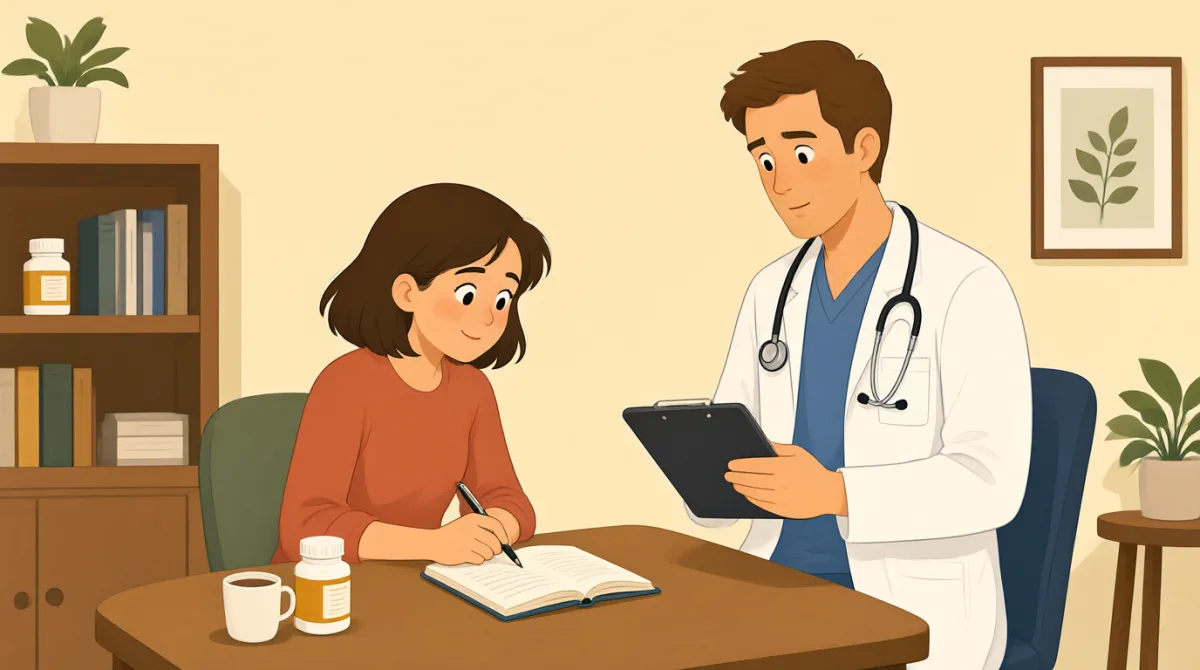

I take a daily multivitamin and sometimes use ibuprofen for headaches. Are those okay with my new medicine?
Tomo un multivitamínico todos los días y a veces tomo ibuprofeno para el dolor de cabeza. ¿Puedo tomar esas cosas con mi nuevo medicamento?

Let me check the medication list and the label. Do you know the name and strength of the pain reliever?
Déjeme revisar la lista de medicamentos y la etiqueta. ¿Sabe cómo se llama el analgésico y de cuántos miligramos es?
It’s regular ibuprofen, 200 milligrams. I only take one or two when I really need it.
Es ibuprofeno normal, de 200 miligramos. Solo tomo una o dos pastillas cuando de verdad lo necesito.
Thanks. This new medicine can interact with ibuprofen, so it’s best to avoid taking them together unless your doctor says otherwise.
Gracias. Este nuevo medicamento puede interactuar con el ibuprofeno, así que es mejor no tomarlos juntos, a menos que su médico le indique lo contrario.
Got it. What about the multivitamin? I usually take it with breakfast, so I’d rather not stop if I don’t have to.
Entiendo. ¿Y qué pasa con el multivitamínico? Normalmente lo tomo con el desayuno, así que preferiría no dejar de tomarlo si no es necesario.
That should be fine, but check the vitamin label for minerals like calcium or iron. They may affect how your medicine is absorbed.
No debería haber problema, pero revise la etiqueta para ver si contiene minerales como calcio o hierro. Pueden afectar la absorción del medicamento.
There’s some calcium in it. Should I take the medicine at a different time, just to be on the safe side?
Tiene algo de calcio. ¿Debería tomar el medicamento a otra hora, solo para asegurarme?
Yes, leave at least two hours between them. And if you need something for a headache, call your doctor or ask us about a safer option.
Sí, deje pasar al menos dos horas entre uno y otro. Y si necesita algo para el dolor de cabeza, llame a su médico o consúltenos sobre una opción más segura.
Thanks, I’ll keep them apart and avoid the ibuprofen for now. I’m glad I checked before mixing anything.
Gracias, los tomaré por separado y por ahora evitaré el ibuprofeno. Me alegro de haber consultado antes de mezclar nada.
You’re welcome. Bring in the vitamin bottle next time, and we can double-check the ingredients together.
De nada. La próxima vez, traiga el frasco de vitaminas y podemos revisar juntos los ingredientes para asegurarnos.
Vocabulario8
- interact withinteractuar con
To affect each other when used together. Here, the new medicine may have an unwanted effect when taken with ibuprofen.
Significa que dos cosas se afectan entre sí cuando se usan juntas. En este caso, el nuevo medicamento podría causar un efecto no deseado si se toma con ibuprofeno.
- unless your doctor says otherwisea menos que su médico le indique lo contrario
This means you should follow the advice given, except when your doctor gives different instructions. Use it to explain when an exception is allowed.
Significa que debe seguir el consejo dado, excepto si su médico le da instrucciones diferentes. Se usa para explicar cuándo se permite una excepción.
- What about the multivitamin?¿Y qué pasa con el multivitamínico?
A natural way to ask about another item or topic. You can use “What about…?” to check whether something else is okay.
Es una forma natural de preguntar por otro artículo o tema. Puedes usar “What about…?” (¿Y qué pasa con…?) para comprobar si otra cosa también está bien.
- on the safe sidepara asegurarme
This means doing something extra to avoid possible problems. For example, you might leave more time between medicines just to be on the safe side.
Significa tomar una precaución adicional para evitar posibles problemas. Por ejemplo, podrías dejar más tiempo entre medicamentos, solo para asegurarme.
- leave at least two hours between themdejar pasar al menos dos horas entre uno y otro
This means to wait two or more hours before taking the second item. You can use this structure to describe a time gap between activities or medicines.
Significa esperar dos horas o más antes de tomar el segundo producto. Puedes usar esta estructura para hablar del intervalo entre actividades o medicamentos.
- a safer optionuna opción más segura
A choice that is less likely to cause a problem. You can ask about a safer option when you are unsure what to use.
Una opción que tiene menos probabilidades de causar un problema. Puedes preguntar por una opción más segura cuando no tienes claro qué usar.
- keep them aparttomarlos por separado
Here, this means not taking the medicines or supplements at the same time. The phrase can also mean keeping two things separate.
Aquí significa no tomar los medicamentos o suplementos al mismo tiempo. La expresión también puede significar mantener separadas dos cosas.
- double-checkcomprobar de nuevo
To check something again to make sure it is correct. You can use it when you want someone to confirm details or information.
Revisar algo otra vez para asegurarse de que está correcto. Puedes usarlo cuando quieras que alguien confirme datos o información.
Frases clave8
- 1
Are those okay with my new medicine?
¿Puedo tomar esas cosas con mi nuevo medicamento?
A useful way to ask whether two or more things can be used together. Replace “those” with the items you want to ask about.
Es una forma útil de preguntar si se pueden usar juntas dos o más cosas. Sustituye “those” por los productos sobre los que quieres preguntar.
- 2
Do you know the name and strength of the pain reliever?
¿Sabe cómo se llama el analgésico y de cuántos miligramos es?
This politely asks for specific details about a medicine. You can use “Do you know the name and strength of…?” when checking a product.
Esta pregunta pide amablemente detalles concretos sobre un medicamento. Puedes usar “Do you know the name and strength of…?” cuando quieras identificar un producto y saber su concentración.
- 3
This new medicine can interact with ibuprofen, so it’s best to avoid taking them together unless your doctor says otherwise.
Este nuevo medicamento puede interactuar con el ibuprofeno, así que es mejor no tomarlos juntos, a menos que su médico le indique lo contrario.
This explains a possible risk and gives clear advice with an exception. The pattern “it’s best to avoid… unless…” is useful for cautious recommendations.
Esta frase explica un posible riesgo y da un consejo claro con una excepción. El patrón “it’s best to avoid… unless…” sirve para hacer recomendaciones prudentes.
- 4
I usually take it with breakfast, so I’d rather not stop if I don’t have to.
Normalmente lo tomo con el desayuno, así que preferiría no dejar de tomarlo si no es necesario.
This gives a reason and politely explains a preference. Use “I’d rather not…” to say what you prefer to avoid doing.
Esta frase da una razón y expresa amablemente una preferencia. Usa “I’d rather not…” para decir qué preferirías no hacer.
- 5
Should I take the medicine at a different time, just to be on the safe side?
¿Debería tomar el medicamento a otra hora, solo para asegurarme?
This is a natural way to ask whether an extra precaution is advisable. You can replace “take the medicine at a different time” with another possible precaution.
Es una forma natural de preguntar si conviene tomar una precaución adicional. Puedes sustituir “take the medicine at a different time” por otra precaución posible.
- 6
And if you need something for a headache, call your doctor or ask us about a safer option.
Y si necesita algo para el dolor de cabeza, llame a su médico o consúltenos sobre una opción más segura.
This gives two practical next steps and offers a safer alternative. The structure “if you need…, call… or ask…” is useful for giving advice.
Esta frase propone dos pasos prácticos y ofrece una alternativa más segura. La estructura “if you need…, call… or ask…” sirve para dar consejos.
- 7
I’m glad I checked before mixing anything.
Me alegro de haber consultado antes de mezclar nada.
This expresses relief about checking something in advance. Use “I’m glad I checked before…” to describe a helpful precaution.
Esta frase expresa alivio por haber consultado con anticipación. Usa “I’m glad I checked before…” para describir una precaución que resultó útil.
- 8
Bring in the vitamin bottle next time, and we can double-check the ingredients together.
La próxima vez, traiga el frasco de vitaminas y podemos revisar juntos los ingredientes para asegurarnos.
This makes a friendly request and explains what will happen next. “Bring in… next time” is useful when asking someone to bring an item for review.
Esta frase hace una petición amable y explica qué pasará después. “Bring in… next time” sirve para pedirle a alguien que traiga algo para revisarlo.