The Parents Come Home
Os pais chegam em casa
Mia and Jack come home and ask Emma how the evening went. Emma tells them what the child ate, what they played, and how bedtime went.
Mia e Jack chegam em casa e perguntam a Emma como foi a noite. Emma conta o que a criança comeu, do que brincaram e como foi a hora de dormir.
Diálogo8
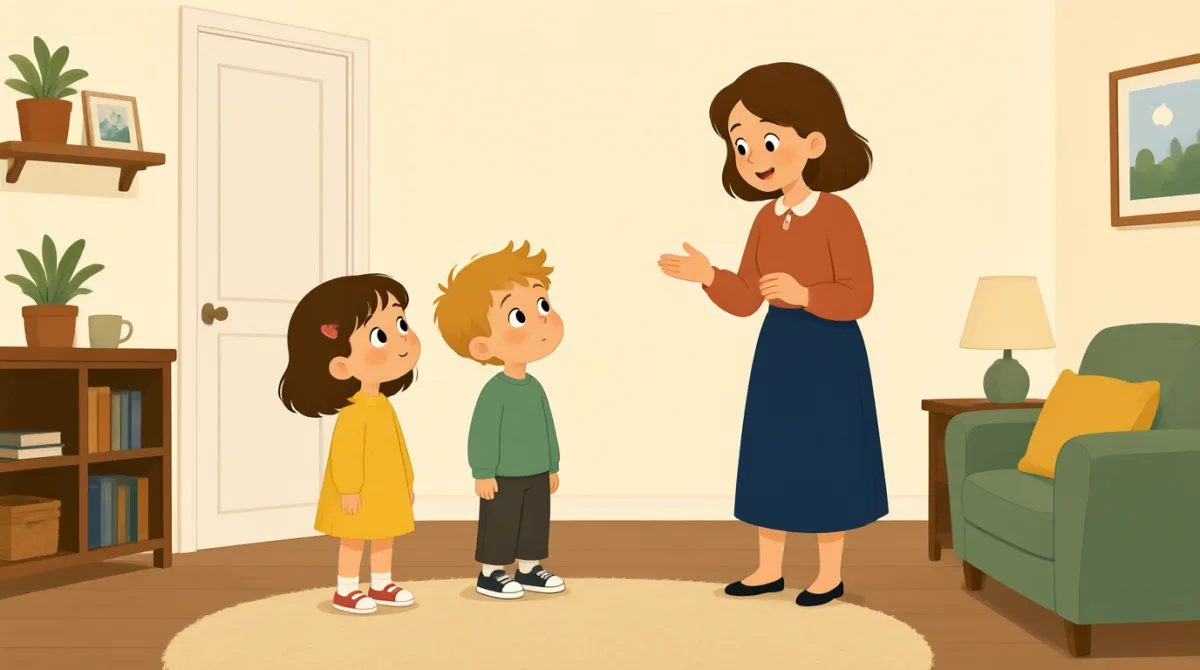

Thanks for staying with her, Emma. How did the evening go?
Obrigada por ficar com ela, Emma. Como foi a noite?

It went well. She ate some pasta and asked for more.
Foi tudo bem. Ela comeu um pouco de macarrão e pediu mais.

Great. What did you two do after dinner?
Que bom. O que vocês duas fizeram depois do jantar?
We played a simple card game. She was excited, but took turns.
Jogamos um jogo de cartas simples. Ela ficou empolgada, mas esperou a vez dela.
And bedtime? She sometimes says she isn't tired.
E na hora de dormir? Às vezes ela diz que não está com sono.
She said that tonight, too. I read her a short story, and she settled down.
Ela disse isso hoje à noite também. Li uma historinha para ela, e ela se acalmou.
Thanks for handling everything so well. Was she asleep when you left?
Obrigada por cuidar de tudo tão bem. Ela já estava dormindo quando você foi embora?
Yes, she was asleep. I left the light on in the hallway, like you asked.
Sim, ela estava dormindo. Deixei a luz do corredor acesa, como você pediu.
Vocabulário6
- staying with herficar com ela
This means taking care of her while her parents are away. You can say, “Thanks for staying with my dog.”
Significa cuidar dela enquanto os pais estão fora. Você também pode dizer: “Thanks for staying with my dog.”
- went wellcorreu bem
This means that something happened successfully, without serious problems. You can use it to describe how a meeting, trip, or evening was.
Significa que algo aconteceu sem problemas sérios. Você pode usar essa expressão para dizer como foi uma reunião, uma viagem ou uma noite.
- asked for morepediu mais
This means she wanted another serving of food. You can also say, “He asked for more water.”
Significa que ela quis mais uma porção de comida. Você também pode dizer: “He asked for more water.”
- settled downse acalmou
Here, this means she became calm and ready to sleep. You can also use it when someone becomes quiet after being excited.
Aqui, significa que ela ficou calma e pronta para dormir. Você também pode usar essa expressão quando alguém fica quieto depois de estar empolgado.
- handling everythingcuidar de tudo
This means taking care of all the tasks or problems. You can say, “Thanks for handling everything while I was away.”
Significa cuidar de todas as tarefas ou resolver todos os problemas. Você pode dizer: “Thanks for handling everything while I was away.”
- left the light ondeixou a luz acesa
This means Emma did not turn off the light when she left. You can say, “I left the kitchen light on.”
Significa que Emma não apagou a luz quando saiu. Você pode dizer: “I left the kitchen light on.”
Frases-chave8
- 1
How did the evening go?
Como foi a noite?
This is a friendly way to ask how an event or activity went. You can use it after a visit, meeting, or day out.
Essa é uma maneira simpática de perguntar como foi um evento ou uma atividade. Você pode usá-la depois de uma visita, reunião ou passeio.
- 2
It went well.
Foi tudo bem.
This is a short, common way to say that something was successful. You can use it to answer questions about how an event went.
Essa é uma forma curta e comum de dizer que algo deu certo. Você pode usá-la para responder a perguntas sobre como foi um evento.
- 3
What did you two do after dinner?
O que vocês duas fizeram depois do jantar?
Use this question to ask what two people did after an event or meal. You can change “after dinner” to “after school” or “after work.”
Use essa pergunta para saber o que duas pessoas fizeram depois de um evento ou de uma refeição. Você pode trocar “after dinner” por “after school” ou “after work.”
- 4
We played a simple card game.
Jogamos um jogo de cartas simples.
This sentence tells someone what activity you did. You can replace “a simple card game” with another activity, such as “a board game.”
Essa frase conta a alguém que atividade vocês fizeram. Você pode substituir “a simple card game” por outra atividade, como “a board game.”
- 5
She said that tonight, too.
Ela disse isso hoje à noite também.
This means she said the same thing tonight as she has said before. You can use “too” to show that something happened again.
Significa que ela disse hoje à noite a mesma coisa que já tinha dito antes. Você pode usar “too” para mostrar que algo aconteceu de novo.
- 6
I read her a short story, and she settled down.
Li uma historinha para ela, e ela se acalmou.
This explains what you did and what happened next. You can use this pattern to describe how one action helped someone become calm.
Essa frase explica o que você fez e o que aconteceu depois. Você pode usar essa estrutura para descrever como uma ação ajudou alguém a se acalmar.
- 7
Was she asleep when you left?
Ela já estava dormindo quando você foi embora?
This is a yes-or-no question about what was happening at the time someone left. You can use the same pattern to ask, “Was he home when you called?”
Essa é uma pergunta de sim ou não sobre o que estava acontecendo quando alguém foi embora. Você pode usar a mesma estrutura para perguntar: “Was he home when you called?”
- 8
I left the light on in the hallway, like you asked.
Deixei a luz do corredor acesa, como você pediu.
This tells someone you followed their request. You can change “left the light on” to another action, such as “locked the door.”
Essa frase diz a alguém que você fez o que a pessoa pediu. Você pode trocar “left the light on” por outra ação, como “locked the door.”