The Parents Come Home
Los padres vuelven a casa
Mia and Jack come home and ask Emma how the evening went. Emma tells them what the child ate, what they played, and how bedtime went.
Mia y Jack vuelven a casa y le preguntan a Emma cómo estuvo la noche. Emma les cuenta qué comió la niña, a qué jugaron y cómo fue la hora de dormir.
Diálogo8
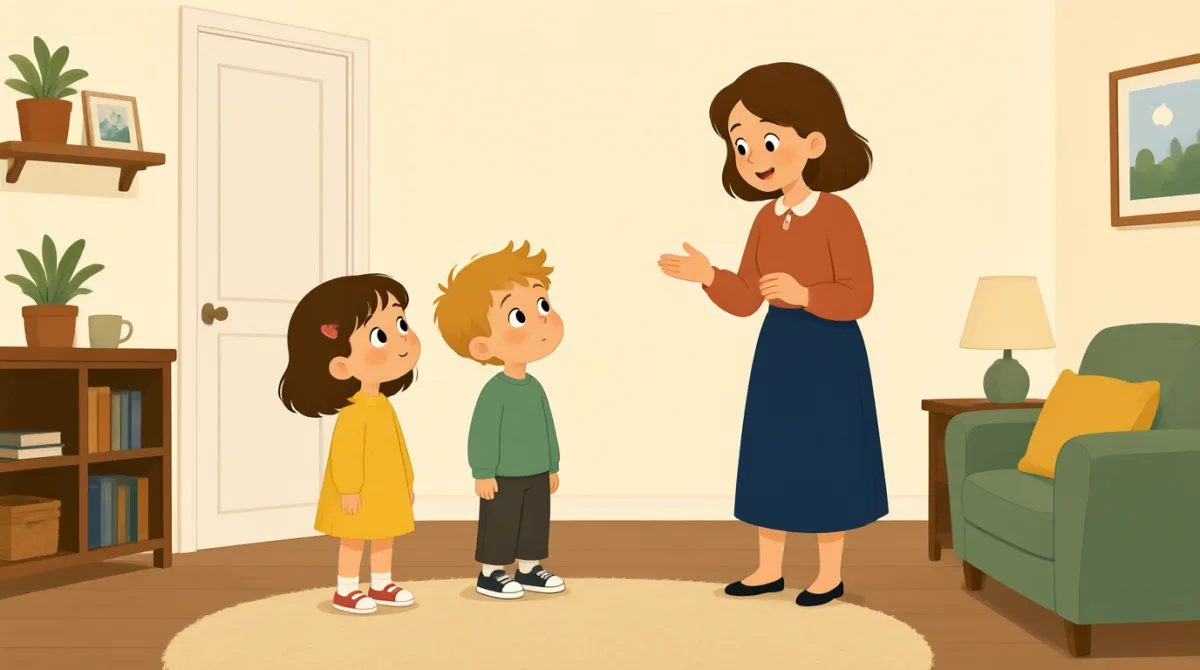

Thanks for staying with her, Emma. How did the evening go?
Gracias por quedarte con ella, Emma. ¿Cómo estuvo la noche?

It went well. She ate some pasta and asked for more.
Todo salió bien. Comió pasta y pidió más.

Great. What did you two do after dinner?
Genial. ¿Qué hicieron ustedes dos después de cenar?
We played a simple card game. She was excited, but took turns.
Jugamos a un juego de cartas sencillo. Estaba emocionada, pero respetó los turnos.
And bedtime? She sometimes says she isn't tired.
¿Y a la hora de dormir? A veces dice que no tiene sueño.
She said that tonight, too. I read her a short story, and she settled down.
Esta noche también lo dijo. Le leí un cuento corto y se tranquilizó.
Thanks for handling everything so well. Was she asleep when you left?
Gracias por encargarte de todo tan bien. ¿Estaba dormida cuando te fuiste?
Yes, she was asleep. I left the light on in the hallway, like you asked.
Sí, estaba dormida. Dejé la luz del pasillo encendida, como me pediste.
Vocabulario6
- staying with herquedarte con ella
This means taking care of her while her parents are away. You can say, “Thanks for staying with my dog.”
Significa cuidarla mientras sus padres están fuera. También puedes decir: “Thanks for staying with my dog.” (Gracias por quedarte con mi perro).
- went wellsalió bien
This means that something happened successfully, without serious problems. You can use it to describe how a meeting, trip, or evening was.
Significa que algo salió como se esperaba y sin problemas importantes. Puedes usarlo para contar cómo fue una reunión, un viaje o una noche.
- asked for morepidió más
This means she wanted another serving of food. You can also say, “He asked for more water.”
Significa que quería otra porción de comida. También puedes decir: “He asked for more water.” (Pidió más agua).
- settled downse tranquilizó
Here, this means she became calm and ready to sleep. You can also use it when someone becomes quiet after being excited.
Aquí significa que se calmó y estaba lista para dormir. También puedes usarlo cuando alguien deja de estar tan alterado o emocionado.
- handling everythingencargarte de todo
This means taking care of all the tasks or problems. You can say, “Thanks for handling everything while I was away.”
Significa hacerte cargo de todas las tareas o resolver todos los problemas. Puedes decir: “Thanks for handling everything while I was away.” (Gracias por encargarte de todo mientras estaba fuera).
- left the light ondejé la luz encendida
This means Emma did not turn off the light when she left. You can say, “I left the kitchen light on.”
Significa que Emma no apagó la luz cuando se fue. Puedes decir: “I left the kitchen light on.” (Dejé la luz de la cocina encendida).
Frases clave8
- 1
How did the evening go?
¿Cómo estuvo la noche?
This is a friendly way to ask how an event or activity went. You can use it after a visit, meeting, or day out.
Es una forma amable y natural de preguntar cómo fue un evento o una actividad. Puedes usarla después de una visita, una reunión o una salida.
- 2
It went well.
Todo salió bien.
This is a short, common way to say that something was successful. You can use it to answer questions about how an event went.
Es una forma breve y común de decir que algo salió bien. Puedes usarla para responder preguntas sobre cómo fue un evento.
- 3
What did you two do after dinner?
¿Qué hicieron ustedes dos después de cenar?
Use this question to ask what two people did after an event or meal. You can change “after dinner” to “after school” or “after work.”
Usa esta pregunta para averiguar qué hicieron dos personas después de un evento o una comida. Puedes cambiar “after dinner” por “after school” o “after work.”
- 4
We played a simple card game.
Jugamos a un juego de cartas sencillo.
This sentence tells someone what activity you did. You can replace “a simple card game” with another activity, such as “a board game.”
Esta frase cuenta qué actividad hicieron. Puedes sustituir “a simple card game” por otra actividad, como “a board game.”
- 5
She said that tonight, too.
Esta noche también lo dijo.
This means she said the same thing tonight as she has said before. You can use “too” to show that something happened again.
Significa que esta noche dijo lo mismo que ya había dicho antes. Puedes usar “too” para indicar que algo volvió a pasar.
- 6
I read her a short story, and she settled down.
Le leí un cuento corto y se tranquilizó.
This explains what you did and what happened next. You can use this pattern to describe how one action helped someone become calm.
Esta frase explica qué hiciste y qué pasó después. Puedes usar este patrón para describir cómo una acción ayudó a alguien a calmarse.
- 7
Was she asleep when you left?
¿Estaba dormida cuando te fuiste?
This is a yes-or-no question about what was happening at the time someone left. You can use the same pattern to ask, “Was he home when you called?”
Es una pregunta de sí o no sobre lo que estaba pasando cuando alguien se fue. Puedes usar el mismo patrón para preguntar: “Was he home when you called?” (¿Estaba en casa cuando llamaste?).
- 8
I left the light on in the hallway, like you asked.
Dejé la luz del pasillo encendida, como me pediste.
This tells someone you followed their request. You can change “left the light on” to another action, such as “locked the door.”
Esta frase le cuenta a alguien que hiciste lo que te pidió. Puedes cambiar “left the light on” por otra acción, como “locked the door.”