The Parents Come Home
부모님이 집에 돌아오다
Mia and Jack come home and ask Emma how the evening went. Emma tells them what the child ate, what they played, and how bedtime went.
미아와 잭이 집에 돌아와 에마에게 저녁은 어땠는지 물어봐요. 에마는 아이가 뭘 먹었는지, 함께 뭘 하며 놀았는지, 잠자리는 어땠는지 이야기해요.
대화8
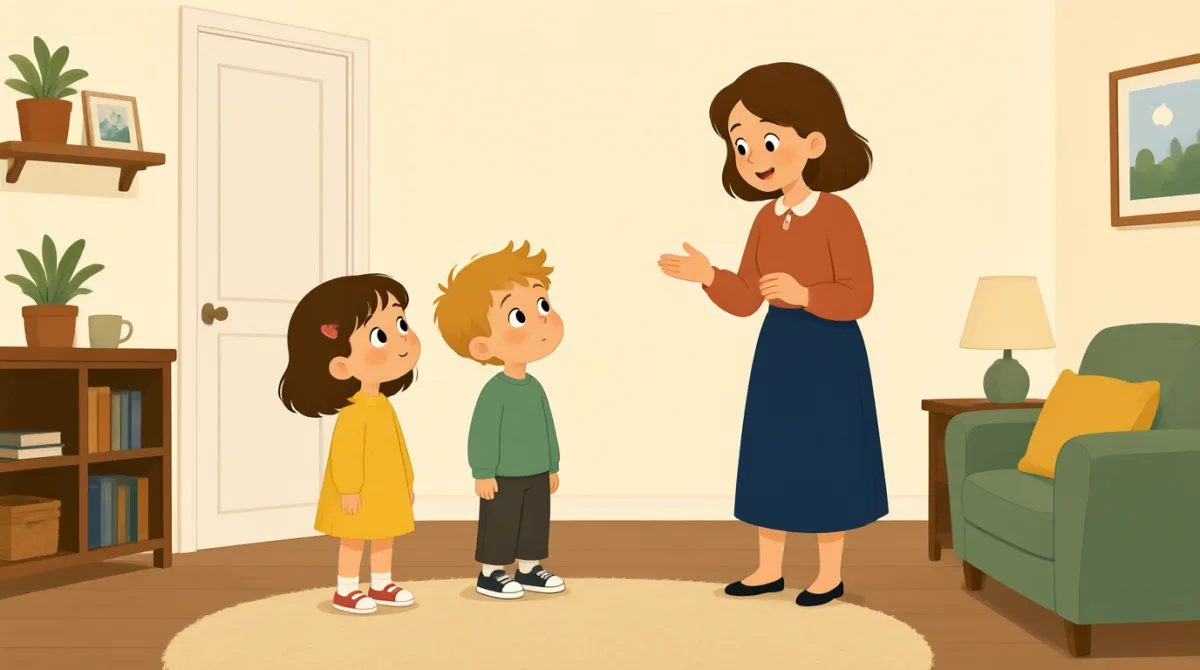

Thanks for staying with her, Emma. How did the evening go?
에마, 아이 봐줘서 고마워. 저녁은 어땠어?

It went well. She ate some pasta and asked for more.
잘 보냈어. 파스타를 먹고 더 달라고 했어.

Great. What did you two do after dinner?
잘됐다. 저녁 먹고 둘이 뭐 했어?
We played a simple card game. She was excited, but took turns.
간단한 카드 게임을 했어. 신나 했지만 차례도 잘 지켰어.
And bedtime? She sometimes says she isn't tired.
잠자리는 어땠어? 가끔 피곤하지 않다고 하잖아.
She said that tonight, too. I read her a short story, and she settled down.
오늘 밤에도 그렇게 말하더라. 짧은 이야기를 읽어 줬더니 얌전해져서 잠들 준비를 했어.
Thanks for handling everything so well. Was she asleep when you left?
모든 걸 잘 챙겨줘서 고마워. 네가 갈 때 아이는 자고 있었어?
Yes, she was asleep. I left the light on in the hallway, like you asked.
응, 자고 있었어. 부탁한 대로 복도 불은 켜뒀어.
어휘6
- staying with her아이를 봐주다
This means taking care of her while her parents are away. You can say, “Thanks for staying with my dog.”
부모님이 없는 동안 아이를 돌봐 준다는 뜻이에요. “Thanks for staying with my dog.”(우리 강아지 봐줘서 고마워)처럼 말할 수도 있어요.
- went well잘되다
This means that something happened successfully, without serious problems. You can use it to describe how a meeting, trip, or evening was.
큰 문제 없이 일이 성공적으로 진행됐다는 뜻이에요. 회의나 여행, 저녁 시간이 어땠는지 말할 때 쓸 수 있어요.
- asked for more더 달라고 하다
This means she wanted another serving of food. You can also say, “He asked for more water.”
음식을 한 번 더 달라고 했다는 뜻이에요. “He asked for more water.”(그는 물을 더 달라고 했어)라고도 할 수 있어요.
- settled down진정하다
Here, this means she became calm and ready to sleep. You can also use it when someone becomes quiet after being excited.
여기서는 아이가 차분해지고 잠잘 준비를 했다는 뜻이에요. 신나 있던 사람이 조용해졌을 때도 쓸 수 있어요.
- handling everything모든 걸 챙기다
This means taking care of all the tasks or problems. You can say, “Thanks for handling everything while I was away.”
모든 일이나 문제를 처리하고 돌본다는 뜻이에요. “Thanks for handling everything while I was away.”(내가 없는 동안 모든 걸 챙겨줘서 고마워)라고 말할 수 있어요.
- left the light on불을 켜 두다
This means Emma did not turn off the light when she left. You can say, “I left the kitchen light on.”
에마가 떠날 때 불을 끄지 않았다는 뜻이에요. “I left the kitchen light on.”(부엌 불을 켜 뒀어)이라고 말할 수 있어요.
핵심 문장8
- 1
How did the evening go?
저녁은 어땠어?
This is a friendly way to ask how an event or activity went. You can use it after a visit, meeting, or day out.
어떤 일이나 활동이 어땠는지 친근하게 물어보는 표현이에요. 방문이나 회의, 나들이가 끝난 뒤에 쓸 수 있어요.
- 2
It went well.
잘됐어.
This is a short, common way to say that something was successful. You can use it to answer questions about how an event went.
어떤 일이 성공적이었다고 간단히 말할 때 흔히 쓰는 표현이에요. 행사가 어땠는지 묻는 질문에 답할 때 쓸 수 있어요.
- 3
What did you two do after dinner?
저녁 먹고 둘이 뭐 했어?
Use this question to ask what two people did after an event or meal. You can change “after dinner” to “after school” or “after work.”
두 사람이 어떤 일이나 식사 후에 무엇을 했는지 물을 때 쓰는 질문이에요. “after dinner”를 “after school”이나 “after work”로 바꿔 쓸 수도 있어요.
- 4
We played a simple card game.
간단한 카드 게임을 했어.
This sentence tells someone what activity you did. You can replace “a simple card game” with another activity, such as “a board game.”
자신이 어떤 활동을 했는지 말하는 문장이에요. “a simple card game”을 “a board game”처럼 다른 활동으로 바꿀 수 있어요.
- 5
She said that tonight, too.
오늘 밤에도 그렇게 말하더라.
This means she said the same thing tonight as she has said before. You can use “too” to show that something happened again.
전에 했던 말을 오늘 밤에도 똑같이 했다는 뜻이에요. “too”를 쓰면 어떤 일이 다시 일어났다는 걸 나타낼 수 있어요.
- 6
I read her a short story, and she settled down.
짧은 이야기를 읽어 줬더니 진정했어.
This explains what you did and what happened next. You can use this pattern to describe how one action helped someone become calm.
내가 한 행동과 그다음에 일어난 일을 설명하는 문장이에요. 한 행동이 누군가를 차분하게 하는 데 어떻게 도움이 됐는지 이 표현을 활용해 말할 수 있어요.
- 7
Was she asleep when you left?
네가 갈 때 아이는 자고 있었어?
This is a yes-or-no question about what was happening at the time someone left. You can use the same pattern to ask, “Was he home when you called?”
누군가가 떠날 당시 어떤 상황이었는지 예, 아니요로 답할 수 있게 묻는 질문이에요. 같은 형태로 “Was he home when you called?”(네가 전화했을 때 그는 집에 있었어?)라고 물을 수도 있어요.
- 8
I left the light on in the hallway, like you asked.
부탁한 대로 복도 불은 켜뒀어.
This tells someone you followed their request. You can change “left the light on” to another action, such as “locked the door.”
부탁받은 대로 했다고 알려 주는 표현이에요. “left the light on”을 “locked the door”처럼 다른 행동으로 바꿔 쓸 수 있어요.