The Parents Come Home
माता-पिता घर लौटते हैं
Mia and Jack come home and ask Emma how the evening went. Emma tells them what the child ate, what they played, and how bedtime went.
मिया और जैक घर लौटते हैं और एमा से पूछते हैं कि शाम कैसी रही। एमा उन्हें बताती है कि बच्ची ने क्या खाया, उन्होंने कौन-सा खेल खेला और सोने का समय कैसा रहा।
संवाद8
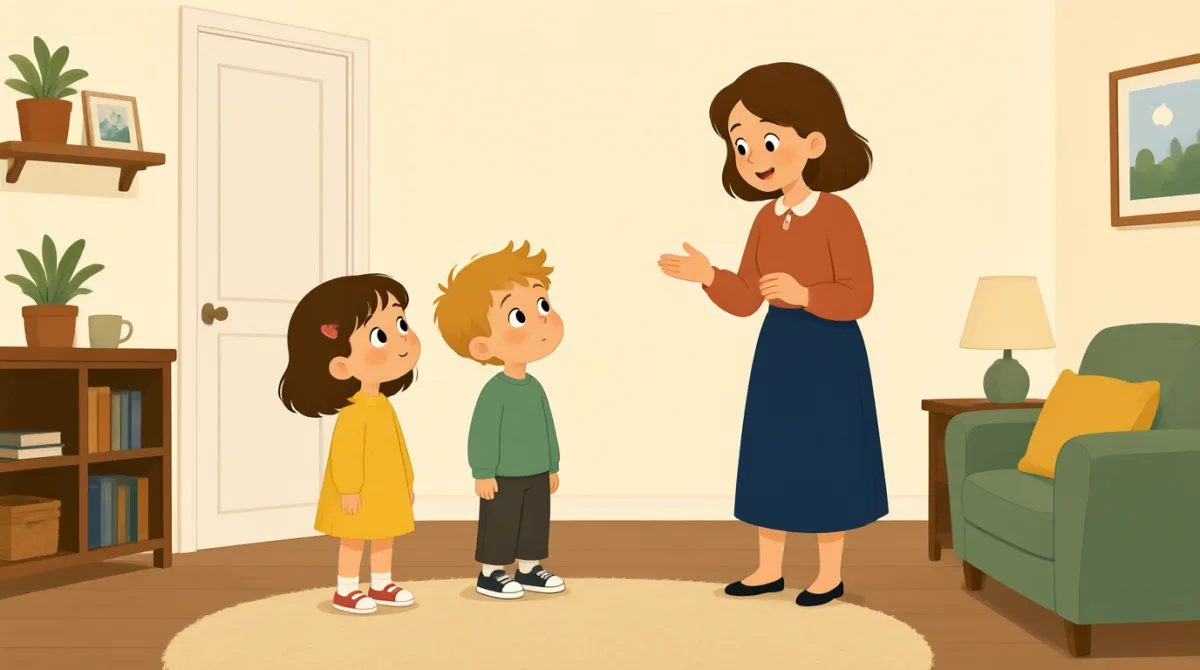

Thanks for staying with her, Emma. How did the evening go?
उसके साथ रुकने के लिए शुक्रिया, एमा। शाम कैसी रही?

It went well. She ate some pasta and asked for more.
सब अच्छा रहा। उसने थोड़ा पास्ता खाया और फिर माँगा।

Great. What did you two do after dinner?
बढ़िया। रात के खाने के बाद तुम दोनों ने क्या किया?
We played a simple card game. She was excited, but took turns.
हमने ताश का एक आसान खेल खेला। वह बहुत उत्साहित थी, लेकिन अपनी बारी का इंतज़ार करती रही।
And bedtime? She sometimes says she isn't tired.
और सोने के समय? वह कभी-कभी कहती है कि उसे नींद नहीं आ रही।
She said that tonight, too. I read her a short story, and she settled down.
आज रात भी उसने यही कहा। मैंने उसे एक छोटी-सी कहानी पढ़कर सुनाई, फिर वह शांत हो गई।
Thanks for handling everything so well. Was she asleep when you left?
सब कुछ इतनी अच्छी तरह संभालने के लिए शुक्रिया। जब तुम गईं, तब क्या वह सो रही थी?
Yes, she was asleep. I left the light on in the hallway, like you asked.
हाँ, वह सो रही थी। तुम्हारे कहने के मुताबिक, मैंने गलियारे की बत्ती जलती रहने दी।
शब्दावली6
- staying with herउसके साथ रुकना
This means taking care of her while her parents are away. You can say, “Thanks for staying with my dog.”
इसका मतलब है, उसके माता-पिता के घर से बाहर होने पर उसकी देखभाल करना। आप कह सकते हैं, “Thanks for staying with my dog.” (मेरे कुत्ते के साथ रुकने के लिए शुक्रिया।)
- went wellअच्छा रहा
This means that something happened successfully, without serious problems. You can use it to describe how a meeting, trip, or evening was.
इसका मतलब है कि कोई काम बिना किसी बड़ी परेशानी के सफलतापूर्वक हुआ। आप इसका इस्तेमाल किसी बैठक, यात्रा या शाम के बारे में बताने के लिए कर सकते हैं।
- asked for moreऔर माँगा
This means she wanted another serving of food. You can also say, “He asked for more water.”
इसका मतलब है कि वह खाने की एक और सर्विंग चाहती थी। आप यह भी कह सकते हैं, “He asked for more water.” (उसने और पानी माँगा।)
- settled downशांत हो गई
Here, this means she became calm and ready to sleep. You can also use it when someone becomes quiet after being excited.
यहाँ इसका मतलब है कि वह शांत हो गई और सोने के लिए तैयार थी। जब कोई उत्साहित होने के बाद शांत हो जाए, तब भी आप इस अभिव्यक्ति का इस्तेमाल कर सकते हैं।
- handling everythingसब कुछ संभालना
This means taking care of all the tasks or problems. You can say, “Thanks for handling everything while I was away.”
इसका मतलब है सभी कामों या समस्याओं का ध्यान रखना। आप कह सकते हैं, “Thanks for handling everything while I was away.” (मेरे दूर रहने के दौरान सब कुछ संभालने के लिए शुक्रिया।)
- left the light onबत्ती जलती छोड़ना
This means Emma did not turn off the light when she left. You can say, “I left the kitchen light on.”
इसका मतलब है कि एमा जाते समय बत्ती बंद नहीं करके गई। आप कह सकते हैं, “I left the kitchen light on.” (मैंने रसोई की बत्ती जलती छोड़ दी।)
मुख्य वाक्य8
- 1
How did the evening go?
शाम कैसी रही?
This is a friendly way to ask how an event or activity went. You can use it after a visit, meeting, or day out.
किसी घटना या गतिविधि के बारे में पूछने का यह एक दोस्ताना तरीका है। आप मुलाक़ात, बैठक या बाहर बिताए दिन के बाद यह पूछ सकते हैं।
- 2
It went well.
सब अच्छा रहा।
This is a short, common way to say that something was successful. You can use it to answer questions about how an event went.
किसी बात के सफल होने की जानकारी देने का यह एक छोटा और आम तरीका है। किसी घटना के बारे में पूछे जाने पर आप जवाब में इसका इस्तेमाल कर सकते हैं।
- 3
What did you two do after dinner?
रात के खाने के बाद तुम दोनों ने क्या किया?
Use this question to ask what two people did after an event or meal. You can change “after dinner” to “after school” or “after work.”
दो लोगों ने किसी घटना या खाने के बाद क्या किया, यह पूछने के लिए इस सवाल का इस्तेमाल करें। आप “after dinner” की जगह “after school” या “after work” कह सकते हैं।
- 4
We played a simple card game.
हमने ताश का एक आसान खेल खेला।
This sentence tells someone what activity you did. You can replace “a simple card game” with another activity, such as “a board game.”
इस वाक्य से आप किसी को बताते हैं कि आपने कौन-सी गतिविधि की। आप “a simple card game” की जगह कोई दूसरी गतिविधि, जैसे “a board game,” रख सकते हैं।
- 5
She said that tonight, too.
आज रात भी उसने यही कहा।
This means she said the same thing tonight as she has said before. You can use “too” to show that something happened again.
इसका मतलब है कि उसने आज रात भी वही बात कही जो वह पहले कह चुकी है। किसी बात के दोबारा होने की जानकारी देने के लिए “too” का इस्तेमाल कर सकते हैं।
- 6
I read her a short story, and she settled down.
मैंने उसे एक छोटी-सी कहानी पढ़कर सुनाई, फिर वह शांत हो गई।
This explains what you did and what happened next. You can use this pattern to describe how one action helped someone become calm.
यह बताता है कि आपने क्या किया और उसके बाद क्या हुआ। यह ढाँचा बताने के लिए इस्तेमाल कर सकते हैं कि किसी काम से किसी को शांत होने में कैसे मदद मिली।
- 7
Was she asleep when you left?
जब तुम गईं, तब क्या वह सो रही थी?
This is a yes-or-no question about what was happening at the time someone left. You can use the same pattern to ask, “Was he home when you called?”
यह हाँ या ना में जवाब दिए जाने वाला सवाल है, जो पूछता है कि किसी के जाने के समय क्या हो रहा था। इसी ढाँचे से आप पूछ सकते हैं, “Was he home when you called?” (जब तुमने फ़ोन किया, तब क्या वह घर पर था?)
- 8
I left the light on in the hallway, like you asked.
तुम्हारे कहने के मुताबिक, मैंने गलियारे की बत्ती जलती रहने दी।
This tells someone you followed their request. You can change “left the light on” to another action, such as “locked the door.”
इससे आप किसी को बताते हैं कि आपने उसकी बात मानी। आप “left the light on” की जगह कोई दूसरी कार्रवाई, जैसे “locked the door,” रख सकते हैं।