Setting Up the Tent
Rozkładanie namiotu
Emma and Jack unpack their tent and try to put it up. They work together and follow the instructions.
Emma i Jack wyjmują namiot z torby i próbują go rozstawić. Współpracują i postępują zgodnie z instrukcją.
Dialog9
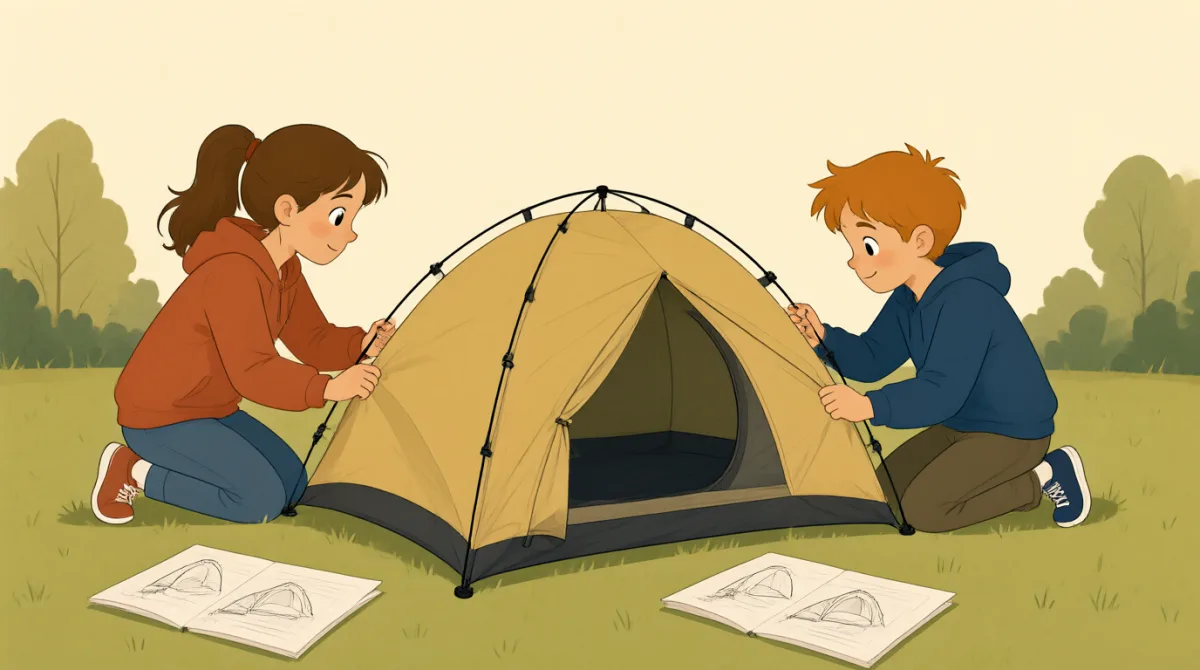

The tent is out of the bag. Which pieces should we use first?
Namiot jest już wyjęty z torby. Których części powinniśmy użyć najpierw?

Let's check the instructions. First, we need to lay the tent flat.
Sprawdźmy instrukcję. Najpierw musimy rozłożyć namiot na płasko.
Okay, I’ll spread it out here. Is this the front door?
Dobra, rozłożę go tutaj. To jest wejście?
Yes. Now connect these poles and push them through the loops.
Tak. Teraz połącz te pałąki i przełóż je przez pętelki.
This pole is a little stuck. Can you help me with it?
Ten pałąk trochę się zacina. Pomożesz mi z nim?
Sure. Hold this end while I push the pole through.
Jasne. Przytrzymaj ten koniec, a ja przepchnę pałąk.
Great, it’s standing up! Where do these small pegs go?
Świetnie, już stoi! Gdzie wbić te małe śledzie?
Put them through the loops at each corner, then push them into the ground.
Przełóż je przez pętelki w każdym rogu, a potem wbij je w ziemię.
All done! The tent feels strong. Let’s put our bags inside.
Gotowe! Namiot wydaje się solidny. Włóżmy do środka nasze torby.
Słownictwo8
- lay the tent flatrozłożyć namiot na płasko
Put the tent on the ground so it is flat. You can use this phrase when you prepare something before setting it up.
Połóż namiot na ziemi tak, żeby leżał płasko. Tego wyrażenia możesz użyć, gdy przygotowujesz coś przed rozstawieniem.
- spread it outrozłożyć
Open the tent and make it cover a larger area. You can also spread out a blanket or a map.
Rozłóż namiot, żeby zajmował większą powierzchnię. Możesz też rozłożyć koc albo mapę.
- connect these polespołączyć te pałąki
Join these tent poles together. Use “connect” when you attach two or more things.
Połącz ze sobą te pałąki namiotowe. Użyj słowa “connect”, gdy łączysz ze sobą dwie lub więcej rzeczy.
- push them through the loopsprzełożyć je przez pętelki
Move the poles through the small fabric loops. “Push something through” describes moving it from one side to the other.
Przesuń pałąki przez małe pętelki z materiału. Wyrażenie “push something through” opisuje przesuwanie czegoś z jednej strony na drugą.
- a little stucktrochę się zacinać
Not moving easily, but only slightly. You can say this when something is difficult to pull or move.
Coś nie przesuwa się łatwo, ale tylko odrobinę. Możesz tak powiedzieć, gdy trudno coś pociągnąć albo przesunąć.
- pegsśledzie
Small pointed pieces that hold the tent in place in the ground. They help keep the tent steady.
Małe, ostro zakończone elementy, które mocują namiot do ziemi. Pomagają utrzymać namiot stabilnie.
- at each cornerw każdym rogu
At every corner of the tent. Use “each” to talk about every one in a group.
W każdym z rogów namiotu. Użyj słowa “each”, gdy mówisz o wszystkich elementach z danej grupy.
- push them into the groundwbić je w ziemię
Press the pegs down into the soil. You can use this phrase when putting something firmly into the ground.
Wciśnij śledzie w ziemię. Tego wyrażenia możesz użyć, gdy mocno umieszczasz coś w gruncie.
Kluczowe zdania8
- 1
Let's check the instructions.
Sprawdźmy instrukcję.
This is a useful way to suggest looking at directions before starting a task. You can also say, “Let’s check the instructions for the game.”
To przydatny sposób, by zaproponować sprawdzenie instrukcji przed rozpoczęciem zadania. Możesz też powiedzieć: “Let’s check the instructions for the game.”
- 2
First, we need to lay the tent flat.
Najpierw musimy rozłożyć namiot na płasko.
This sentence explains the first step in a task. Reuse “First, we need to…” to describe what to do at the beginning.
To zdanie opisuje pierwszy krok zadania. Możesz użyć konstrukcji “First, we need to…” (Najpierw musimy…) żeby powiedzieć, co trzeba zrobić na początku.
- 3
Okay, I’ll spread it out here.
Dobra, rozłożę go tutaj.
This sentence offers to do a simple task and says where you will do it. Use “I’ll spread it out” for things like a blanket or a map.
W tym zdaniu proponujesz wykonanie prostego zadania i mówisz, gdzie to zrobisz. Wyrażenia “I’ll spread it out” możesz użyć w odniesieniu do takich rzeczy jak koc albo mapa.
- 4
Can you help me with it?
Pomożesz mi z tym?
This is a polite way to ask someone for help. You can use it when a task or object is difficult to manage.
To uprzejmy sposób, by poprosić kogoś o pomoc. Możesz użyć tego zdania, gdy trudno sobie poradzić z jakimś zadaniem albo przedmiotem.
- 5
Hold this end while I push the pole through.
Przytrzymaj ten koniec, a ja przepchnę pałąk.
This gives someone a clear task to do at the same time as yours. Use “while” to connect two actions happening together.
W ten sposób jasno mówisz drugiej osobie, co ma zrobić, podczas gdy ty wykonujesz swoją część zadania. Użyj “while”, żeby połączyć dwie czynności wykonywane jednocześnie.
- 6
Put them through the loops at each corner, then push them into the ground.
Przełóż je przez pętelki w każdym rogu, a potem wbij je w ziemię.
This sentence gives simple instructions in the correct order. Use “then” to introduce the next step.
To zdanie podaje proste instrukcje we właściwej kolejności. Użyj “then”, żeby wprowadzić następny krok.
- 7
The tent feels strong.
Namiot wydaje się solidny.
This describes how something seems when you touch or use it. You can also say, “The table feels strong.”
To opis tego, jakie wrażenie coś sprawia, gdy tego dotykasz albo używasz. Możesz też powiedzieć: “The table feels strong.”
- 8
Let’s put our bags inside.
Włóżmy do środka nasze torby.
This is a friendly suggestion to move things into a place. Reuse “Let’s put our…” when suggesting a shared action.
To przyjazna propozycja przeniesienia czegoś do jakiegoś miejsca. Użyj “Let’s put our…” (Włóżmy nasze…), gdy proponujesz wspólne działanie.