Cooking Over a Fire
Gotowanie nad ogniskiem
Emma and Jack cook dinner over the campsite fire. They prepare a simple meal and talk about what they want to do the next day.
Emma i Jack przygotowują kolację nad ogniskiem na kempingu. Przyrządzają prosty posiłek i rozmawiają o tym, co chcą robić następnego dnia.
Dialog8
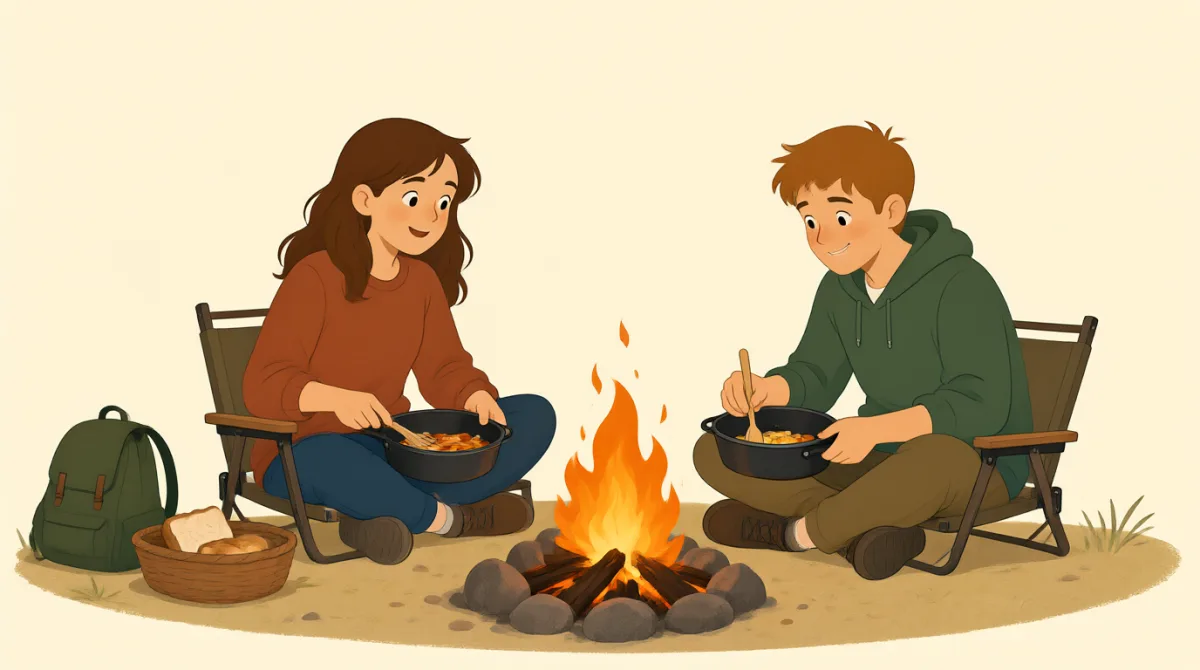

The fire is ready. What should we cook for dinner?
Ognisko jest już gotowe. Co powinniśmy przygotować na kolację?

Let’s cook sausages and potatoes. I brought some bread, too.
Upieczmy kiełbaski i ziemniaki. Wziąłem też trochę chleba.
Great! Can you put the potatoes in the pan?
Świetnie! Możesz włożyć ziemniaki na patelnię?
Sure. We should cook them slowly so they don’t burn.
Jasne. Powinniśmy piec je powoli, żeby się nie przypaliły.
I’ll turn the sausages. They smell really good.
Obrócę kiełbaski. Pięknie pachną.
Dinner will be ready soon. What do you want to do tomorrow?
Kolacja będzie gotowa już niedługo. Co chcesz robić jutro?
I’d like to hike by the lake and take some pictures.
Chciałabym wybrać się na wędrówkę nad jezioro i zrobić kilka zdjęć.
Sounds good. Let’s eat, then plan our morning.
Brzmi dobrze. Zjedzmy, a potem zaplanujmy poranek.
Słownictwo8
- cook for dinnerprzygotować na kolację
This means to prepare food for the evening meal. You can ask, “What should we cook for dinner?”
To znaczy przygotować jedzenie na wieczorny posiłek. Możesz zapytać: “What should we cook for dinner?” (Co powinniśmy przygotować na kolację?).
- broughtprzyniosłem / przyniosłam
“Brought” is the past form of “bring.” Use it to say you carried something with you, such as food on a camping trip.
“Brought” to forma przeszła czasownika “bring”. Używaj jej, gdy chcesz powiedzieć, że coś ze sobą zabrałeś, na przykład jedzenie na kemping.
- put the potatoes in the panwłożyć ziemniaki na patelnię
This means to place the potatoes inside the pan. You can use “put [something] in [a container]” when giving a simple instruction.
To znaczy umieścić ziemniaki na patelni. Możesz użyć zwrotu “put [something] in [a container]”, gdy wydajesz proste polecenie.
- cook them slowlypiec je powoli
This means to heat the food gently over time. You can use this phrase when food needs to cook without burning.
To znaczy podgrzewać jedzenie delikatnie i przez jakiś czas. Używaj tego zwrotu, gdy jedzenie powinno się piec, ale nie może się przypalić.
- turn the sausagesobracać kiełbaski
This means to move or flip the sausages so they cook on the other side. It is useful when cooking food in a pan or over a fire.
To znaczy obrócić kiełbaski na drugą stronę, żeby się z niej upiekły. Ten zwrot przydaje się podczas gotowania na patelni lub nad ogniem.
- burnprzypalić się
Food burns when it gets too hot or cooks for too long. You can say, “Watch the food so it doesn’t burn.”
Jedzenie przypala się, gdy jest zbyt gorące albo piecze się za długo. Możesz powiedzieć: “Watch the food so it doesn’t burn.” (Pilnuj jedzenia, żeby się nie przypaliło).
- by the lakenad jeziorem
This means near or beside the lake. Use “by” to describe a place next to something.
To znaczy w pobliżu jeziora lub tuż obok niego. “By” opisuje miejsce znajdujące się obok czegoś.
- take some pictureszrobić kilka zdjęć
This means to use a camera or phone to make photographs. You can say, “I’d like to take some pictures” when talking about plans.
To znaczy użyć aparatu lub telefonu, żeby zrobić fotografie. Możesz powiedzieć: “I’d like to take some pictures” (Chciałbym / Chciałabym zrobić kilka zdjęć), gdy opowiadasz o swoich planach.
Kluczowe zdania8
- 1
What should we cook for dinner?
Co powinniśmy przygotować na kolację?
Use this question to ask for ideas about what to prepare for an evening meal. You can replace “dinner” with another meal or occasion.
Tego pytania użyj, gdy chcesz poprosić o pomysły na wieczorny posiłek. Możesz zastąpić “dinner” nazwą innego posiłku lub okazji.
- 2
I brought some bread, too.
Przyniosłem też trochę chleba. / Przyniosłam też trochę chleba.
This sentence tells someone that you brought an additional item. Use “I brought [something], too” to mention something you have with you.
To zdanie informuje kogoś, że przyniosłeś dodatkową rzecz. Użyj wzoru “I brought [something], too”, aby wspomnieć o czymś, co masz ze sobą.
- 3
Can you put the potatoes in the pan?
Możesz włożyć ziemniaki na patelnię?
This is a polite way to ask someone to do a task. Replace “the potatoes” and “the pan” with other things and places.
To uprzejmy sposób, by poprosić kogoś o wykonanie zadania. Zastąp “the potatoes” i “the pan” innymi rzeczami i miejscami.
- 4
We should cook them slowly so they don’t burn.
Powinniśmy piec je powoli, żeby się nie przypaliły.
Use “We should” to make a suggestion, and “so” to explain the reason. You can use this pattern to give practical advice.
Użyj “We should”, by coś zasugerować, a “so”, by wyjaśnić przyczynę. Ten wzór przydaje się do udzielania praktycznych rad.
- 5
I’ll turn the sausages.
Obrócę kiełbaski.
Use “I’ll” to offer to do something now or soon. Replace “turn the sausages” with another helpful task.
Użyj “I’ll”, gdy oferujesz, że zrobisz coś teraz lub wkrótce. Zastąp “turn the sausages” innym pomocnym zadaniem.
- 6
What do you want to do tomorrow?
Co chcesz robić jutro?
Use this question to ask someone about their plans for the next day. You can replace “tomorrow” with another time.
Tego pytania użyj, gdy chcesz zapytać kogoś o plany na następny dzień. Możesz zastąpić “tomorrow” innym określeniem czasu.
- 7
I’d like to hike by the lake and take some pictures.
Chciałabym wybrać się na wędrówkę nad jezioro i zrobić kilka zdjęć.
Use “I’d like to” to talk about something you want to do. Add two activities with “and” to describe your plans.
Użyj “I’d like to”, by opowiedzieć o tym, co chcesz zrobić. Dodaj dwie czynności połączone słowem “and”, aby opisać swoje plany.
- 8
Let’s eat, then plan our morning.
Zjedzmy, a potem zaplanujmy poranek.
Use “Let’s” to suggest doing something together. “Then” shows the order of the activities: eat first and plan afterward.
Użyj “Let’s”, by zaproponować wspólne działanie. “Then” wskazuje kolejność czynności: najpierw jemy, a potem planujemy.