A Friend Who Always Borrows Money
Leo asks Emma to lend him money again, and she explains kindly but clearly that she can’t keep covering his expenses. They discuss other ways he might handle the shortfall.
Dialogue9
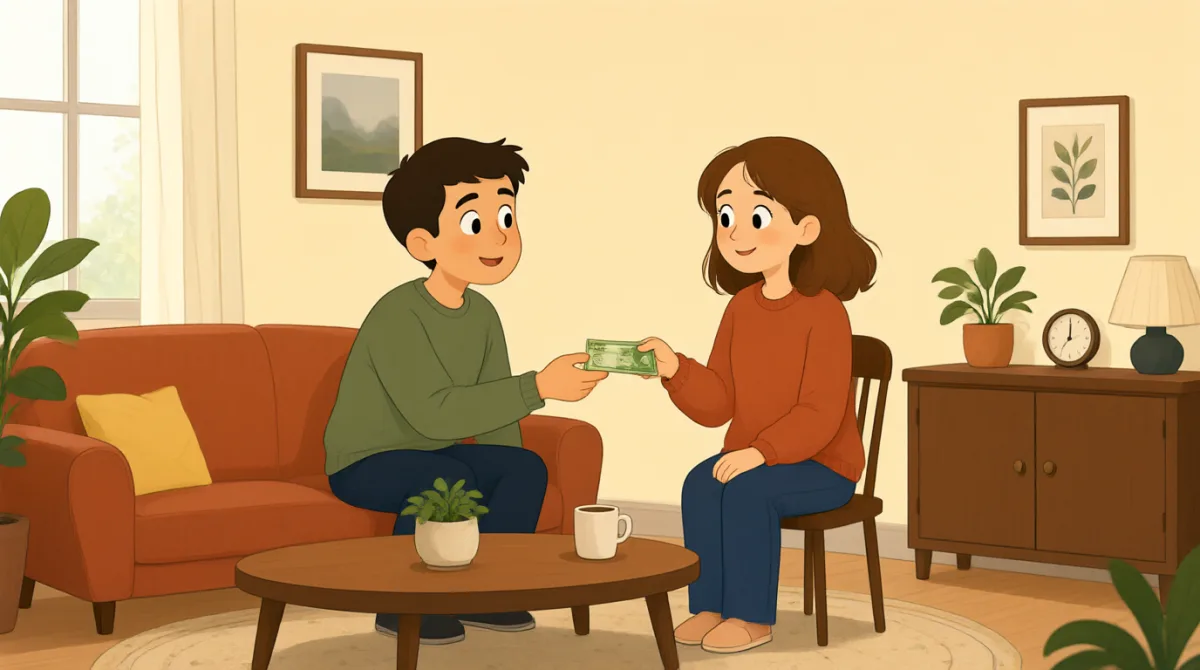

Hey, Emma. Could you lend me two hundred dollars until payday? My car insurance came out earlier than I expected, and I’m a little short this week.

I’m sorry you’re dealing with that. I need to be honest, though: I can’t lend you money this time. I’ve covered a few expenses for you recently, and it’s starting to put pressure on my own budget.
I get it. I was planning to pay you back as soon as I get paid. I just thought it might be easier to ask you than to deal with the insurance company.
I understand why you asked, and I’m not upset with you. But I don’t want money to become a regular part of our friendship, especially when I’m not sure when I’ll be paid back.
That’s fair. I didn’t realize it was becoming a pattern. I suppose I’ve been counting on you to bail me out instead of looking at why I keep running short.
Thanks for hearing me out. Maybe you could call the insurance company and ask whether they’ll let you change the payment date or split the bill into installments.
I could do that. I’ve been putting off calling them because I assumed they’d say no, but it’s worth checking. I can also cut back on a couple of things this week.
That sounds like a solid plan. I’m happy to help you think through your options, but I need to keep lending money off the table. I hope you know this doesn’t change how much I value our friendship.
I do, and I appreciate you being straight with me. I’ll call them today and work out a budget so I’m not scrambling every time an unexpected bill comes up.
Vocabulary8
- a little short this week
This means not having quite enough money for current expenses. It’s a tactful way to describe a temporary money shortage.
- put pressure on my own budget
This means making it harder to manage your personal spending. You can use it to explain how helping someone affects your finances.
- pay you back
This means returning money you borrowed. Use it when discussing when or how you’ll repay someone.
- become a regular part of our friendship
This means turn into something that happens often between friends. Here, it politely expresses concern that lending money could become a habit.
- bail me out
To bail someone out is to rescue them from a difficult situation, often by providing money. It can also suggest that the person relies on others instead of solving the underlying problem.
- putting off calling them
This means delaying a phone call you need to make. Use “put off” with a noun or an -ing verb to talk about postponing something.
- keep lending money off the table
This means make clear that lending money is not an option. “Off the table” is useful for setting a firm boundary during a discussion.
- scrambling
Here, this means rushing to deal with a problem at the last minute. It often describes trying to find money or make arrangements under pressure.
Key Sentences7
- 1
I need to be honest, though: I can’t lend you money this time.
This is a kind but direct way to refuse a request. You can reuse “I need to be honest, though” before stating a difficult decision.
- 2
I’ve covered a few expenses for you recently, and it’s starting to put pressure on my own budget.
This explains a boundary by describing its effect on your own finances rather than blaming the other person. Replace “covered a few expenses” with another kind of help you have been providing.
- 3
I don’t want money to become a regular part of our friendship, especially when I’m not sure when I’ll be paid back.
This sets a limit while showing that you value the relationship. You can adapt “I don’t want [something] to become a regular part of [our arrangement].”
- 4
I suppose I’ve been counting on you to bail me out instead of looking at why I keep running short.
This sentence acknowledges a pattern and takes responsibility for it. Use “counting on [someone] to [do something]” to describe relying on another person.
- 5
Maybe you could call the insurance company and ask whether they’ll let you change the payment date or split the bill into installments.
This offers practical alternatives without taking over the other person’s problem. “Maybe you could…” is a tactful way to suggest a next step.
- 6
I’m happy to help you think through your options, but I need to keep lending money off the table.
This combines support with a clear boundary. You can use “I’m happy to help with X, but I need to keep Y off the table” to clarify what you can and can’t offer.
- 7
I’ll call them today and work out a budget so I’m not scrambling every time an unexpected bill comes up.
This describes a concrete plan and its intended benefit. “So I’m not…” is useful for explaining what you hope to avoid.