When a Friend Gets Defensive
Leo feels criticized and says Emma is making too much of things. Emma acknowledges his feelings without backing away from her boundaries, and they try to separate the limits she’s setting from how much she values him.
Dialogue10
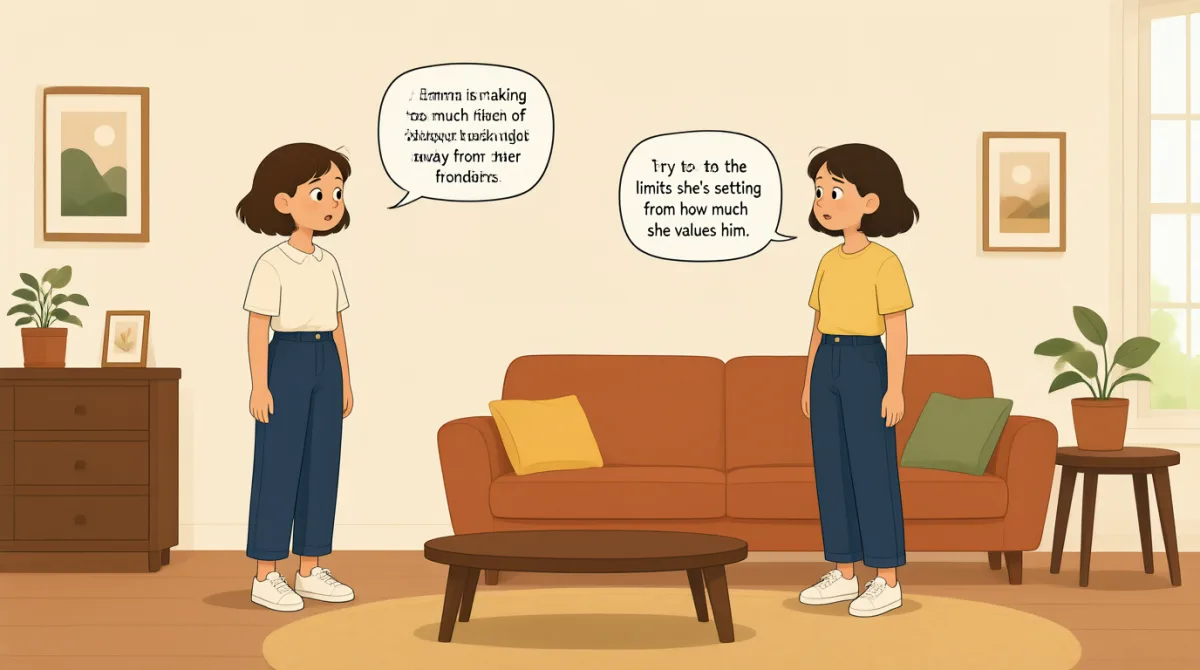

I get that you’re upset, but honestly, this feels like a lot. You’re making it sound as if I’m a terrible friend just because I’ve had a rough few weeks.

I’m not saying you’re a terrible friend, Leo. I can see why this feels like criticism, and I’m not trying to pile on when you’re already stressed.
It just seems like every time I need you, there’s a new rule. I thought friends were supposed to show up for each other without keeping score.
I do want to show up for you. But lending money, taking late calls, and having plans canceled at the last minute have started to wear me down.
I didn’t realize it was affecting you that much. When you bring up all three things at once, though, it feels like you’ve been keeping a list against me.
I can understand why it came across that way. I’m not keeping score; I’m trying to explain the pattern so we can deal with it instead of letting resentment build up.
So what are you actually asking me to do? I don’t want to feel like I have to pass a test just to stay your friend.
I’m asking you to check with me before calling late, give me more notice if plans change, and not count on me to cover expenses. Those are limits, not a test.
I can try to do that. I still feel a little defensive, but I don’t want you to think I take you for granted or that I don’t care about this friendship.
I don’t think that. I value you, and I want us to stay close. I also need to be honest about what I can manage, so neither of us ends up quietly resenting the other.
Vocabulary8
- pile on
To add more criticism or pressure when someone is already dealing with a lot. Emma says she does not want to make Leo feel even more stressed.
- show up for you
To be there for someone and support them when they need help. Here, Emma wants to support Leo while also setting limits.
- wear me down
To gradually make someone feel tired or emotionally drained. Emma uses this phrase to explain how the repeated issues have affected her.
- keeping a list against me
Remembering and collecting someone’s mistakes to use against them later. Leo worries Emma has been tracking his behavior rather than trying to solve a problem.
- build up
To gradually grow or become stronger over time. Emma wants to talk about the pattern before resentment grows.
- count on me
To rely on someone or expect them to help. Emma is asking Leo not to assume she will pay his expenses.
- take you for granted
To fail to appreciate someone because you assume they will always be there for you. Leo wants Emma to know that he values her and their friendship.
- quietly resenting the other
Feeling upset with someone over time without talking openly about it. Emma wants them to be honest so this does not happen.
Key Sentences8
- 1
I can see why this feels like criticism, and I’m not trying to pile on when you’re already stressed.
This acknowledges another person’s feelings without agreeing that your concern is wrong. You can reuse the structure to show empathy while explaining your intention.
- 2
I do want to show up for you.
This reassures someone that you care and want to support them. The phrase “show up for you” is useful when talking about being there for a friend.
- 3
But lending money, taking late calls, and having plans canceled at the last minute have started to wear me down.
This explains how specific repeated behaviors have affected you. You can name several examples and use “have started to wear me down” to describe their cumulative impact.
- 4
I’m not keeping score; I’m trying to explain the pattern so we can deal with it instead of letting resentment build up.
This clarifies that you are raising an issue to solve it, not to blame someone. The contrast with “instead of” is useful for explaining what you hope to avoid.
- 5
I’m asking you to check with me before calling late, give me more notice if plans change, and not count on me to cover expenses.
This states practical boundaries as clear, specific requests. You can reuse the parallel verbs “check,” “give,” and “not count on” to explain what you need.
- 6
Those are limits, not a test.
This brief sentence distinguishes boundaries from a demand to prove yourself. It is useful when someone worries that your request is a test of the relationship.
- 7
I value you, and I want us to stay close.
This directly reassures someone that a boundary does not mean you care less about them. You can use it to affirm a relationship during a difficult conversation.
- 8
I also need to be honest about what I can manage, so neither of us ends up quietly resenting the other.
This explains why it is important to speak openly about your limits. The phrase “so neither of us” is a useful way to describe a shared goal.