Talking It Through Honestly
Emma asks Leo to sit down and talk about the pattern behind the money requests, late-night calls, and canceled plans. She uses specific examples and explains what she needs in order to feel the friendship is reciprocal.
Dialogue10
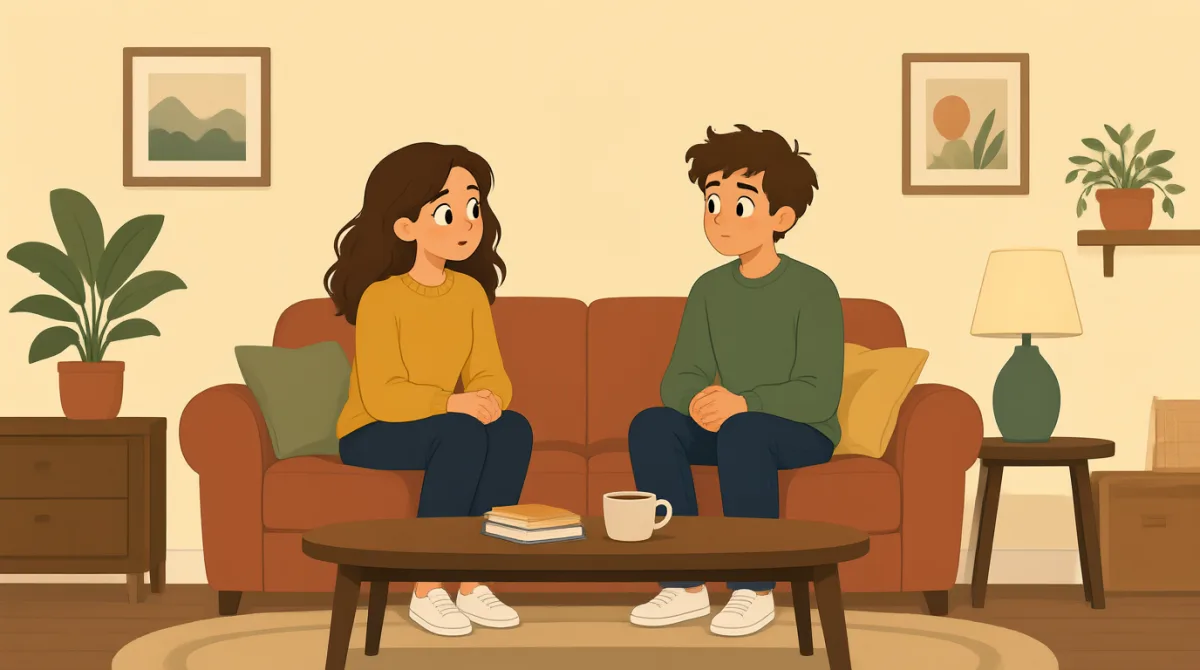

Leo, could we sit down and talk honestly about something? I value our friendship, and I’m not bringing this up to blame you. I just want us to understand each other better.

Sure. You sound serious, though. Is this about the money I asked to borrow last week? I know I’ve been leaning on you a lot lately.
That’s part of it. I’ve covered your expenses a few times, and you’ve called late at night when you were stressed. Then our plans got canceled at the last minute twice.
I hadn’t realized those things were adding up for you. The cancellations weren’t meant to send a message; I’ve just been overwhelmed and bad at planning.
I get that things have been difficult, and I’m not saying you do any of this on purpose. But when it keeps happening, I start feeling like my time and support are taken for granted.
That’s fair. I suppose I’ve been focused on getting through one problem at a time, without thinking about how it affects you. What would help you feel things are more balanced?
I need to be able to say no to lending money without feeling guilty, and I’d like you to check before calling late. If we make plans, please give me as much notice as you can if they need to change.
I can do that. I also don’t want you to feel like you’re responsible for sorting out my problems. I’ll look at other options when I’m short on money, and I’ll be more careful about making plans.
Thanks. I’m happy to listen and spend time together, but I need it to go both ways. I want us to keep being close without either of us feeling stretched too thin.
I hear you, Emma. I’m sorry I let things get lopsided. I care about our friendship too, and I’ll make an effort to respect those limits instead of assuming you’ll always be available.
Vocabulary8
- leaning on you
Relying on you for help or support. Here, Leo recognizes that he has depended on Emma a lot lately.
- adding up
Becoming significant when several things happen over time. Emma means that the requests, calls, and canceled plans have built up and affected her.
- at the last minute
Very close to the time something is supposed to happen. Use it when plans change or get canceled with little warning.
- taken for granted
Treated as if your help or time will always be available and does not need to be appreciated. It describes how Emma feels when the pattern continues.
- feel things are more balanced
Feel that each person is giving and receiving a fair amount. This phrase can open a conversation about making a relationship more reciprocal.
- go both ways
Be mutual, with both people contributing or benefiting. Emma uses it to explain that she wants the friendship to include support in both directions.
- stretched too thin
Under too much pressure because you have taken on more than you can manage. It is a useful way to describe feeling overcommitted without blaming someone.
- get lopsided
Become uneven or unfairly balanced in one direction. Leo uses it to acknowledge that he has been relying on Emma more than he should.
Key Sentences7
- 1
I value our friendship, and I’m not bringing this up to blame you.
This reassures someone that a difficult conversation is meant to solve a problem, not attack them. Replace “our friendship” with what you value in another relationship.
- 2
But when it keeps happening, I start feeling like my time and support are taken for granted.
This describes the effect of a repeated behavior without claiming the other person intended to cause harm. You can adapt it by naming the pattern and how it makes you feel.
- 3
What would help you feel things are more balanced?
This invites the other person to suggest practical changes and keeps the conversation collaborative. Use it when you want to discuss how to make a situation fairer.
- 4
I need to be able to say no to lending money without feeling guilty, and I’d like you to check before calling late.
This combines a clear boundary with a specific request. The structure “I need to be able to...” is useful for explaining what you require, while “I’d like you to...” makes a polite request.
- 5
If we make plans, please give me as much notice as you can if they need to change.
This sets an expectation while allowing for situations the other person may not control. Use “If..., please...” to make a practical request about future plans.
- 6
I’m happy to listen and spend time together, but I need it to go both ways.
This shows that you still care while explaining that support should be mutual. It is useful when setting a boundary without ending the relationship.
- 7
I’ll make an effort to respect those limits instead of assuming you’ll always be available.
This is a thoughtful way to acknowledge someone’s boundaries and commit to changing your behavior. Reuse “I’ll make an effort to...” when you want to promise improvement without claiming you’ll be perfect.