Agreeing on a Better Way Forward
Emma and Jack agree to confirm important plans and let each other know as early as possible if something changes. They talk about how to bring up frustrations before they build into another argument.
Dialogue10
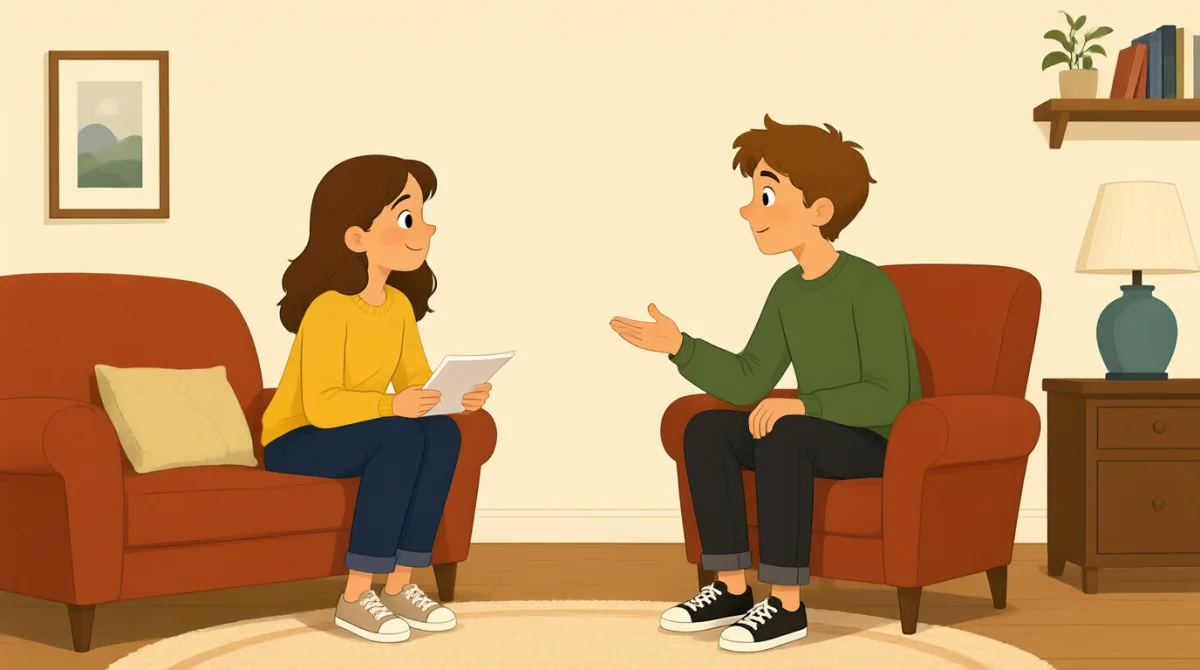

I’m glad we’re talking about what to do differently. I don’t want us to keep revisiting the argument every time one of us feels let down.

Me neither. Could we agree to confirm plans that really matter, maybe the day before? That way, we can catch a misunderstanding before it turns into a missed evening.
That sounds reasonable. And if something changes, I’d rather hear about it as soon as you know, even if you’re still figuring out the details.
I can do that. I sometimes put off sending a message because I think I need a complete solution first, but I can see how that leaves you in the dark.
And I’ll try to bring things up earlier, before I’ve been sitting with them for hours. I don’t want frustration to build until it comes out sharper than I mean it to.
That would help. Maybe we can say, “Something’s bothering me—can we talk about it?” That feels less like an accusation and more like an invitation to sort it out.
I like that. And if one of us isn’t ready to talk right away, we can say so and suggest a time to come back to it, instead of just going quiet.
Agreed. I don’t expect us to get everything right, but I want us to be more upfront and give each other the benefit of the doubt when we can.
I want that too. Let’s try these things and check in after a few weeks to see whether they’re working for both of us.
Deal. And if I forget to confirm, you can remind me without having to soften it into a hint. I’ll do my best to listen instead of getting defensive.
Vocabulary5
- keep revisiting the argument
To keep bringing up the same disagreement again and again. It suggests the speakers want to resolve the issue rather than repeatedly return to it.
- confirm plans
To check and make sure an arrangement is still happening. You can use this phrase when agreeing on plans that are important to you.
- bring things up
To start talking about a subject, especially a concern or problem. You can bring something up early to discuss it before it becomes more serious.
- build until it comes out sharper than I mean it to
To grow stronger over time and eventually come out in a harsher way than intended. This phrase describes how unspoken frustration can affect the way someone speaks.
- give each other the benefit of the doubt
To assume that someone had good intentions rather than immediately thinking the worst. This can help people respond more generously when something goes wrong.
Key Sentences8
- 1
Could we agree to confirm plans that really matter, maybe the day before?
This is a polite way to suggest a practical agreement. Reuse “Could we agree to…” when you want to propose a shared routine or expectation.
- 2
And if something changes, I’d rather hear about it as soon as you know, even if you’re still figuring out the details.
This clearly explains what kind of update would help and allows for uncertainty. Reuse “I’d rather hear about it…” to express a communication preference.
- 3
I sometimes put off sending a message because I think I need a complete solution first, but I can see how that leaves you in the dark.
This sentence explains a habit, acknowledges its effect on another person, and shows understanding. It is useful for taking responsibility without making excuses.
- 4
And I’ll try to bring things up earlier, before I’ve been sitting with them for hours.
This is a constructive way to commit to changing a behavior. Reuse “I’ll try to… earlier” when you want to discuss how you will handle a problem differently.
- 5
Maybe we can say, “Something’s bothering me—can we talk about it?”
This offers a direct but non-accusatory way to start a difficult conversation. You can use the question to raise a concern while inviting the other person to talk.
- 6
And if one of us isn’t ready to talk right away, we can say so and suggest a time to come back to it, instead of just going quiet.
This sentence sets a considerate boundary while keeping the conversation open. Reuse “suggest a time to come back to it” when you need a pause but still want to resolve an issue.
- 7
I don’t expect us to get everything right, but I want us to be more upfront and give each other the benefit of the doubt when we can.
This balances realistic expectations with a clear goal for the relationship. It is useful when agreeing to improve communication without expecting perfection.
- 8
Let’s try these things and check in after a few weeks to see whether they’re working for both of us.
This proposes a practical follow-up and makes the agreement something both people can review. Reuse “check in after…” when you want to revisit a plan after some time.