Making Up Over Dinner
Jack invites Emma to dinner to make up for the missed plans, and they choose somewhere they both enjoy. The evening gives them a chance to relax and reconnect.
Dialogue10
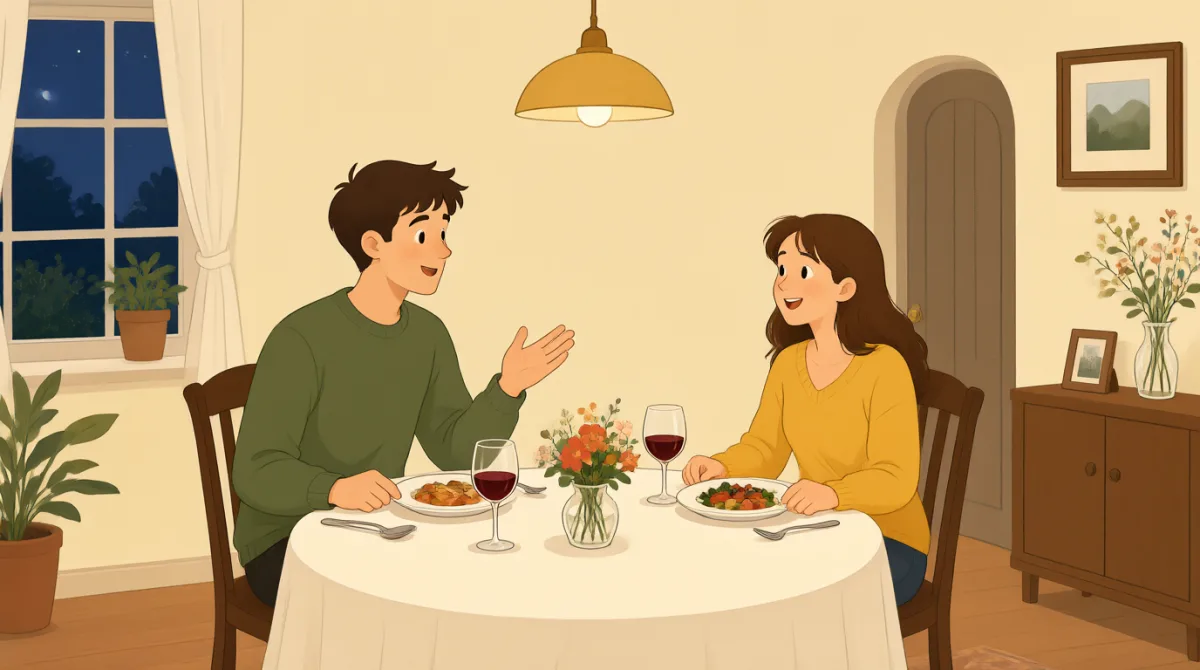

Thanks for coming. I know dinner doesn’t undo what happened, but I wanted to make time for us and show you I’m serious about making things right.

I appreciate that. And I’m glad you picked somewhere we both like. I wasn’t sure I’d feel ready to see you, but I’m happy we’re here.
I was hoping a familiar place might take some pressure off. No need to force a big conversation tonight—we can just enjoy dinner and see how we feel.
That sounds good. I don’t want us to pretend the argument never happened, but I also don’t want it hanging over every minute we spend together.
I get that. I’ve been thinking about what we agreed on, too. I’ll confirm our plans, and if something changes, I’ll let you know as soon as I can.
Thanks. And I’ll try to bring things up sooner, before I’ve had time to build a whole story in my head about what they mean.
That would help. I can get defensive when I feel overwhelmed, but I’m working on pausing and listening instead of jumping straight into explanations.
I’ll do my part, too. I care about us, and I’d rather work through a difficult moment together than let it turn into distance between us.
I care about us, too. And for the record, this is a much better dinner than the one I accidentally missed—especially since I’m actually here for it.
Good, because I’m not sharing dessert with someone who’s only here in spirit. Let’s order, and maybe we can start fresh—not by forgetting, but by doing better.
Vocabulary7
- take some pressure off
To make a situation feel less stressful or demanding. Jack hopes that choosing a familiar place will help them feel more at ease.
- hanging over every minute
Continuing to cause worry or discomfort throughout an experience. Emma does not want their argument to affect all the time they spend together.
- bring things up
To start talking about a subject or problem. Emma says she will try to discuss her concerns sooner.
- build a whole story in my head
To imagine or assume a lot about what something means, often without checking the facts. Emma wants to avoid making assumptions before she talks to Jack.
- get defensive
To react as if you are being attacked or criticized, often by explaining or justifying yourself. Jack says he is working on listening instead.
- work through
To deal with a problem or difficult situation together until it is resolved. Emma would rather work through difficult moments than let them create distance.
- start fresh
To begin again with a more positive approach, without pretending past problems never happened. Emma suggests they do better from this point on.
Key Sentences8
- 1
I know dinner doesn’t undo what happened, but I wanted to make time for us and show you I’m serious about making things right.
This acknowledges that a kind gesture cannot erase a problem while expressing a sincere intention to repair it. You can reuse “I know [action] doesn’t undo what happened, but…” to show accountability and explain what you hope to do next.
- 2
I wasn’t sure I’d feel ready to see you, but I’m happy we’re here.
This sentence honestly expresses mixed feelings while ending on a warm, positive note. Reuse “I wasn’t sure I’d feel [emotion], but…” when you want to describe uncertainty and how you feel now.
- 3
No need to force a big conversation tonight—we can just enjoy dinner and see how we feel.
This gently reduces pressure and leaves room to decide what feels comfortable. You can use “No need to force…” to reassure someone that they do not have to do something before they are ready.
- 4
I don’t want us to pretend the argument never happened, but I also don’t want it hanging over every minute we spend together.
This balances acknowledging a conflict with wanting to move forward. Reuse “I don’t want to…, but I also don’t want to…” to express two concerns that matter at the same time.
- 5
I’ll confirm our plans, and if something changes, I’ll let you know as soon as I can.
This makes a clear commitment and explains what will happen if circumstances change. The pattern “I’ll [action], and if [condition], I’ll [response]” is useful for making practical agreements.
- 6
I can get defensive when I feel overwhelmed, but I’m working on pausing and listening instead of jumping straight into explanations.
This names a personal reaction and describes a specific effort to change it. Reuse “I can [reaction] when…, but I’m working on…” to take responsibility without claiming you have already solved the problem.
- 7
I care about us, and I’d rather work through a difficult moment together than let it turn into distance between us.
This communicates commitment and compares a constructive choice with an unwanted outcome. You can reuse “I’d rather [preferred action] than [unwanted result]” to explain what matters most to you.
- 8
Let’s order, and maybe we can start fresh—not by forgetting, but by doing better.
This suggests moving forward while still recognizing what happened. The structure “not by…, but by…” is useful for clarifying what a fresh start means in practical terms.