Taking Time to Cool Down
After the argument, Emma and Jack agree to take some time apart rather than say things they might regret. Later, Jack checks in and asks whether Emma is ready to talk.
Dialogue11
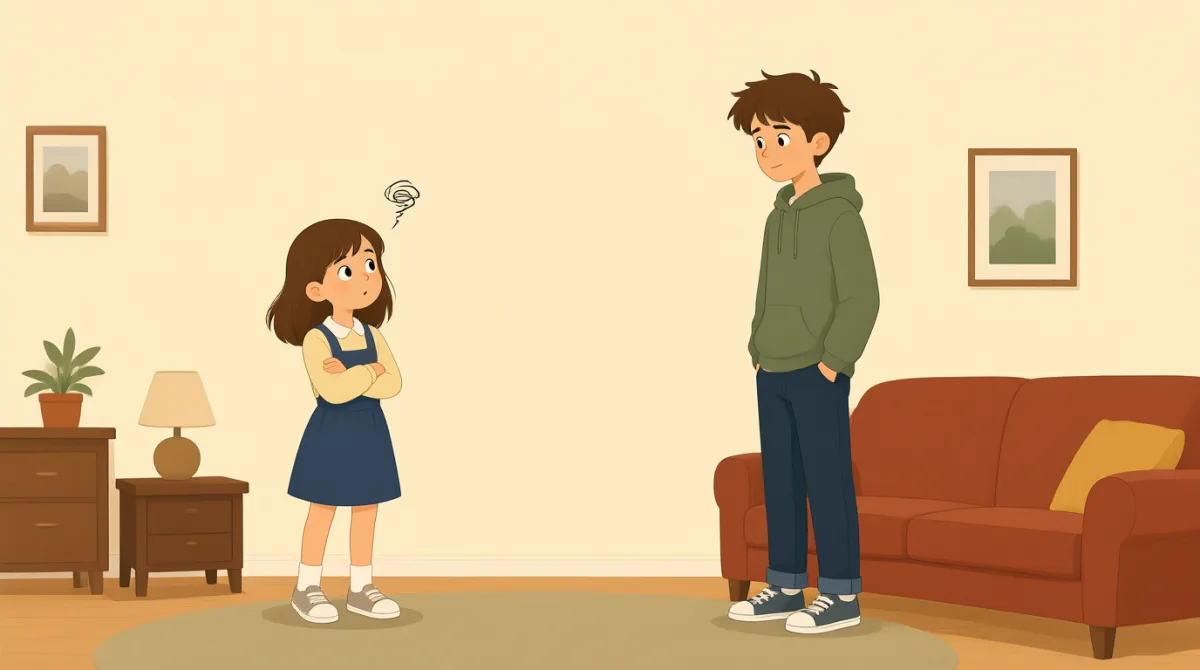

Hey, Emma. I know we said we’d give each other some space, so there’s no pressure to reply right away. I just wanted to check in.

Thanks for checking in. I’ve had some time to cool down, but I’m still feeling hurt. I think I’m ready to talk, as long as we take it slowly.
Absolutely. We don’t have to sort everything out tonight. I’d rather listen properly than jump in and get defensive again.
That would help. When we argued, I felt like we were both trying to win instead of understand what the other person was saying.
I can see that. I got caught up in explaining myself, and the more I talked, the less I seemed to hear you. I’m sorry for that.
I appreciate you saying that. I don’t want us to brush it under the rug, but I also don’t want to go over every sharp thing we said right now.
That makes sense. We can pause if either of us starts getting worked up. Would you rather talk here, or take a walk somewhere quiet?
A walk sounds good. I think I’ll be able to explain myself better if we’re not sitting across from each other like we’re in a formal meeting.
Fair enough. We can keep it low-key and just talk for a little while. If it feels like too much, we can call it for tonight and pick it up later.
Okay. I’m not promising we’ll settle everything on this walk, but I’m willing to hear you out and tell you how I’ve been feeling.
That’s all I’m asking for. Thanks for giving me a chance to talk, Emma. Let’s take it one step at a time.
Vocabulary7
- give each other some space
To spend some time apart so both people can calm down. It can help prevent an argument from getting worse.
- cool down
To become calmer after feeling angry or upset. Here, Emma has had time to process her feelings before talking.
- get defensive
To react as if you are being attacked, often by making excuses or arguing back. You can use this phrase to describe a response that makes a difficult conversation harder.
- brush it under the rug
To avoid discussing a problem instead of dealing with it. It is often used when an issue may come back later if it is ignored.
- keep it low-key
To make something relaxed and informal, without too much intensity or attention. Here, it means having a calm, casual conversation.
- hear you out
To listen to someone fully before judging or responding. It is useful when you want to show that you are open to understanding another person's point of view.
- one step at a time
To deal with something gradually instead of trying to solve everything at once. It can reassure someone during a difficult or complicated process.
Key Sentences8
- 1
I’ve had some time to cool down, but I’m still feeling hurt.
This sentence shows that you are calmer but still have difficult feelings. You can reuse the pattern “I’ve had some time to [verb], but I’m still…” to describe mixed emotions.
- 2
I think I’m ready to talk, as long as we take it slowly.
This is a considerate way to agree to a conversation while setting a condition. Replace “take it slowly” with another request, such as “keep it brief” or “talk somewhere quiet.”
- 3
I’d rather listen properly than jump in and get defensive again.
This sentence expresses a preference and recognizes a past behavior you want to change. The structure “I’d rather [action] than [action]” is useful for explaining how you want to handle a situation.
- 4
I don’t want us to brush it under the rug, but I also don’t want to go over every sharp thing we said right now.
This balances the need to address a problem with the need to avoid discussing it all immediately. You can reuse “I don’t want to…, but I also don’t want to…” to explain two competing concerns.
- 5
We can pause if either of us starts getting worked up.
This suggests a practical boundary for keeping a conversation calm. The pattern “We can [action] if either of us…” can help both people agree on a plan.
- 6
If it feels like too much, we can call it for tonight and pick it up later.
This offers a way to stop a difficult conversation without giving up on it. “Call it for tonight” means stop for now, while “pick it up later” means continue at another time.
- 7
I’m not promising we’ll settle everything on this walk, but I’m willing to hear you out and tell you how I’ve been feeling.
This manages expectations while showing openness to a conversation. You can use “I’m not promising…, but I’m willing to…” to set a realistic limit and still show cooperation.
- 8
Let’s take it one step at a time.
This encourages people to handle a situation gradually. It works well when a problem feels complicated or emotionally overwhelming.